
JHS Pedals JHS Little Black Amp Box Signal Converter
4.6Editor score
Passive design
FX loop integration
Sturdy compact build
Discover the top attenuator for tube amp options to control volume while preserving tone, featuring reactive loads and passive designs for every budget today.
Tube amplifiers are beloved for their rich harmonic distortion but often lack volume control without sacrificing tone. An attenuator for tube amp solves this by reducing speaker output while maintaining power tube saturation.
We evaluated ten leading models based on power handling, impedance matching, tone preservation, and build quality. Our analysis includes passive units, reactive loads, and advanced digital systems designed for home and studio use.
Each pick highlights key features and real-world performance. Prices may vary by retailer or time, so check current listings before purchasing. This guide ensures you find the right solution for your specific amplifier needs.
4.6Editor score

4.5Editor score

4.4Editor score
This side-by-side comparison highlights the core specifications and unique strengths of each model to help you narrow down your choice based on power handling and features.



The Two Notes Torpedo Captor stands out as the top-rated attenuator for tube amp in our list. With a 4.5-star rating, it balances performance and price effectively for guitarists seeking professional results at home.
We may earn a commission when you buy through this link, at no additional cost to you.
Its reactive loadbox design preserves amp feel while offering a direct box output for silent recording. Users can connect directly to an interface, capturing speaker tones without needing a microphone setup.
While it requires external power and may generate heat during long sessions, these trade-offs are minor compared to the tonal clarity it provides. Most users find the unit durable and straightforward in daily use.
Buy this if you need a reliable, studio-grade solution that fits into a pedalboard. It delivers exceptional value for musicians who want control without compromising the integrity of their tube tone.
The DI output enables direct connection to audio interfaces for clean recordings.
Its compact design fits easily under most pedalboards with standard space.
We may earn a commission when you buy through this link, at no additional cost to you.
The JHS Pedals Little Black Amp Box earns the best budget badge with a 4.6 rating. It is a passive signal converter that tames loud tube amps without requiring any power supply.
We may earn a commission when you buy through this link, at no additional cost to you.
By placing it in the effects loop, you control signal sent to the power section. This lets you push the front end for natural feel while keeping overall volume low for home practice.
The lack of speaker emulation means you still need a cab for full sound. However, its simplicity and low cost make it a practical choice for those who already have speaker options.
Choose this if you want an affordable, no-fuss attenuator for tube amp. It is ideal for players seeking volume reduction without complex features or additional gear requirements.
No batteries or power bricks are needed for operation.
Can be mounted under a pedalboard or placed in a rack.
We may earn a commission when you buy through this link, at no additional cost to you.
The Universal Audio Ox Amp Top Box represents the premium end of the market with a 4.4 rating. It is a no-compromise analog reactive load box designed for serious recording and performance.
We may earn a commission when you buy through this link, at no additional cost to you.
Its front-panel RIG control delivers instant album-quality mic and cabinet tones. You can choose virtual mic placement without miking an amp, saving time while achieving professional results.
Five attenuation levels cover silent to full volume. Dynamic Speaker Modeling emulates breakup and cone cry for authentic feel. Though expensive, it justifies the cost for studios and pros.
Invest in this if you need top-tier control and tone shaping. It is the ultimate attenuator for tube amp for those who demand flawless sound and versatility in any setting.
Get record-ready sounds without external microphones or cabinets.
Adjust speaker drive and breakup for realistic dynamic response.
We may earn a commission when you buy through this link, at no additional cost to you.
The Bugera POWER SOAK PS1 delivers robust performance with a 4.3 rating. As a passive 100-watt attenuator, it works for both guitar and bass amplifiers effectively.
We may earn a commission when you buy through this link, at no additional cost to you.
Multi-impedance connectors match most setups, while the emulated mic output lets you route signal to a mixing console. This feature adds flexibility for live sound or recording scenarios.
It lacks reactive load benefits, which some players prefer for dynamic feel. Still, the 3-year warranty provides peace of mind for long-term use in demanding environments.
Choose this if you need a reliable, high-wattage attenuator for tube amp. It offers solid value for players who want simplicity and durability without breaking the bank.
Designed to work with both guitar and bass amplifier types.
Backed by a 3-year warranty for extended reliability assurance.
We may earn a commission when you buy through this link, at no additional cost to you.
The Tone King Ironman II Mini scores 4.6 stars for its tailored design for 30-watt amplifiers. It delivers reactive attenuation to preserve tone while reducing volume for practice.
We may earn a commission when you buy through this link, at no additional cost to you.
A footswitchable boost allows for on-the-fly volume changes during performance. The line output provides flexibility to send signal to a PA or interface when needed.
Its compact pedal format fits most setups easily. However, the 30-watt limit means it won't suit higher-power amps. Users praise its clarity and intuitive operation.
Ideal for players with small combos or 30-watt heads. This attenuator for tube amp offers reactive quality in a user-friendly package that suits many home scenarios.
Use the footswitch to engage a boost during solos or fills.
Reactive load maintains dynamic response better than resistive models.
We may earn a commission when you buy through this link, at no additional cost to you.
The Tone King Ironman II 100-Watt earns a 4.2 rating for high-wattage users. It features a precision-compensated reactive attenuator designed to retain tone in powerful setups.
We may earn a commission when you buy through this link, at no additional cost to you.
A presence switch adjusts high-frequency response, while dual impedance controls help match different cabinets. The DI output supports direct recording without extra mic gear.
Bypass mode lets you remove the attenuator when full volume is needed. Some users note the size is bulky, but it delivers professional-grade performance for serious players.
Pick this if you have a 100-watt head and need reliable attenuation. It is a premium attenuator for tube amp that balances power, tone, and control for demanding environments.
Presence switch lets you tailor high-end response to your taste.
Dual impedance options ensure correct load for various cabinets.
We may earn a commission when you buy through this link, at no additional cost to you.
The Boss WAZA Tube Amp Expander scores 4.3 stars as a command center for tube amps. It supports up to 150 watts with advanced variable reactive load circuits.
We may earn a commission when you buy through this link, at no additional cost to you.
Users can store ten rig settings and control via MIDI footswitches. The built-in 100-watt power amp offers seamless volume control for direct monitoring without extra gear.
While the interface is complex, it offers deep real-time performance control. Many professionals appreciate the Tube Logic design for maintaining natural tone and feel.
Choose this for ultimate control in professional setups. It is a top-tier attenuator for tube amp that merges attenuation, amplification, and system management in one unit.
Save and recall ten different rig configurations easily.
Built-in power amp supports direct monitoring without a cab.
We may earn a commission when you buy through this link, at no additional cost to you.
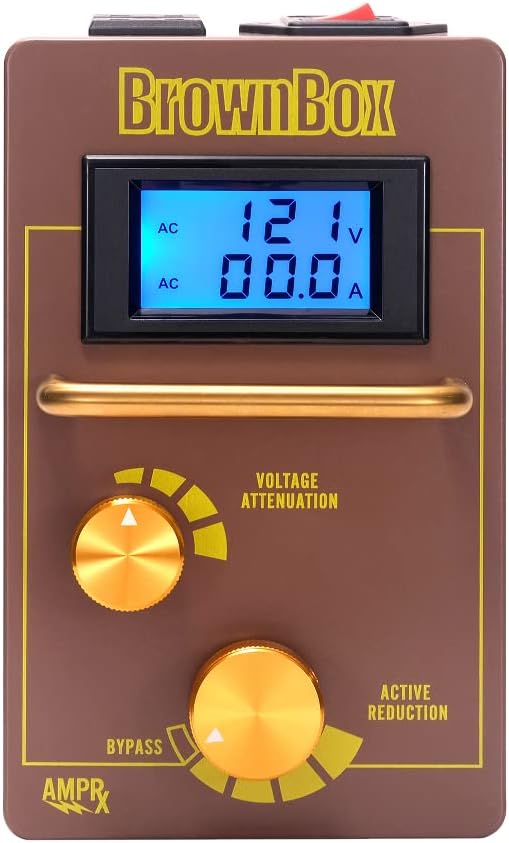
The BrownBox Tube Amplifier Input Voltage Attenuator holds a perfect 5.0 rating. It uniquely attenuates AC input voltage to reduce tube amp power before it reaches the transformer.
We may earn a commission when you buy through this link, at no additional cost to you.
With selectable output voltages and an LCD voltmeter, it provides precise control over tube performance. This method can soften output while keeping the amp safe.
Note that this is not a speaker load device; it reduces power at the source. It is a niche tool for those who want to manage amp headroom electrically.
Consider this for safe, electrical voltage control. It is a specialized attenuator for tube amp that offers a unique angle on volume management for tube enthusiasts.
Controls voltage input to lower overall tube amp power safely.
LCD meter shows input voltage for accurate settings.
We may earn a commission when you buy through this link, at no additional cost to you.
The Warm Audio Reamper Routing Hub is a versatile analog studio tool. It includes a silent 50-watt power soak and variable impedance for flexible signal paths.
We may earn a commission when you buy through this link, at no additional cost to you.
Ideal for re-amping, it lets you send recorded signals through multiple preamp paths. The independent paths help experiment with different tones while keeping the studio quiet.
Lacking user ratings, it remains a pro tool for specific studio workflows. It suits those who need precise control over signal routing and tube amp re-amping.
Select this for studio re-amping tasks. It is a unique attenuator for tube amp designed to integrate seamlessly into complex recording setups and production workflows.
Multiple paths allow creative re-processing of recorded tracks.
Silent 50W power soak reduces noise during tracking.
We may earn a commission when you buy through this link, at no additional cost to you.
The Donner Amp Attenuator Pedal achieves a 4.3 rating for affordability. It fits a pedalboard and runs through the FX loop to control signal to the power section.
We may earn a commission when you buy through this link, at no additional cost to you.
A mute footswitch lets you silence output quickly, useful for quick transitions. True bypass ensures tone stays intact when the unit is off, preserving signal clarity.
Note the power adapter is not included, which is a minor inconvenience. Still, its simple layout and low price make it accessible for many players.
This is a great entry-level attenuator for tube amp. It offers practical features for home use without demanding extra cash or complex setup.
Tap the mute footswitch to silence output during breaks.
True bypass keeps your original tone when the effect is off.
We may earn a commission when you buy through this link, at no additional cost to you.
Choosing the right attenuator for tube amp requires evaluating power handling, impedance, and desired features. This section breaks down the key factors to consider before buying.
Power handling indicates the maximum wattage the attenuator can safely dissipate without overheating. Ensure it matches or exceeds your amplifier output.
Choose a unit with higher power handling for headroom and longevity in loud environments.
Impedance must match your amp and cabinet to prevent tone degradation or damage. Look for units with multiple impedance settings.
Selecting the correct impedance ensures the amp sees the load it expects for safe operation.
Reactive attenuators simulate speaker impedance, preserving dynamic feel and tone better than passive ones. Passive units are simpler and cheaper but less nuanced.
Pick reactive models if tone fidelity is critical; passive suits budget or basic needs.
Outputs like line out, DI, or mic emulations enable direct recording and flexible setups. Consider where you need to route your signal after attenuation.
Units with DI outputs are preferable for silent recording and modern studio workflows.
Some units include footswitchable boost or mute features for live performance control. Check if your workflow needs instant changes.
Footswitch features increase convenience during live sets without manual knob adjustments.
Sturdy enclosures and reliable components ensure durability under heat and frequent use. Metal cases and proper ventilation are ideal.
Prioritize robust construction to avoid damage from heat or physical stress during tours.
Warranty terms reflect manufacturer confidence and can save money on repairs. Longer warranties like three years add value.
Look for brands with solid warranty policies to protect your investment over time.
Budget units lack features but handle basic tasks. Premium ones offer advanced control and tonal accuracy. Balance needs against cost.
Choose a price point that matches your skill level and performance demands to maximize value.
Connect the attenuator between your amp's speaker out and cabinet. Ensure impedance matches for safe power transfer.
Set attenuation level to desired volume. Adjust amp master until tone feels natural without excessive heat.
Allow proper ventilation during use. Store in a dry place and check cables periodically for wear.
High-quality reactive models preserve tone and feel by simulating speaker impedance. Basic passive units may slightly affect dynamics but still allow lower-volume play without sacrificing core characteristics.
Most attenuators require a speaker cabinet. Some models include DI or loadbox options for direct connection, but a cabinet is typical for full sound.
The amount depends on how much volume reduction you want. Units with multiple levels or continuous control let you dial in exact needs from practice to performance.
Ensure power and impedance ratings match your amp. Most attenuators fit common 8 ohm setups, but high-wattage models require careful compatibility checks.
Attenuators dissipate power as heat, so they may run warm. Good ventilation and proper power ratings prevent overheating issues during long use.
Some models include loadbox features or DI outputs for direct recording without a speaker. These enable silent monitoring and capture of tones via interfaces.
Use a dry cloth to wipe dust off. Keep vents clear to avoid heat buildup and avoid liquids near electronics during cleaning routines.
A loadbox simulates a speaker load for direct recording. An attenuator reduces volume while keeping a cab. Some units combine both functions for maximum flexibility.
The Two Notes Torpedo Captor leads as the editor's choice, balancing reactive tone and practical features for most players. The JHS Little Black Amp Box serves budget needs well.
Prioritize reactive models for authentic feel and consider output options for your recording setup. Match power and impedance to ensure safe operation and best tone.
Prices vary across retailers and over time, so review current listings. With the right attenuator for tube amp, you can enjoy cranked tone at any volume.