
Lenovo Chromebook 14 Touchscreen Slim Laptop
4.4Editor score
Affordable entry price point
Full HD touchscreen display
Long battery life for school
Finding the right laptop for kids to learn coding requires balancing performance, durability, and ease of use. Young developers need devices that run coding platforms smoothly while with rugged enough to handle daily school and home use without constant maintenance.
We compared ten diverse options ranging from budget-friendly Chromebooks to specialized learning laptops. Our evaluation focused on processing power, screen quality, battery life, and educational software compatibility to ensure each pick supports a child's coding journey effectively.
Each pick highlights key strengths and trade-offs for different age groups and skill levels. Prices change frequently, so verify current deals before purchasing. This list aims to simplify your search for a reliable tool that fosters creativity and technical skills.
4.4Editor score

4.2Editor score

5.0Editor score
As an Amazon Associate we earn from qualifying purchases.
This side-by-side comparison highlights the core specifications and strengths of each selected laptop. Whether you need a rugged school device or a powerful coding machine, these entries cover the essential features for young learners.




This Chromebook stands out as a top choice for young coders due to its flexible 2-in-1 design and durable build. It earns high marks for supporting both laptop and tablet modes which aids interactive learning sessions.
We may earn a commission when you buy through this link, at no additional cost to you.
The Intel N150 processor handles basic coding platforms like Scratch or web-based editors smoothly. Its 14-inch WUXGA touchscreen offers clear visuals for reading code and debugging errors without eye strain.
While storage is limited to 128GB UFS, cloud integration on Chrome OS mitigates this concern for most students. The trade-off is acceptable given the device longevity and ease of use for educational purposes.
Parents seeking a reliable all-rounder for K-12 coding classes should consider this model. It balances performance and durability effectively making it a safe bet for daily school and home use.
The 360-degree hinge allows Tent and Stand modes which are ideal for following video tutorials or sharing screens during group projects.
MIL-STD 810H testing ensures the device withstands drops and spills common in student environments reducing replacement costs over time.
We may earn a commission when you buy through this link, at no additional cost to you.
This Lenovo Chromebook offers exceptional value for families on a budget while still providing essential features for coding education. Its MediaTek Kompanio 520 processor ensures smooth performance for web-based coding tools.
We may earn a commission when you buy through this link, at no additional cost to you.
The 14-inch Full HD touchscreen provides a vibrant workspace for visual learners. Combined with the included accessory bundle featuring a dock and mouse it delivers a complete setup right out of the box.
Storage management requires using the microSD card slot effectively since internal eMMC is limited. This is a minor inconvenience given the low price point and the flexibility of expandable storage.
For beginners starting with block-based coding or simple Python projects this laptop is an excellent starting point. It keeps costs low without sacrificing the core functionality needed for early programming success.
The MarxsolAccessory package adds a docking station and wireless mouse which enhances productivity during long coding sessions without extra purchases.
The MediaTek processor is designed for class-leading battery life ensuring the device lasts through full school days without needing a recharge.
We may earn a commission when you buy through this link, at no additional cost to you.
This NIMO laptop delivers a premium experience with a large 15.6-inch screen perfect for multitasking between code editors and browsers. The 1080p Full HD display ensures text remains crisp during long sessions.
We may earn a commission when you buy through this link, at no additional cost to you.
Security features like fingerprint access add a layer of protection for family devices. The 2-year warranty provides peace of mind which is rare at this price point for renewed electronics.
The backlit keyboard is a standout feature allowing homework or coding sessions in low light without strain. While it is a renewed unit the quality control ensures reliable performance for daily learning.
Families wanting a full-featured Windows-like experience without the high cost will appreciate this option. It bridges the gap between budget Chromebooks and expensive student laptops effectively.
The touchpad fingerprint reader and fTPM chip allow quick secure logins without needing complex passwords which is convenient for shared family devices.
A full 2-year manufacturer warranty and 90-day return policy offer significant protection against defects ensuring long-term usability for students.
We may earn a commission when you buy through this link, at no additional cost to you.
Built specifically for educational environments this HP Chromebook prioritizes durability and longevity. The spill-resistant keyboard protects against accidental liquid spills which is common with younger students.
We may earn a commission when you buy through this link, at no additional cost to you.
Its compact 11.6-inch form factor makes it easy to carry in backpacks. The AMD processor handles basic web applications and coding platforms adequately for introductory lessons.
The 32GB storage is tight for large downloads but cloud storage on Chrome OS solves this issue. Focus remains on reliability and ease of use rather than high-end specifications.
Schools or families needing a rugged device for daily transport will find this model suitable. It is a practical tool for learning fundamental coding concepts without breaking the budget.
The backlit island-style keyboard resists spills and is designed to withstand daily wear and tear in classroom settings.
Weighing less than 2.5 pounds the device is lightweight enough for children to carry comfortably between home and school.
We may earn a commission when you buy through this link, at no additional cost to you.
This VTech laptop serves as an ideal introduction to computer skills for preschool and early elementary students. It mimics a real laptop without the complexities of internet connectivity.
We may earn a commission when you buy through this link, at no additional cost to you.
The bilingual features allow children to learn English and Spanish simultaneously while engaging with math and science activities. This early exposure builds confidence before moving to actual coding environments.
Since it runs on batteries it is not suitable for long sessions but excellent for short focused learning bursts. The QWERTY keyboard helps kids familiarize themselves with typing layouts early on.
Parents of children under eight looking for a safe introductory tool will find this valuable. It bridges the gap between toys and real computers effectively fostering curiosity.
Every activity comes pre-loaded and ready to play offline ensuring no accidental internet browsing or ads distract from learning.
A full-size QWERTY keyboard helps young users develop muscle memory for typing which is essential for future coding work.
We may earn a commission when you buy through this link, at no additional cost to you.
This HP Fortis model focuses on stability and multitasking capability with 8GB of RAM. It handles multiple browser tabs which is crucial when running coding tools alongside documentation.
We may earn a commission when you buy through this link, at no additional cost to you.
The MT8186 processor ensures smooth performance for web-based development environments. It is built to last with a design optimized for frequent transport and daily use.
Storage is limited to 64GB which may require reliance on external drives or cloud services. This is standard for Chromebooks but requires careful management for projects with large assets.
Students needing a robust device for school assignments and introductory coding will appreciate its reliability. It offers a balanced mix of performance and durability for academic needs.
With 8GB of RAM students can keep multiple tabs open for research and coding simultaneously without performance lag.
The MediaTek processor provides consistent speed for web applications ensuring smooth operation during online classes or projects.
We may earn a commission when you buy through this link, at no additional cost to you.
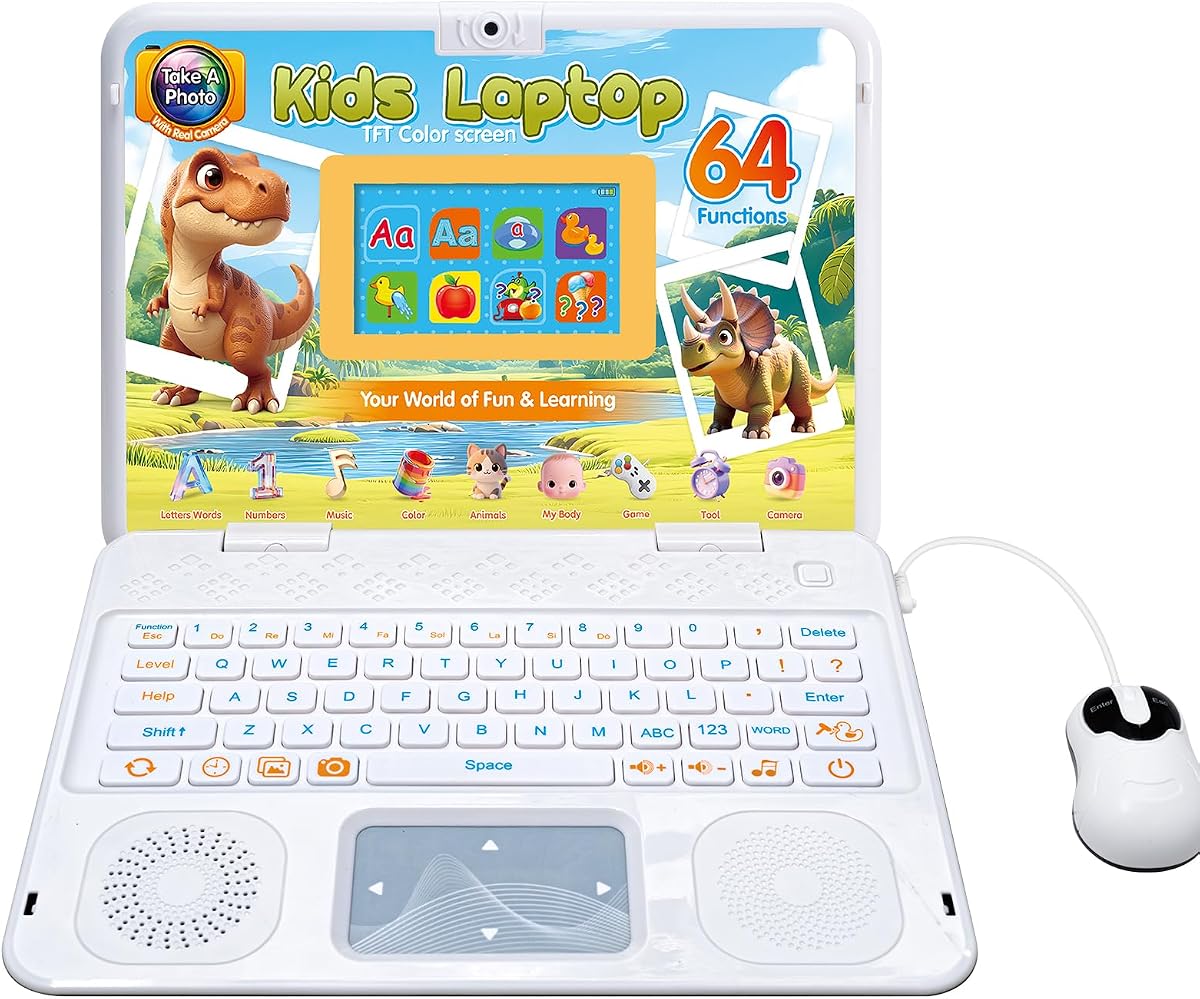
This device blends learning with entertainment offering 64 modes that include math language arts and music. The built-in camera allows kids to take photos adding a creative dimension to play.
We may earn a commission when you buy through this link, at no additional cost to you.
The 4.3-inch color screen is bright and clear for its size making visuals easy to see. The realistic keyboard and mouse help children understand how computers work without overwhelming them.
It is not a full computer but rather a focused learning tool. However for developing fine motor skills and early computer literacy it is highly effective for its target age group.
Parents seeking a safe engaging toy that mimics a laptop will find this appealing. It encourages exploration and creativity while keeping children focused on educational content.
Kids can use the camera to take pictures with cute frames and filters which fosters artistic expression alongside technical skills.
The ergonomic layout mimics real laptops helping children develop proper hand positioning for typing and using a mouse early.
We may earn a commission when you buy through this link, at no additional cost to you.
This LeapFrog laptop introduces preschoolers to basic coding logic through simple program creation. Children can create code to make a character clean or cuddle reinforcing sequencing concepts early.
We may earn a commission when you buy through this link, at no additional cost to you.
The interactive Pixel character engages kids with movement and sound which maintains attention during learning sessions. The 11 activities cover letters numbers and basic computer skills effectively.
It is designed for ages 3 to 7 which makes it ideal for pre-school environments. The durable plastic construction ensures it survives typical preschool handling and accidents.
Parents wanting to introduce coding concepts before school starts will find this helpful. It lays a solid foundation for logical thinking that prepares children for more advanced tools later.
Creating simple code programs helps children understand cause and effect which is a fundamental concept in all programming languages.
Pixel the animated character talks sings and dances to encourage learning making the process fun and less intimidating for toddlers.
We may earn a commission when you buy through this link, at no additional cost to you.
This laptop features 48 learning modes that include alphabet math and logic games. The logic games are particularly beneficial for developing critical thinking skills necessary for future coding.
We may earn a commission when you buy through this link, at no additional cost to you.
The 4.3-inch TFT screen offers lifelike visuals that make learning engaging. The keyboard design mimics real computers helping children adapt to standard layouts over time.
Users must remove a protective film from the screen initially which is a minor setup step. Despite its small size it offers enough variety to keep young learners interested.
For children aged five and up looking to develop problem-solving skills this is a solid option. It is portable and easy to use for short educational play sessions.
The included logic games test memory and speed which are essential cognitive skills for debugging and writing code later.
The TFT color screen provides clear images and text ensuring that children can easily read content without eye strain.
We may earn a commission when you buy through this link, at no additional cost to you.
This LEXiBOOK device functions as a lightweight laptop running Android OS which allows access to thousands of apps via Google Play. This opens up various educational and coding applications for kids.
We may earn a commission when you buy through this link, at no additional cost to you.
The 10.1-inch touchscreen provides a large workspace for interacting with educational content. Parental controls ensure a safe environment allowing parents to manage time and apps efficiently.
While it is not a full desktop system it supports lightweight coding tools and educational ebooks. The 128GB storage offers ample space for downloads and offline content.
Families wanting a versatile tablet-laptop hybrid for casual coding and general learning will find this useful. It balances entertainment and education while keeping content safe for children.
Access to Google Play lets kids download educational games and coding apps which expand the device's learning potential.
Robust parental controls and customizable profiles ensure a tailored and safe experience for each child using the device.
We may earn a commission when you buy through this link, at no additional cost to you.
Choosing the right device involves evaluating age appropriateness, performance, and durability. This guide outlines the key factors to ensure your purchase supports your child's learning journey effectively.
The operating system dictates which coding platforms a device can run. Chromebooks and Linux systems support web-based tools like Scratch and Code.org easily. Windows laptops offer more flexibility for installing advanced IDEs or local software environments.
Prioritize Chrome OS for simple tasks or Windows for more complex coding as children advance in skill.
Basic coding like block programming requires minimal power but text-based languages need more resources. A minimum of 4GB RAM is recommended for smooth multitasking while the processor should handle browser-based editors without lag.
Look for at least an Intel N100 series or equivalent ARM chip to ensure responsiveness.
A larger screen reduces eye strain when reading lines of code for extended periods. Aim for a 13-inch or larger display with at least 1080p resolution to keep text crisp and clear.
Higher resolution ensures characters in code editors are distinct and easy to read.
Coding involves typing extensively so a comfortable keyboard is essential. Look for full-size keys with good travel and backlighting for use in low-light environments like late-night study sessions.
A backlit keyboard ensures accuracy even when ambient light is poor.
Kids often carry devices to school or friends' houses so weight and build quality matter. Lightweight laptops under 4 pounds reduce back strain while rugged designs resist drops and spills.
Choose a model with a sturdy build to survive daily transport and accidental drops.
Coding sessions can last hours so battery life should match the child's schedule. Aim for at least 8 hours of usage on a single charge to avoid interruptions during lessons.
Long battery life ensures the device lasts through school days without constant recharging.
While cloud storage is common some coding tools require local disk space. At least 128GB of SSD storage is recommended to store projects and offline resources without running out of space.
Ensure the device has enough internal storage for offline project files and applications.
Access to external peripherals like monitors or mice can improve productivity. Look for laptops with multiple USB ports and HDMI outputs to expand workspace possibilities for complex projects.
Multiple ports allow connections to external displays and essential peripherals for better workflow.
Start by setting up parental controls to ensure a safe browsing environment. Most laptops allow you to restrict website access and manage app installations which helps protect children from inappropriate content while coding online.
Keep the keyboard clean and dust-free using a soft brush or air duster regularly. Coding requires precision typing so ensuring keys remain functional and clean extends the life of the input device significantly.
Store the laptop in a padded sleeve when transporting to prevent scratches and drops. Use the power management settings to adjust brightness and background tasks to maximize battery life during school hours.
Children can begin learning coding concepts as early as five years old using simplified interfaces. Most experts recommend waiting until age seven for text-based languages since typing skills and logical reasoning are more developed by then.
Not necessarily; many popular coding platforms run on web browsers compatible with Chromebooks and Macs. Windows laptops offer more software options but are not strictly required for beginners learning Scratch or basic web development.
For basic block coding and web editors 4GB RAM is sufficient to run smoothly. More advanced text-based coding or running virtual machines typically requires 8GB or more to ensure performance does not lag.
Chromebooks can run many web-based development tools but struggle with native Windows applications. Advanced users might need a Windows or macOS laptop for heavy-duty tasks but beginners find ChromeOS adequate for learning.
Touchscreens are less critical for typing code but helpful for navigation and learning apps. They support interactive learning tools and drag-and-drop interfaces which can make early coding lessons more engaging for kids.
Chromebooks generally offer the best value for young learners due to low cost and ease of use. Devices like the Lenovo Chromebook provide adequate performance for free educational coding platforms without a high price tag.
The HP Chromebook 14 x360 and Lenovo Chromebook 14 lead the list by balancing performance and affordability. These devices offer versatile designs that adapt to different learning environments while keeping costs reasonable for families.
Prioritize durability and screen size when selecting a laptop for younger students. A larger screen reduces strain and a rugged build ensures the device survives daily use during homework and playtime.
Prices fluctuate regularly so check current deals before finalizing your purchase decision. Investing in the right device now will support your child's growth into a confident and skilled developer in the future.