
FNIRSI LC1020E
4.7Editor score
100kHz test frequency
Dual parameter display
Sorting and calibration
This guide compares the top Lcr Meter models for precision electronics testing, reviewing features, accuracy, and usability to help you choose the right device
An Lcr Meter is essential for accurately measuring inductance, capacitance, and resistance in electronic components. Whether you are a hobbyist or a professional engineer, having a reliable tester ensures your circuits function correctly and safely.
We evaluated ten top-rated Lcr Meters based on accuracy, frequency range, display quality, and ease of use. Our analysis includes handheld and benchtop models to cover various testing environments and budget requirements for different users.
Each pick highlights specific strengths like sorting modes, auto-ranging, or SMD compatibility. Note that prices and availability change frequently, so verify current listings before purchasing to ensure you get the best value for your investment.
4.7Editor score

4.6Editor score

4.4Editor score
The following table provides a side-by-side comparison of all ten selected Lcr Meters, highlighting key specifications such as measurement ranges, display types, and connectivity options to facilitate easier decision-making.

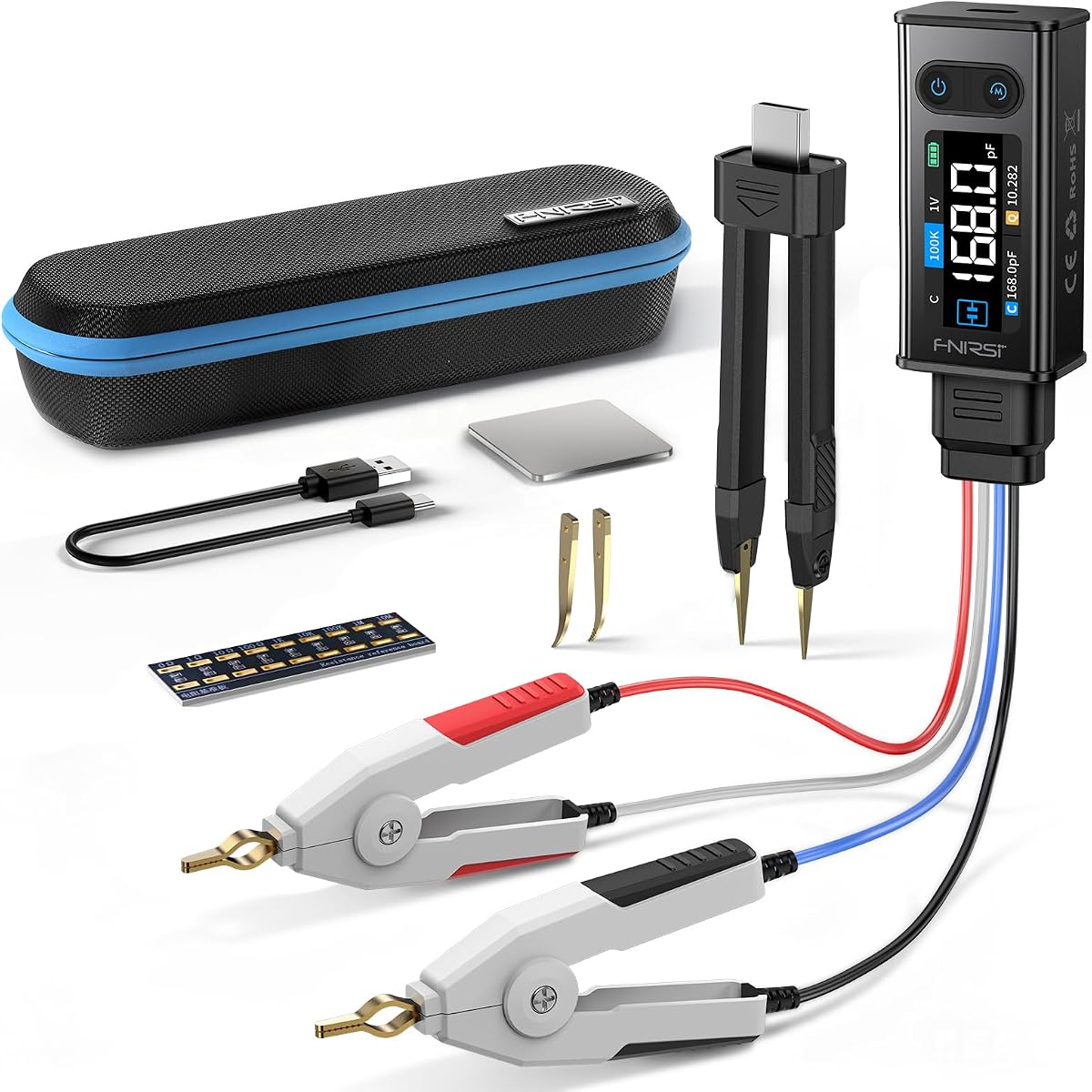


The FNIRSI LC1020E stands out as a top-tier Lcr Meter for both hobbyists and professionals. With a 4.7 rating, it offers high precision through its 19,999-count display and supports multiple frequencies up to 100kHz. Its dual parameter display allows simultaneous monitoring of primary and secondary values, making complex analysis straightforward.
We may earn a commission when you buy through this link, at no additional cost to you.
Key strengths include smart sorting and comparison modes that calculate relative errors against preset nominal values. This feature is invaluable for quality control when testing batches of components. The adjustable test voltage and internal bias settings ensure accurate readings across different component types, from small capacitors to large inductors.
While the device requires open and short calibration before use, this is standard for high-accuracy meters. Users must fully discharge components before testing to avoid inaccurate results. These trade-offs are acceptable given the level of precision and the comprehensive feature set provided at this price point.
This meter is ideal for electronics repair shops, R&D labs, and serious hobbyists who need reliable component verification. The Type-C charging and auto-off feature add to its user-friendly design. For those seeking a balance of performance and portability, the LC1020E is a highly recommended choice.
Simultaneous display of main and secondary parameters like ESR, Q, and D allows for deeper insight into component health without switching modes repeatedly.
The sorting mode helps screen components quickly by comparing them against tolerance limits, triggering sound or LED alerts when parts fall outside acceptable ranges.
We may earn a commission when you buy through this link, at no additional cost to you.
The DE-5000 Handheld LCR Meter is a robust tool for field technicians and bench users alike. It features a dual display showing up to 19999 counts for precise readings. The AUTO-LCR smart mode allows direct measurement of inductance, capacitance, and resistance without manual function selection, saving valuable time.
We may earn a commission when you buy through this link, at no additional cost to you.
Its high accuracy is supported by auto ranging for both AC impedance and DC resistance. Users can choose from multiple test frequencies including 100Hz to 100kHz to match specific component requirements. The sorting mode assists in organizing components quickly by comparing them against preset standards.
One limitation is the reliance on a 9V battery without internal data storage capabilities. While it offers great portability, users might need to manually log results. However, the included accessories like SMD tweezers and test leads ensure it is ready for immediate use upon unboxing.
This meter is best suited for users who prioritize ease of use and portability over advanced data logging. Its straightforward operation and high accuracy make it a favorite among electronics enthusiasts. For routine component checks and basic troubleshooting, the DE-5000 delivers excellent value.
Selecting the AUTO-LCR mode automatically identifies and measures the component type, streamlining the workflow for rapid testing sequences.
The package includes alligator test leads, SMD tweezers, and guard lines, ensuring compatibility with various component sizes and connection types.
We may earn a commission when you buy through this link, at no additional cost to you.
The MATRIX MCR5200 represents a high-end solution for rigorous electronic testing in laboratory environments. With 0.1% basic accuracy and a frequency range up to 200kHz, it handles everything from RF components to large inductors with precision. The 4.3-inch TFT display provides clear visualization of complex measurement data.
We may earn a commission when you buy through this link, at no additional cost to you.
Connectivity options like USB and RS232C allow seamless data transfer to PCs for documentation and analysis. Built-in comparator functions enable automated testing workflows with flexible qualified and defective alarming modes. This makes it ideal for production quality control where speed and accuracy are paramount.
While its benchtop design limits portability, it is built for stability and repeatability in fixed locations. It requires a continuous power source and is heavier than handheld units. These constraints are acceptable for lab settings where consistent environmental conditions ensure reliable testing outcomes.
Engineers and quality assurance teams will appreciate the comprehensive data saving features and high-precision computing power. The calibration tools ensure long-term stability and reduced measurement errors. For professionals needing industrial-grade testing capabilities, the MCR5200 is a superior investment.
USB Host and RS232C ports enable direct data logging to external drives or computers, streamlining reporting processes for professional audits.
Built-in comparators with flexible grading allow for immediate pass/fail sorting, essential for high-volume production line testing.
We may earn a commission when you buy through this link, at no additional cost to you.
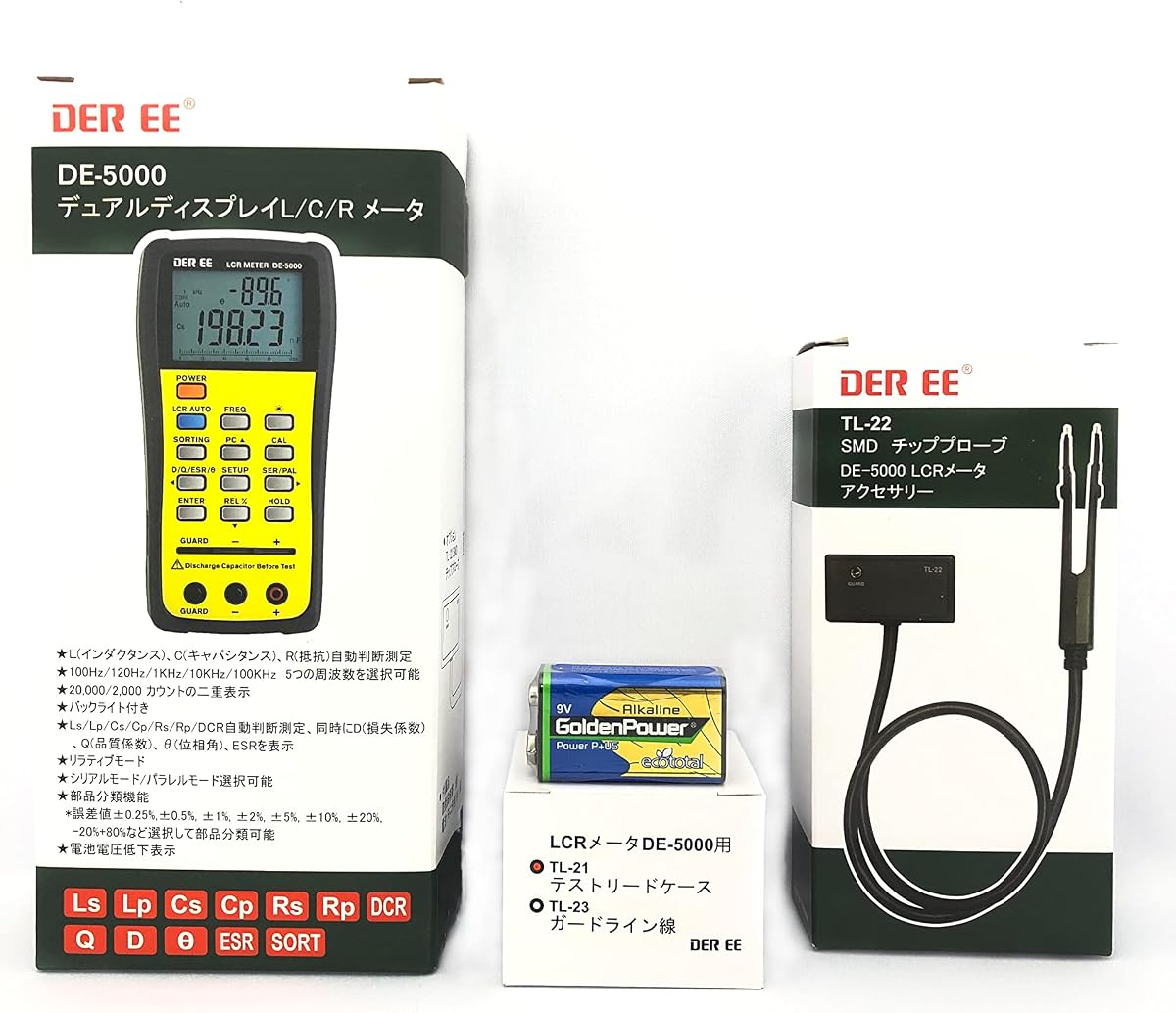
This version of the DE-5000 comes as a complete set including essential test leads and a protective case. It maintains the high accuracy and auto-ranging features of the standard model, making it a convenient package for new users. The backlit display ensures readability in low-light work environments.
We may earn a commission when you buy through this link, at no additional cost to you.
The kit includes TL-21 Alligator Test Leads and TL-22 SMD test leads, expanding its versatility for different component types. Tolerance settings allow precise verification against specific design requirements. ISO 9001 certification adds a layer of trust regarding the device's quality standards.
It lacks advanced data interfaces found in higher-end models, focusing instead on standalone usability. Users must perform manual calibration and rely on memory for records. However, its comprehensive accessory list means less need for immediate additional purchases, saving time and cost.
Ideal for technicians and hobbyists who need a reliable, self-contained Lcr Meter. The inclusion of quality accessories ensures it is ready for immediate deployment. For general repair work and component validation, this kit offers an excellent balance of features and convenience.
Receiving specialized SMD and alligator leads right out of the box minimizes setup time and ensures you can test any component immediately.
The 20,000 count backlit display allows for clear reading in dimly lit workbenches or field conditions without external lighting.
We may earn a commission when you buy through this link, at no additional cost to you.
The Proster LCR Meter is designed for entry-level users needing basic component testing capabilities. It offers specific ranges for capacitance and inductance, making it suitable for general hobbyist projects. The rotatable LCD allows comfortable viewing from different angles without repositioning the device.
We may earn a commission when you buy through this link, at no additional cost to you.
Its kit includes test leads and a storage bag, providing a complete start-up package. The data hold function helps in recording readings manually. While it lacks complex frequency adjustments, it covers the essential needs for troubleshooting simple circuits and verifying component values.
Accuracy limitations are expected at this price point, but it remains functional for non-critical testing. The lack of advanced modes means it is not ideal for high-precision engineering tasks. However, its simplicity makes it very approachable for beginners.
For students and hobbyists on a tight budget, this meter provides the necessary tools to learn about component testing. Its lightweight design and straightforward operation make it easy to carry. It serves as a great first step into dedicated electronic testing.
The rotatable LCD screen allows you to adjust the viewing angle, reducing neck strain during long periods of component testing.
Designed to be cost-effective without sacrificing basic functionality, it is perfect for educational purposes and casual electronics work.
We may earn a commission when you buy through this link, at no additional cost to you.
The FNIRSI LCR-ST2 is specifically designed to handle small SMD components easily. It features built-in tweezers for quick testing without extra tools. Its auto component identification simplifies the process, making it ideal for dense circuit boards where traditional probes might be cumbersome.
We may earn a commission when you buy through this link, at no additional cost to you.
The device includes adjustable brightness and a built-in magnet to secure it on metal work surfaces. With Type-C charging and a rechargeable battery, it offers long-term usability without frequent battery changes. The auto sorting function helps flag abnormal components quickly.
While the display is small compared to larger units, it remains readable for most users. The limited voltage options restrict some specialized testing but are sufficient for standard repairs. Its compact form factor makes it easy to keep on a workbench for instant access.
Technicians working with surface-mount technology will find this meter highly efficient. The integrated tools and rechargeable system reduce clutter and cost. For modern electronics repair involving tiny components, the LCR-ST2 provides a specialized and practical solution.
The built-in gold-plated tweezers allow precise handling and testing of tiny SMD components without needing external clips.
The rear magnet holds the unit securely on metal benches, leaving both hands free to manipulate components during testing.
We may earn a commission when you buy through this link, at no additional cost to you.
Peak Atlas LCR45 offers enhanced measurement resolution suitable for detailed impedance analysis. It allows manual or automatic frequency selection, giving users control over test conditions. Its simple menu system ensures quick setup without complicated navigation steps during critical measurement sessions.
We may earn a commission when you buy through this link, at no additional cost to you.
The high rating of 4.8 reflects its reliability and user-friendly interface. It supports both component type identification and impedance testing, making it versatile for various applications. The included warranty adds confidence in its build quality and manufacturer support.
While it lacks sorting modes, its focus is on precision and simplicity. The display is basic but sufficient for core functions. This trade-off prioritizes robust performance over complex features, appealing to engineers who prefer straightforward tools.
For users who value reliability and ease of use in impedance testing, this meter is a strong candidate. Its lightweight design makes it suitable for field work. It remains a trusted choice for those needing consistent results without unnecessary complications.
Capable of measuring down to 0.2uH and 0.2pF, it provides high resolution for detecting minor variations in component values.
Users can switch between manual and automatic frequency selection to optimize test conditions for different component types.
We may earn a commission when you buy through this link, at no additional cost to you.
The B&K Precision 879B combines universal measurement capabilities with a portable handheld design. Its backlit dual display ensures clear reading of both primary and secondary parameters. The Mini USB interface supports data transfer for record-keeping in professional environments.
We may earn a commission when you buy through this link, at no additional cost to you.
This model is designed for versatility across different component types. It includes an AC adapter for continuous operation in labs. The compact dimensions make it easy to store or carry in a technician's kit. Its dual display format is highly appreciated for comparative analysis.
The price point is higher than budget options, reflecting its deluxe status. However, the interface is older compared to modern screens. This might deter users expecting cutting-edge tech, but those valuing legacy reliability may find it acceptable.
For general lab use and field service requiring reliable universal measurements, this meter is a solid choice. Its inclusion of an AC adapter ensures no downtime during long sessions. It remains a respected brand in the industry for consistent performance.
Showing both primary and secondary parameters simultaneously allows for faster assessment of component quality without extra steps.
Its compact handheld size ensures it can be taken anywhere, providing lab-grade testing capability in the field.
We may earn a commission when you buy through this link, at no additional cost to you.
The Extech LCR200 is a dedicated passive component tester with a built-in test fixture for stability. It supports open and short calibration to eliminate stray impedance errors. Its limit settings allow quick pass/fail testing against predefined thresholds, ideal for repetitive tasks.
We may earn a commission when you buy through this link, at no additional cost to you.
With five selectable test frequencies, it covers a wide range of applications. The dual backlit display ensures clear reading in various lighting. Auto power off helps preserve battery life during idle times. It is designed for efficiency and ease of use.
While the built-in fixture limits testing for very large components, it simplifies testing for standard parts. It relies on a 9V battery which limits usage time without spares. These trade-offs are minor compared to the convenience it offers for routine checks.
Quality control technicians will appreciate the limit settings and stability. Its reputation for reliability makes it a safe investment. For testing standard passive components repeatedly, the LCR200 provides a streamlined and efficient workflow.
Configure high and low limits to get immediate pass or fail results, speeding up quality assurance on production lines.
An integrated test fixture ensures consistent contact and stable measurements, reducing errors from manual handling.
We may earn a commission when you buy through this link, at no additional cost to you.
This model offers an impressive 0.1% basic accuracy for resistance, making it a top choice for precise work. It includes three selectable test voltages to accommodate different component characteristics. The wide measurement range covers most needs from small resistors to large inductors.
We may earn a commission when you buy through this link, at no additional cost to you.
The inclusion of a diode test function adds extra utility to the standard LCR capabilities. Lifetime support and a one-year warranty demonstrate the manufacturer's confidence in the product. Its perfect rating suggests high satisfaction among users who value precision.
While specialized, it may not suit every budget. However, for applications requiring exact measurements, its features justify the investment. The smart tweezers included ensure easy handling of SMD parts. It balances precision with practical testing tools effectively.
For engineers and technicians who prioritize accuracy, this meter delivers consistent results. Its robust support network adds peace of mind. For exacting applications in research or detailed diagnostics, the Pro1-100KHz is a highly capable and trustworthy instrument.
Three selectable test voltages allow you to choose the optimal level for each component type, enhancing measurement accuracy and safety.
A dedicated lifetime support policy ensures you always have access to assistance or updates, keeping your investment valid for years.
We may earn a commission when you buy through this link, at no additional cost to you.
Selecting the right Lcr Meter depends on your specific needs, budget, and the types of components you test frequently. This guide outlines key factors to consider for a well-informed decision.
Accuracy determines how close a measurement is to the true value. For professional or production work, look for 0.1% or better accuracy to ensure reliable results. Hobbyists may find 1% or 2% sufficient for general repairs.
Different components behave differently at various frequencies. A wider range like 100Hz to 200kHz allows testing RF parts as well as standard electrolytics. Ensure the meter supports frequencies relevant to your specific applications.
Clear displays with dual parameter support improve workflow efficiency. Look for backlit screens if working in low-light environments. Simple menus and auto-ranging features reduce setup time and potential user errors.
Auto component detection helps identify whether a part is a resistor, capacitor, or inductor without manual selection. Sorting modes and limit settings are useful for quality control tasks to quickly separate good from bad components.
USB or RS232C ports enable data logging to computers for detailed analysis. For field work, standalone meters with sufficient memory may suffice. Decide if you need to archive results or simply view them live.
Handheld units run on batteries and are easy to transport. Benchtop models require AC power and offer better stability. Rechargeable batteries are convenient for field use to reduce waste and operating costs.
Regular calibration ensures long-term accuracy. Look for meters with easy open/short calibration features. Included accessories like tweezers or test leads can save additional costs and ensure immediate usability upon arrival.
Store the meter in a dry and protected environment to prevent corrosion of the test leads. Regularly check the battery levels and replace or recharge them to maintain consistent performance during critical measurements.
A standard multimeter measures resistance and sometimes basic capacitance, but it lacks the ability to measure inductance and complex impedance accurately. An Lcr Meter is specifically designed to test inductance, capacitance, and resistance with higher precision and at specific frequencies.
Most meters require an open and short calibration before use. This involves leaving the test leads open and then shorting them together to zero out stray capacitance and resistance. Follow the specific steps in your model's manual for best results.
It is generally not recommended to measure components on a live or powered circuit. The surrounding circuitry can interfere with readings. Always power off the device and discharge all energy storage components before testing to ensure accuracy and safety.
The ideal frequency depends on the capacitor type. Electrolytic capacitors are often tested at lower frequencies like 100Hz or 120Hz, while ceramic and film capacitors may require higher frequencies such as 1kHz or 10kHz to detect equivalent series resistance effectively.
Negative values usually indicate a measurement error due to incorrect calibration or lead contact issues. It can also happen if the component is damaged or out of range. Check your connections and perform calibration again to resolve this.
Yes, many Lcr Meters come with SMD tweezers designed to handle tiny surface mount components. These tweezers ensure precise contact and minimize measurement errors caused by the small size of the parts.
Inspect leads regularly for wear or broken insulation. If you notice fluctuating readings or poor contact, replace the leads. Proper maintenance ensures consistent test quality and extends the life of your equipment.
Yes, Lcr Meters are excellent for testing coils and transformers by measuring their inductance and resistance. Ensure the component is not energized and check the specific frequency requirements for the transformer type to get accurate readings.
Always verify current prices and availability as they fluctuate frequently. Investing in a quality tool ensures long-term reliability and saves time during electronics repair and testing projects.