
YCA1030 Dusk to Dawn Sensor
4.4Editor score
Hard-wired photocell design
UL Listed for safety
IP65 weather protection rating
Discover the top light sensors for home security systems that integrate motion detection with ambient light sensing to automate lighting and enhance safety
Securing your home often starts with smart lighting that responds to your presence. Light sensors for home security combine motion detection with ambient light awareness to ensure lights turn on only when needed. This automation saves energy while improving safety by eliminating dark corners where intruders could hide.
We compared ten leading products ranging from simple photocell switches to advanced wireless Zigbee and mmWave sensors. Each option was evaluated on connectivity, detection range, battery life, and ease of integration with popular smart home platforms. Our goal is to help you find the perfect fit for your specific security needs.
Every pick below highlights key specifications, pros, cons, and real-world use cases to guide your decision. We focus on reliability and features that matter most for security applications. Please note that product availability and pricing can change frequently, so verify details on the manufacturer site before purchasing.
4.4Editor score

4.4Editor score

4.4Editor score
The following table provides a side-by-side comparison of all ten products to help you quickly identify key specifications. Review the detection methods, connectivity options, and specific use cases to determine which sensor aligns best with your home security requirements and budget constraints.


The Akamatis Litos v3 stands out as a top choice for users deeply invested in Home Assistant ecosystems. Its mmWave radar technology allows it to detect stationary human presence, a feature missing in traditional PIR sensors. Combined with an integrated ambient light sensor, it enables highly nuanced automations that respond to both occupancy and lighting conditions.
We may earn a commission when you buy through this link, at no additional cost to you.
This device is particularly powerful for creating seamless automation rules. Because it can detect if a person is sitting still in a room, it prevents lights from turning off prematurely. The integrated light sensor matches human eye sensitivity closely, ensuring that lights only activate when the room is truly dark and occupied. This dual capability enhances security by ensuring outdoor or hallway lights turn on precisely when needed.
While the reliance on Home Assistant is a limitation for general consumers, it is a strength for privacy-focused users who prefer local control over cloud dependencies. The pre-flashed ESPHome firmware simplifies installation, requiring no manual flashing. However, if you do not already run Home Assistant, the setup complexity may be a barrier compared to simpler plug-and-play options.
Ideal for tech-savvy homeowners who want granular control over their security lighting, this sensor offers unmatched flexibility. It bridges the gap between simple motion detection and true presence awareness. For those willing to invest in the Home Assistant platform, the Litos v3 provides the most sophisticated lighting and security automation available today.
Unlike standard motion sensors, mmWave radar detects micro-movements like breathing, ensuring lights stay on while occupants are present even if they are sitting still.
The integrated light sensor ensures precise ambient light measurements, allowing your system to ignore artificial light and react only to true darkness.
We may earn a commission when you buy through this link, at no additional cost to you.
The YCA1030 is the quintessential budget-friendly option for homeowners who want automatic outdoor lighting without the complexity of smart home tech. This hard-wired photocell sensor replaces traditional bulbs or old sensors on existing fixtures. It turns lights on at dusk and off at dawn automatically, providing a basic but effective layer of security by ensuring your property is illuminated at night.
We may earn a commission when you buy through this link, at no additional cost to you.
What makes this sensor ideal for security on a budget is its reliability and lack of maintenance. Since it is hard-wired, there are no batteries to replace or connectivity issues to troubleshoot. The UL listing ensures it meets safety standards for electrical use, and the IP65 rating means it can withstand heavy rain and dust. It works with almost all standard bulb types including LED and CFL.
The main trade-off is the lack of smart capabilities. You cannot control it remotely or adjust sensitivity via an app. It operates purely on ambient light levels. However, for many users, this simplicity is a benefit rather than a drawback. It removes potential points of failure and works independently of your internet connection or home network.
If you have outdoor wall packs or post lights that need simple automation, this sensor is the perfect solution. It installs easily into standard outlet boxes and provides consistent performance. For those who do not need remote access or advanced automation, this sensor offers the best value for money in the market today.
Hard-wired design eliminates battery changes and ensures the sensor functions continuously without interruption or low-battery warnings.
Compatible with a wide range of voltage levels and bulb types, making it suitable for nearly any existing outdoor lighting fixture.
We may earn a commission when you buy through this link, at no additional cost to you.
The Philips Hue Outdoor Motion Sensor offers a premium experience for those already invested in the Hue ecosystem. It combines motion detection with a built-in light sensor that automatically detects dusk. This means it won't waste battery or trigger unnecessarily during the day. It integrates perfectly with Hue lights to create a cohesive security lighting system that looks professional and functions reliably.
We may earn a commission when you buy through this link, at no additional cost to you.
This sensor is designed for outdoor use with an IP44 weatherproof rating, ensuring it can handle rain and dust. The 160-degree detection angle covers a wide area, making it suitable for driveways or large patios. It supports multiple smart home platforms including Alexa, Google Assistant, and Apple HomeKit. This flexibility allows you to trigger lights or notifications across different ecosystems without compatibility issues.
The requirement for a Hue Bridge is a necessary condition for this device to function. While this adds to the initial cost, it ensures a stable connection that does not rely on Wi-Fi. Battery life is decent given the wireless nature of the device. The premium price reflects the build quality and ecosystem features that are not available in generic alternatives.
Choose this sensor if you value design and seamless integration over raw cost savings. It is ideal for homeowners who want their security lighting to look and feel like part of a unified smart home system. The combination of reliability, weather resistance, and smart features makes it a top premium choice for outdoor security.
Combines motion detection with ambient light sensing to ensure lights only turn on when there is movement and natural light is low.
Rugged construction and IP44 rating ensure consistent performance even in harsh outdoor conditions like heavy rain or snow.
We may earn a commission when you buy through this link, at no additional cost to you.
This Zigbee motion sensor is a versatile tool for security-focused automations. It pairs a traditional PIR motion sensor with a precise light sensor. This combination allows you to set rules where lights only turn on when motion is detected in low-light conditions. It is particularly useful for hallways or entryways where you want efficiency and privacy.
We may earn a commission when you buy through this link, at no additional cost to you.
The sensor features a 360-degree adjustable mount, making it easy to aim at specific zones. This is crucial for security to avoid triggering on street traffic or pets. The Zigbee protocol ensures reliable communication without clogging your Wi-Fi network. The battery is long-lasting and includes a low-battery alert so you never miss a notification due to power loss.
It is designed to work with hubs like SmartThings or Home Assistant. While this adds a layer of complexity compared to Wi-Fi devices, it offers greater stability and range. The compact size allows it to blend into your decor unobtrusively. Users who need robust local automation will appreciate the flexibility of the sensitivity settings.
For users who prioritize local control and efficiency, this sensor is an excellent choice. It delivers accurate performance without cloud dependencies. The ability to customize sensitivity levels helps reduce false alarms. It is a solid middle-ground option for those who want smart features without sacrificing reliability.
Uses light sensing to prevent lights from turning on during the day, saving energy and reducing wear on bulbs.
The adjustable ball-joint mount allows you to direct the sensor exactly where needed to avoid false triggers.
We may earn a commission when you buy through this link, at no additional cost to you.
The TP-Link Tapo T100 is designed for reliability and low maintenance. It uses a Sub-1G wireless protocol that extends battery life significantly. This allows the sensor to last up to two years on a single battery. For security applications, this means fewer interruptions and less frequent maintenance trips to check the device.
We may earn a commission when you buy through this link, at no additional cost to you.
It offers a wide detection range of up to 23 feet and a 120-degree angle. This coverage is sufficient for most indoor rooms and entryways. The Tapo Hub acts as the central brain, enabling automations even if your Wi-Fi goes down. This reliability is a key factor for home security where consistent operation is paramount.
Installation is simple with magnetic or adhesive options. You can place it on metal surfaces or drywall without tools. The sensitivity levels can be adjusted to reduce false triggers. While it lacks the advanced light sensing of some competitors, its core motion detection is robust and consistent across various environments.
This sensor is ideal for users who want long-term reliability without constant battery changes. It fits well into the Tapo ecosystem for those who prefer a unified app experience. The combination of battery life and connectivity reliability makes it a practical choice for general security monitoring.
Sub-1G protocol optimizes power usage to deliver up to two years of continuous operation on one battery.
Enables local automations that work even if your internet connection is temporarily unavailable or unstable.
We may earn a commission when you buy through this link, at no additional cost to you.
The Philips Hue Secure Smart Contact Sensor is designed specifically for doors and windows. While not a motion sensor, it serves a critical security function by detecting when a door is opened. It integrates with Hue lights to trigger a light alarm when an entry point is accessed. This visual deterrent can be effective in scaring off intruders.
We may earn a commission when you buy through this link, at no additional cost to you.
It sends real-time alerts to your mobile device when opened. The tamper detection feature notifies you if someone tries to remove the sensor from the frame. This adds a layer of physical security that simple motion detectors cannot provide. The sensor is small and white, blending seamlessly into most interior doorframes.
Reliability is high due to the connection with the Hue Bridge. It does not depend on Wi-Fi directly, which reduces lag. The setup is easy using the adhesive backing included in the box. For a complete security setup, combining this with motion sensors offers comprehensive coverage of both movement and entry points.
This is the best option for monitoring specific entry points rather than general movement. It works well in conjunction with other Hue devices for a full system. If you already own Hue lights, this sensor expands your security capabilities significantly without needing a separate security platform.
Specifically designed to detect door or window openings, providing targeted alerts on unauthorized access.
Alerts you if the sensor itself is removed or tampered with, adding physical security to the sensor device.
We may earn a commission when you buy through this link, at no additional cost to you.
This 2-pack of photocell sensors offers excellent value for homeowners with multiple outdoor light fixtures. Like the single YCA1030, these are hard-wired switches that detect ambient light to turn lights on and off. Buying a two-pack allows you to cover your front and back yard simultaneously at a lower cost per unit than single purchases.
We may earn a commission when you buy through this link, at no additional cost to you.
The sensors support multiple voltage inputs, making them compatible with various electrical standards globally. This flexibility is useful for different regions or older wiring. The swivel mount allows for precise aiming to avoid triggering from nearby streetlights. The IP65 rating ensures durability against rain and dust for long-term outdoor use.
Installation is straightforward with a threaded design for knockout holes. It includes surge protection to safeguard your lights from power spikes. Since there are no batteries or Wi-Fi to manage, maintenance is minimal. This pack is ideal for property owners who need reliable automated lighting across multiple zones.
For those seeking a low-cost solution for large properties, this set provides all the necessary features. It ensures your entire property is illuminated at night without manual intervention. The robust build quality and UL listing make it a trustworthy choice for basic but critical security lighting.
Accommodates a range of voltage inputs ensuring compatibility with different regional electrical standards.
Built-in surge protection safeguards connected lighting fixtures from voltage spikes and electrical damage.
We may earn a commission when you buy through this link, at no additional cost to you.
The Ring Motion Detector is designed for simplicity and direct security alerts. It connects over Amazon Sidewalk rather than requiring a dedicated base station. This makes it easy to set up without extra hardware. It is ideal for those who want instant intruder alerts on their phone when motion is detected in a specific room.
We may earn a commission when you buy through this link, at no additional cost to you.
It features a pet-friendly mode that ignores small pets under 50 lbs. This reduces false alarms significantly in homes with animals. The 90-degree field of view covers standard room layouts well. While it lacks advanced lighting automation, its primary strength is in security alerts and monitoring movement in key areas.
The device is compact and mounts easily on walls. Battery life is decent for a simple PIR sensor. Because it relies on Sidewalk, it benefits from the wider network coverage. However, this requires your Ring account and some basic setup steps to ensure connection stability.
Choose this detector if you want straightforward security monitoring without a complex hub. It provides peace of mind with immediate notifications. For users within the Amazon ecosystem, this offers an accessible entry point into home security monitoring.
Adjustable settings allow you to ignore motion from small pets to prevent unnecessary security alerts.
Leverages the Amazon Sidewalk network to maintain connection without a dedicated base station or complex router setup.
We may earn a commission when you buy through this link, at no additional cost to you.
The YoLink Motion Sensor utilizes LoRa technology to offer an extreme range of over 2000 feet. This makes it superior for large properties or multi-story buildings where other sensors fail. It connects directly to a YoLink Hub rather than your home Wi-Fi. This independence ensures that even if your internet goes down, the security system keeps working.
We may earn a commission when you buy through this link, at no additional cost to you.
You can pair the sensor directly with sirens or lights for device-to-device action. This local control is crucial for security when internet access is interrupted. It supports multiple notification types including email and SMS. The battery life is excellent, and the installation is magnetic for quick placement on metal surfaces.
The setup is plug-and-play via a QR code scan. Adding devices is fast and simple. While it works best within its ecosystem, the range and reliability are unmatched. It is a robust choice for rural properties or large estates where standard Wi-Fi cannot reach every corner.
For large properties or those without strong Wi-Fi, this sensor provides reliable coverage. It ensures alerts are received regardless of internet status. The range and simplicity make it a standout option for remote or large home security.
Uses Long Range technology to communicate over vast distances without losing signal strength.
Operates on a dedicated network separate from Wi-Fi ensuring continued security functionality during internet outages.
We may earn a commission when you buy through this link, at no additional cost to you.
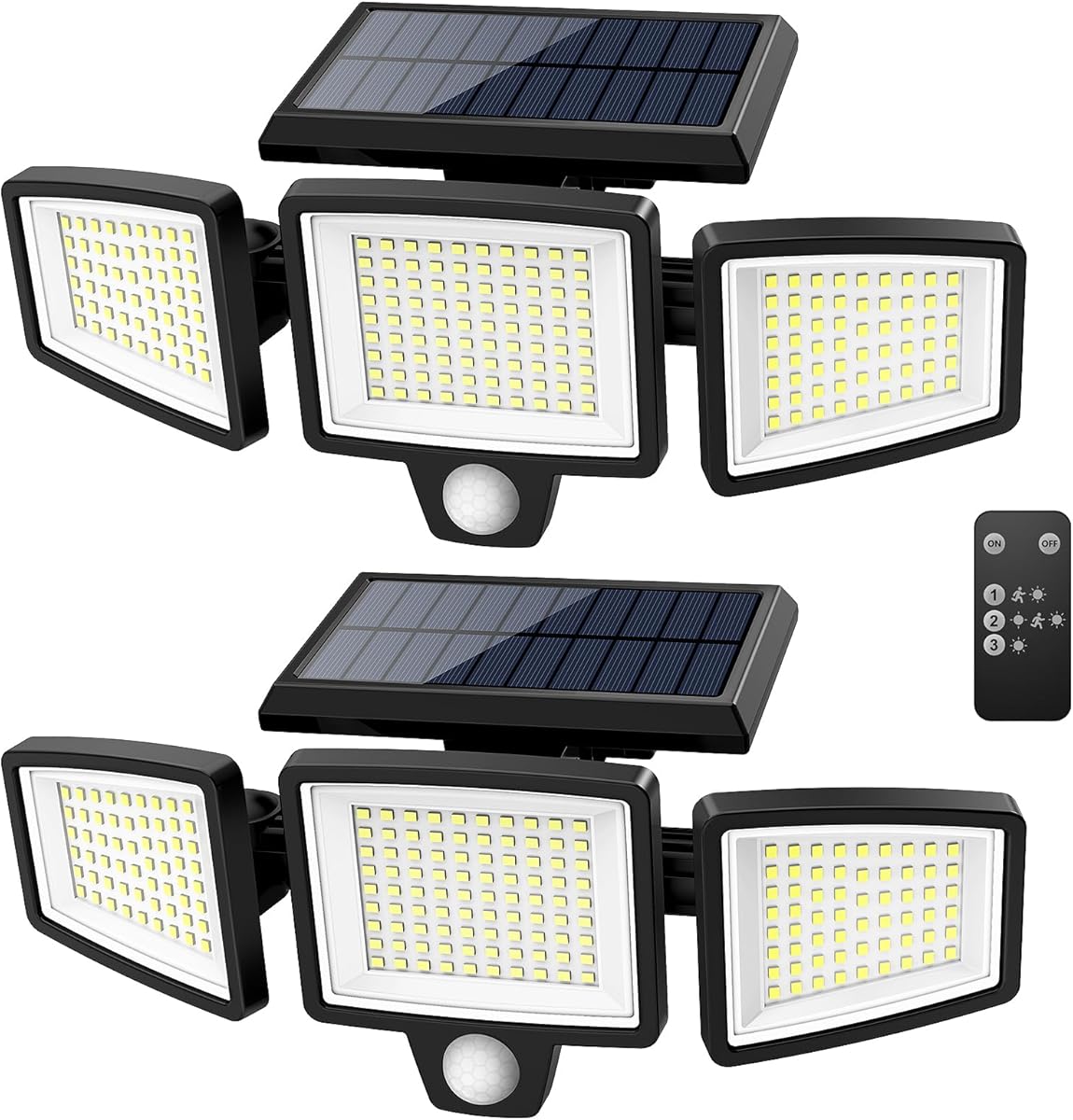
This solar light kit combines a security sensor with a powerful floodlight. It charges during the day via a built-in solar panel and turns on at night when motion is detected. The 2500 lumens output provides intense illumination that can deter intruders effectively. It is ideal for areas where running wires is difficult or impossible.
We may earn a commission when you buy through this link, at no additional cost to you.
The adjustable heads allow you to direct light exactly where needed. With three modes, you can choose between bright light or dim sensor modes. It is waterproof and durable enough for harsh weather. The remote control offers convenient manual adjustment. This all-in-one design solves both lighting and security needs at once.
The main limitation is dependency on sunlight. On cloudy days, the battery might not charge fully. However, for most climates, it provides reliable performance. The wireless nature simplifies installation drastically. You only need screws to mount it on a wall. It is a cost-effective solution for outdoor security lighting.
Choose this for driveways or backyards where wiring is challenging. The brightness and solar efficiency offer great value. It is a practical and robust choice for those needing high-intensity motion lighting without electrical work.
Solar powered design eliminates the need for wiring and allows for flexible placement anywhere there is sunlight.
Massive LED count ensures that security lighting is bright enough to deter intruders and illuminate dark areas.
We may earn a commission when you buy through this link, at no additional cost to you.
Choosing the right light sensor requires balancing features like connectivity, detection type, and power source to ensure reliable security performance.
Connectivity is the backbone of smart sensors. Wi-Fi devices offer direct control but drain battery and clog networks. Zigbee and Z-Wave require a hub but are more stable and save battery. LoRa and Sub-1G offer extreme range for large properties but need specific hubs.
Select a protocol that fits your existing smart home hub. If you use Alexa or Google, ensure the device is compatible. For privacy, local options like Zigbee are better.
Standard PIR sensors detect heat changes from motion. mmWave sensors detect micro-movements like breathing. For security, mmWave is better because it does not turn lights off when you are sitting still. PIR is cheaper but may cause lights to flicker off in stationary areas.
Prioritize mmWave if you want lights to stay on in rooms where you sit still. PIR is fine for hallways or entryways where movement is constant.
A dedicated light sensor ensures your system only activates at night. Without this, lights might trigger during the day due to sun reflection or passing cars. Look for sensors with Lux ranges like 0-1000 to ensure accurate detection of ambient darkness.
Choose a sensor with integrated light detection to avoid wasting energy. This feature is critical for security to ensure lights are off when not needed.
Outdoor sensors must survive rain and dust. Look for an IP65 or IP44 rating. IP65 means full dust protection and low-pressure water jets. IP44 means protection against splashing water. For heavy rain areas, aim for higher IP ratings.
Always check the IP rating before buying for outdoor use. A lower rating will lead to premature failure of the device in wet conditions.
Wireless sensors rely on batteries. Some last 1 year, others 2 years. Long battery life reduces maintenance. If you use a hub, the sensor usually uses less power than direct Wi-Fi devices. Consider replaceable CR2450 batteries for easy swapping.
Prioritize models with replaceable batteries. Avoid built-in batteries that require complex charging or replacement of the whole unit.
Ensure the sensor covers the area you need. PIR typically covers 90 to 120 degrees. mmWave covers wider ranges. If you have a large room or driveway, multiple sensors might be better. Check the detection distance to ensure no blind spots.
Map your entry points before buying. Ensure the sensor range matches the distance from the door to the light.
Many sensors require a hub. Zigbee needs a bridge or hub. Tapo needs a Tapo Hub. Ensure you already have or plan to buy the right hub. Some sensors like Ring or YoLink have their own ecosystems.
Check what hub is required before purchasing. Buying a sensor without the hub will leave it unusable.
Adjustable sensitivity reduces false alarms. Pets or wind can trigger cheap sensors. Good models allow you to set sensitivity levels or exclude small movements.
Always choose a sensor with adjustable sensitivity to prevent unwanted alerts from environmental factors or pets.
Place sensors at entry points to avoid false triggers. Avoid aiming directly at the sun or streetlights. Install the sensor at about 6 to 7 feet high for optimal motion detection. Ensure it has a clear view of the entry area.
Test the sensor after installation. Walk into the room to ensure it triggers. Adjust the sensitivity settings if it triggers on curtains or pets. Use the app to check battery levels regularly.
Clean the sensor lens occasionally with a soft cloth. Dust and dirt can block light or motion detection. Check the battery level in the app every few months to prevent sudden power loss.
Most advanced smart sensors require a hub to connect securely. Some Wi-Fi devices connect directly, but they use more power. Simple photocells work without a hub but lack smart features.
In the app, set the light threshold to your desired Lux level. If the sensor has automatic dusk-to-dawn, just enable it. For manual control, set a rule that triggers when light levels drop below a specific number.
Many sensors have IP ratings like IP65 or IP44 which make them water-resistant. Always check the product details for specific water protection levels before using them outdoors.
Yes, many motion sensors work indoors too. They can turn on lights in hallways or closets when you enter. Ensure they are compatible with your indoor smart home system.
Batteries typically last 1 to 2 years depending on usage. Sensors with Wi-Fi may drain faster. Look for models with replaceable CR2450 batteries for long life.
Check the battery level first. Ensure the hub is online and the sensor is connected. Reset the device if needed and reinstall it according to the manual instructions.
Yes, most hubs allow multiple sensors. You can set up rules to link sensors together to trigger lights in different rooms when motion is detected in one zone.
Most major sensors work with Alexa and Google Assistant. Check the product page for specific compatibility. Some require a skill or bridge to enable full integration.
We have explored the best options for light sensors for home security ranging from simple photocells to advanced mmWave devices. Each option offers unique benefits depending on your need for automation or budget.
Prioritize connectivity and detection technology when making your choice. Ensure the sensor fits your existing ecosystem to avoid compatibility issues. A reliable sensor ensures you never miss a critical alert.
Always verify the current availability and prices before purchasing. Security needs change, so choose a solution that grows with your home. With the right sensor, you can automate your lighting and enhance your home security effortlessly.