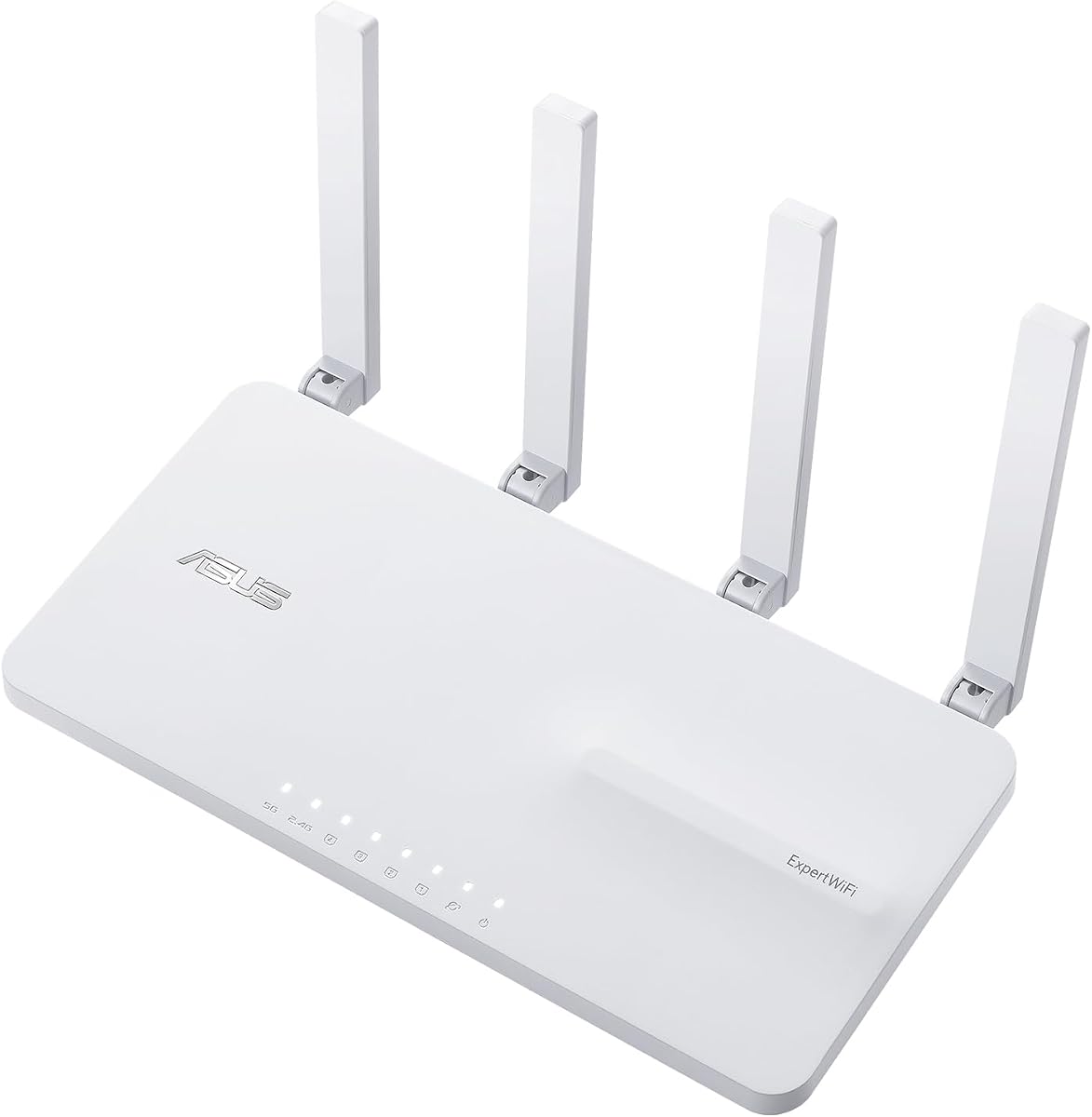
ASUS ExpertWiFi EBR63 AX3000 WiFi 6 Business Router
4.2Editor score
Free Commercial Grade Security
Guest Portal Customization
Remote Management App
Compare the top 10 commercial wireless routers for small and mid businesses. We review speed, security, and manageability to help you find the right networking
Commercial wireless routers are the backbone of modern business operations, ensuring reliable connectivity for employees and customers. A good router balances speed, security, and scalability to meet growing demands without constant upgrades or downtime.
We evaluated ten leading models based on throughput, security protocols, management tools, and real-world performance. Each product was assessed for its ability to handle dense device environments, support VLANs, and maintain stable connections under load.
Every pick highlights key strengths and limitations to help you match hardware to your specific workspace needs. Prices and availability may change over time, so verify current terms before finalizing your business network infrastructure investment.
4.2Editor score
4.2Editor score

4.6Editor score
This comparison table outlines the core specifications and standout features of each selected commercial router to simplify your decision process.




The ASUS ExpertWiFi EBR63 AX3000 is a powerful entry point for small businesses needing reliable connectivity. With a 4.2 rating, it stands out for balancing performance and user-friendly management tools.
We may earn a commission when you buy through this link, at no additional cost to you.
Its standout quality is the ability to create up to five SSIDs for different usage scenarios. You can isolate guest traffic from internal staff data to enhance security. The Custom Guest Portal feature lets you brand your WiFi login page to fit your business style.
A major advantage is the free commercial-grade security subscription. You get AiProtection Pro to block malicious sites and secure your network without ongoing fees. The USB port supports backup WAN connectivity via mobile hotspot to maintain uptime if your primary line fails.
This router is best for small offices or retail shops needing easy remote management. The ExpertWiFi app simplifies setup and maintenance. While advanced VLAN features are limited, the included SDN and mesh scalability make it a practical choice for growing networks.
Branding guest portals improves customer experience and allows controlled access to internal systems when needed.
Using a USB mobile hotspot as backup WAN ensures your business stays online even during primary outages.
We may earn a commission when you buy through this link, at no additional cost to you.
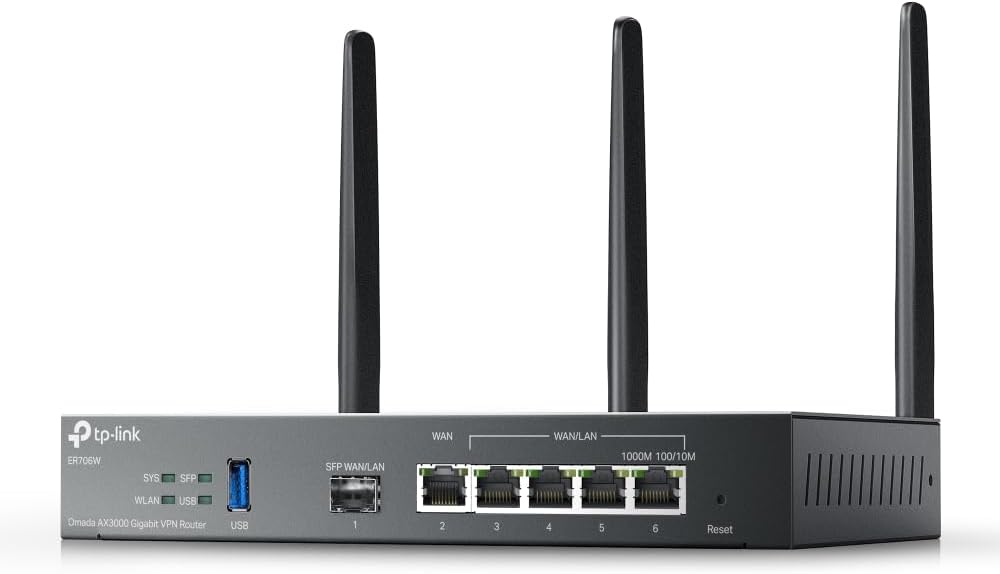
The Omada ER706W is a robust router built for businesses needing reliable VPN and multi-WAN connectivity. It delivers solid AX3000 WiFi 6 speeds with a flexible port configuration suitable for wired and wireless setups.
We may earn a commission when you buy through this link, at no additional cost to you.
Its main strength is the extensive VPN support including SSL IPSec GRE WireGuard and more. You can securely connect remote employees or branch offices. Load balancing across up to five WAN ports optimizes bandwidth usage from multiple internet providers.
The 2402 Mbps on 5GHz ensures fast wireless speeds for client devices. It integrates seamlessly with Omada SDN for centralized management across access points. This approach simplifies network administration for multi-site deployments.
This model fits IT managers prioritizing security and bandwidth management over consumer features. Setup requires an Omada controller but offers professional control. It is an ideal budget-friendly gateway for small to mid-sized offices needing enterprise routing capabilities.
Support for multiple protocols ensures secure remote access for staff regardless of their location or ISP.
Load balancing distributes traffic across internet connections to prevent bottlenecks during peak usage times.
We may earn a commission when you buy through this link, at no additional cost to you.
The Ruckus R750 is a high-performance indoor access point designed for environments with heavy device concentration. While not a standalone router, it excels at delivering stable Wi-Fi 6 connectivity to many simultaneous users.
We may earn a commission when you buy through this link, at no additional cost to you.
Its focus on ultra-dense scenarios makes it perfect for conference centers or auditoriums. The part number 901-R750-US00 identifies the standard indoor variant. It leverages advanced signal processing to maintain performance even when dozens of devices connect.
Unlike consumer routers, this device requires integration with a separate controller or gateway. This allows centralized management across many units. The design prioritizes coverage and reliability over standalone ease of use.
IT professionals seeking enterprise-grade density should consider this unit. It pairs well with Ruckus controllers for seamless roaming. While it lacks routing features, its raw performance in crowded spaces justifies its role in professional network architectures.
Optimized for crowded spaces to maintain consistent speeds without signal degradation from interference.
We may earn a commission when you buy through this link, at no additional cost to you.
The Ruckus R670 Unleashed is a premium indoor access point delivering exceptional end-user experiences through Wi-Fi 7. It stands out with a combined data rate of 9.34 Gbps and support for high-density classrooms or meeting rooms.
We may earn a commission when you buy through this link, at no additional cost to you.
Its BeamFlex+ adaptive antenna technology maximizes signal coverage and throughput without physical adjustments. The device features 6 spatial streams allowing more simultaneous connections. You can also unify Wi-Fi and non-Wi-Fi technologies like Zigbee via built-in BLE.
The 5 GbE port eliminates bottlenecks when connecting to multi-gigabit switches. Security is enhanced with WPA3 and DPSK for dynamic passphrase management. Management options include physical or virtual appliances for quick provisioning.
This unit is ideal for forward-thinking enterprises planning for future wireless standards. It handles high bandwidth applications well. While costly, the capacity and smart antenna features make it a top choice for premium professional deployments.
BeamFlex+ optimizes signal paths automatically to improve speed and reduce errors for every connected device.
Integrated Zigbee and BLE support allow IoT devices to operate on a unified wireless network platform.
We may earn a commission when you buy through this link, at no additional cost to you.
The NETGEAR Orbi 970 Series brings WiFi 7 technology to business environments needing massive throughput. This 3-pack mesh system offers seamless coverage across huge areas without dead zones. It supports up to 200 devices on a single network.
We may earn a commission when you buy through this link, at no additional cost to you.
Its standout feature is the dedicated Quad-Band backhaul ensuring satellites do not slow down client speeds. You get 27 Gbps total speeds which are 2.4 times faster than WiFi 6. The router includes a 10 Gig internet port for future-proof connectivity.
Setup is managed via the Orbi app which guides you step-by-step. The system works with most cable or fiber ISPs. Wired LAN ports on router and satellites deliver ultra-fast connections for critical devices like NAS or servers.
This solution suits large offices or multi-story buildings needing whole-home coverage. While expensive, the speed and reliability support high-end applications. The easy expansion options let you add satellites as your needs grow over time.
Reserving a specific band for satellite traffic keeps user speeds consistent even when nodes communicate.
10 Gigabit ports on both router and units allow ultra-fast wired backbones for gaming or data servers.
We may earn a commission when you buy through this link, at no additional cost to you.
The Omada EAP650 is a high-value wireless access point offering true Wi-Fi 6 speeds up to 2976 Mbps. It features a free cloud management service eliminating the need for hardware controllers. This makes it affordable for small offices.
We may earn a commission when you buy through this link, at no additional cost to you.
Its ultra-slim design blends into modern offices or cafes while providing powerful performance. You can manage devices remotely using the Omada app or SDN controllers. It supports PoE Plus for flexible installation without nearby power outlets.
Features like Beamforming and Airtime Fairness optimize connection reliability for multiple users. The unit includes a 5-year warranty and support during business hours. Mesh and seamless roaming work when integrated with controllers.
This access point is ideal for businesses needing centralized control without heavy IT overhead. The free cloud management reduces costs significantly. For reliable wireless coverage in low to mid-density areas, this model offers excellent value.
No additional fees for cloud management allow easy remote setup and maintenance from any location.
Support for 802.3at PoE Plus or DC adapter simplifies mounting in ceilings or walls without outlets.
We may earn a commission when you buy through this link, at no additional cost to you.
The Ubiquiti U6+ delivers reliable wireless performance with 3 Gbit/s transfer speeds and Gigabit Ethernet connectivity. It supports IEEE 802.11ax ensuring trouble-free connections for business networks. This unit is designed for professional environments.
We may earn a commission when you buy through this link, at no additional cost to you.
Its wall-mountable form factor ensures comfortable usage and easy installation in offices. Data encryption protects valuable information from unauthorized access. PoE+ support means you can receive both power and data through a single cable.
It integrates into Ubiquiti ecosystems for seamless management. While basic, the high efficiency and standard compliance make it a solid choice for many businesses. Setup is straightforward with proper controller configuration.
This access point suits organizations prioritizing reliability and encryption. It handles general business loads well. For simple yet effective wireless expansion, the U6+ offers good performance with standard management capabilities.
PoE+ allows single-cable installation reducing wiring complexity in office walls or ceilings.
We may earn a commission when you buy through this link, at no additional cost to you.
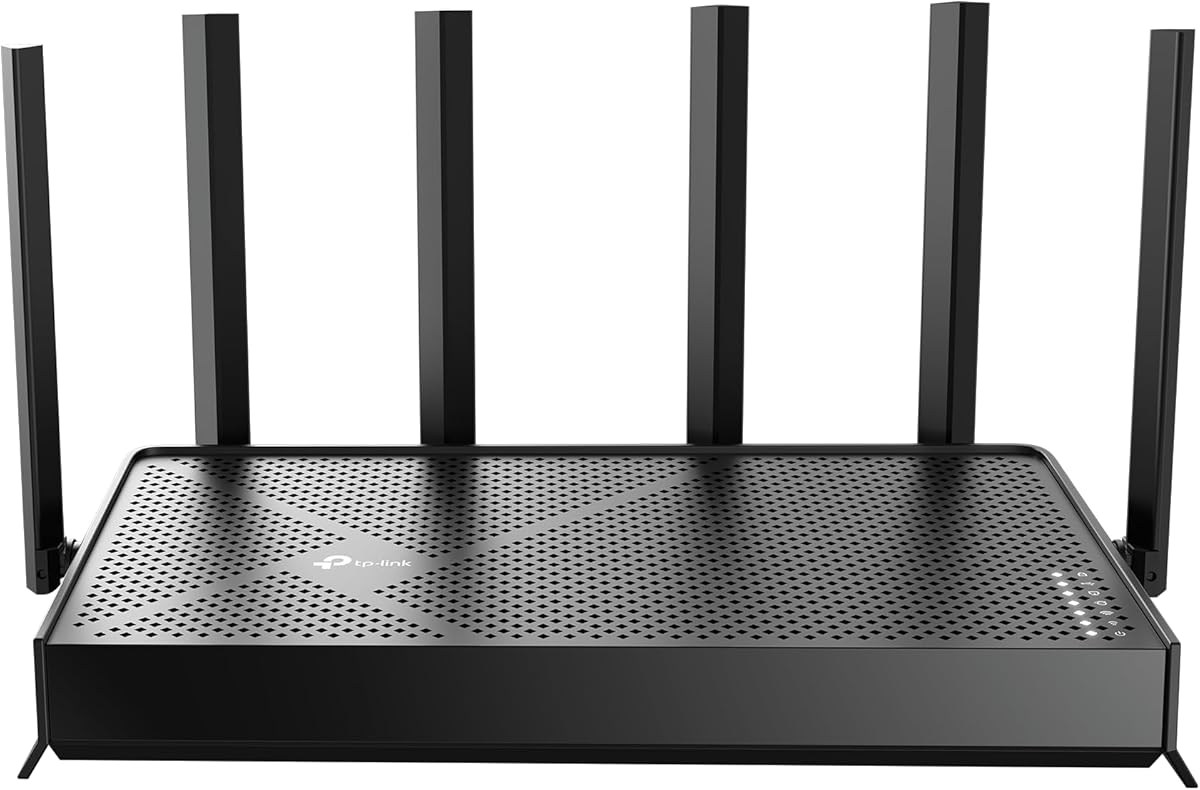
The TP-Link BE6500 is a WiFi 7 router featuring Multi-Link Operation for faster speeds and reliability. With 6.5 Gbps total bandwidth, it supports AR and gaming applications. It comes with a 2.5 Gbps WAN/LAN port for multi-gig modems.
We may earn a commission when you buy through this link, at no additional cost to you.
Its Cybersecurity commitment includes Secure-by-Design pledges ensuring built-in protection. You can set it up easily with the Tether App. The router supports VPN clients and servers without needing extra software on devices.
While not fully compatible with all mesh systems, it works with EasyMesh routers for expansion. The design focuses on throughput and security compliance. It supports up to 90 devices with 2400 sq ft coverage.
This router is great for tech-forward businesses planning for higher internet speeds. The MLO technology reduces latency significantly. For secure and fast home office setups, this model offers robust modern networking features.
Transferring data across bands simultaneously increases throughput and reliability for demanding applications.
Secure-by-Design pledges ensure the device meets strict US agency security requirements by default.
We may earn a commission when you buy through this link, at no additional cost to you.
The NETGEAR Nighthawk WiFi 7 router delivers up to 9.3 Gbps speeds across three bands. It keeps up with growing connected homes supporting streaming and smart devices. The setup via the Nighthawk app is straightforward for quick deployment.
We may earn a commission when you buy through this link, at no additional cost to you.
Its dedicated 6 GHz band provides a fast lane for high-demand devices. The router supports existing cable or fiber ISPs. You can manage networks remotely including guest networks and speed tests directly from your phone.
With 2.5 Gig WAN and LAN ports, it unlocks multi-gig internet plans. Security features are enabled out of the box to protect data. This unit works with most modems without requiring coax cables.
This router suits businesses needing high speeds for video and cloud apps. The multi-gig ready wired connections support NAS drives too. For fast wireless performance and easy management, this model offers reliable modern connectivity.
Dedicated bands ensure fastest devices get their own lane preventing slowdowns for others.
2.5 Gig ports allow wired connections to match high-speed internet plans for critical workstations.
We may earn a commission when you buy through this link, at no additional cost to you.
The ASUS RT-BE88U is a powerhouse WiFi 7 router with two 10G ports for extreme wired capacity. It reaches 7200 Mbps throughput using Multi-Link Operation. The built-in quad-core CPU handles demanding network applications smoothly.
We may earn a commission when you buy through this link, at no additional cost to you.
Its versatile WAN configuration includes a USB port ready for 4G LTE tethering. You can establish up to five SSIDs with Guest Network Pro. This helps manage IoT devices and parental controls effectively.
AiProtection Pro powered by Trend Micro provides commercial-grade security including site-to-site VPN. AiMesh compatibility ensures seamless whole-home connectivity. The 10G SFP+ port bolsters wired capacity up to 34G.
This router is ideal for power users and businesses needing maximum wired and wireless throughput. The security and mesh options add significant value. For high-performance needs requiring 10G wired speeds, this model stands out.
Dual 10G ports enable massive wired data transfer rates for file servers and backups.
Trend Micro powered AiProtection Pro offers scanning and site blocking to prevent threats.
We may earn a commission when you buy through this link, at no additional cost to you.
Choosing the right commercial router requires balancing speed, security, and management needs to ensure your business network runs smoothly.
Look for WiFi 6 or WiFi 7 models to support modern high-speed devices. Higher throughput ensures multiple staff members can work without latency during busy hours.
Prioritize routers with 2.5 Gig or 10 Gig ports if you need fast wired connections for servers or backups.
Ensure the router supports WPA3 encryption and includes built-in threat protection like IPS or firewalls. Many business routers offer free subscriptions for advanced security software.
Check for VPN capabilities to allow secure remote access for employees working outside the office.
Cloud-based management is often preferred for small businesses to control settings without dedicated hardware controllers. Apps should allow remote updates and device monitoring.
Ease of setup and guest network customization can save IT time and improve customer experience.
Select models that support mesh technology to expand coverage as your office grows. Seamless roaming ensures devices switch access points without dropping connections.
Compatible systems let you add more units easily without replacing the entire network infrastructure.
Custom portals and SSID separation allow you to isolate guest traffic for better security. This keeps internal data safe while providing internet access to visitors.
Branding guest login pages can enhance professionalism and control usage limits.
Count the available Ethernet ports to ensure you can connect all wired devices like printers and computers. SFP slots are useful for fiber connections in larger setups.
Multiple WAN ports support load balancing which helps optimize internet performance across providers.
Check the warranty length and availability of technical support to resolve issues quickly. Five-year warranties often indicate higher reliability for business investments.
Regular firmware updates ensure your router stays secure against new vulnerabilities over time.
Balance upfront costs with ongoing fees such as subscription-based security or cloud services. Sometimes a higher initial cost saves money in the long run.
Compare features against specific needs to avoid paying for capabilities your business won't use.
Start by connecting the router to your modem using an Ethernet cable. Place it centrally to maximize coverage and ensure vents are clear for airflow.
Use the vendor's app to configure settings and change default passwords immediately for security. Update firmware regularly to patch vulnerabilities and improve performance.
Monitor connected devices and reboot the router if speeds drop unexpectedly. Keep the area around the unit dust-free to prevent overheating issues.
Commercial routers support more simultaneous devices and offer advanced security like VLANs and guest portals. They prioritize uptime and centralized management for business environments.
Some require controllers for management while others offer cloud or standalone modes. Check if the model supports free cloud management to simplify setup.
Modern WiFi 6 routers typically handle over 100 devices effectively. Look for models with load balancing to distribute traffic evenly.
WiFi 7 offers faster speeds and lower latency for future needs. If your budget allows and you have high-bandwidth tasks, it is a good investment.
Yes, many business routers work for home offices needing extra security. Just ensure you need the management features before buying one.
Look for WPA3 encryption firewall protection and subscription services like AiProtection. These block threats and secure remote access securely.
Use mesh-compatible routers or add access points with roaming support. This ensures signal strength remains consistent throughout the workspace.
Yes, it keeps guest traffic separate from internal data for better security. Custom portals allow branding while controlling access limits.
We highlighted ten top-rated options including the ASUS ExpertWiFi EBR63 and the Ruckus R670 for premium needs. Each delivers unique strengths in speed security or ease of management for business workflows.
Prioritize factors like scalability and security features based on your staff size and data requirements. Choosing the right router ensures reliable connectivity for your daily operations.
Always verify current pricing and availability on the official links since terms can change. Investing in quality networking hardware supports your business growth effectively.