
TrueRC X-AIR 5.8GHz MK II Antenna
5.0Editor score
High gain for long range
Durable compact design
Secure knurled connectors
This guide compares ten top circular polarized antennas for FPV drones, FM broadcasting, and UWB systems to help you choose the right model.
Circular polarized antennas are essential for reliable signal transmission in many wireless applications. They reduce interference and improve range by maintaining signal quality even when orientation changes. Whether you fly drones or run radio stations, the right antenna makes a difference.
We evaluated ten leading models based on performance, durability, and compatibility with popular devices. Our analysis covers frequency ranges, gain ratings, connector types, and real-world suitability for different use cases. Each product brings unique strengths for specific technical needs.
Every selection shows key features, pros, cons, and expert insights to guide your decision. Keep in mind that availability and pricing vary by region and retailer. Check current stock before ordering to ensure you get the best value for your setup.
5.0Editor score
5.0Editor score
4.3Editor score
The following table offers a side-by-side overview of each model's core specifications and intended applications to help you narrow down your choice quickly.


The CP200 stands out as a robust solution for FM broadcasting needs. With a 4.3 star rating it delivers reliable performance for transmitters requiring high power capacity. Its circular polarization design ensures signal penetration even in dense urban environments.
We may earn a commission when you buy through this link, at no additional cost to you.
Constructed from heavy-duty aluminum alloy the antenna withstands harsh weather conditions effortlessly. The engraved frequency values allow precise tuning across the 88-108MHz band. It supports up to 350W input power protecting your transmitter from overheating during long broadcasts.
While it is specialized for FM use the antenna provides excellent clarity and coverage. The straightforward installation process gets your station on air quickly. Keep in mind it is not suitable for other frequency bands like 5.8GHz drone links.
Buyers focused on radio transmission will find this antenna dependable and efficient. Its weatherproof construction guarantees long service life. For professional broadcast setups the CP200 offers a solid balance of power protection and signal quality.
Dual-polarization technology ensures both vertical and horizontal signals reach receivers effectively.
Waterproof design and aluminum alloy construction protect against rain snow and temperature extremes.
We may earn a commission when you buy through this link, at no additional cost to you.
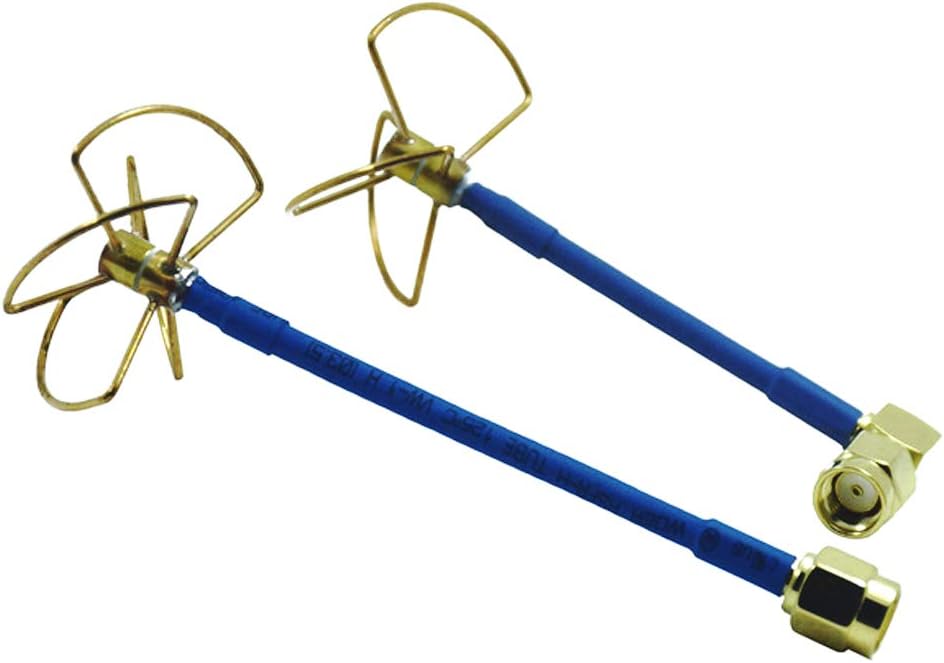
The Anbee set offers an accessible entry point for FPV pilots needing circular polarization. It holds a 4.3 star rating and includes two antennas for both transmitter and receiver. The clover leaf design provides omni-directional coverage during flight maneuvers.
We may earn a commission when you buy through this link, at no additional cost to you.
Designed specifically for 5.8GHz systems these antennas minimize interference from multipath signals. They work well with RC cars racing drones and multicopters. The RP-SMA female connector fits standard FPV setups without adapters.
While the build is lightweight and simple it fulfills basic range needs effectively. Precision manufacturing ensures each antenna meets 3dBi gain standards. For beginners or budget builds this set delivers solid value without compromising core function.
Pilots wanting a cost-effective pair should consider this bundle for daily practice. It handles typical racing environments well. The dual pack ensures you always have a spare ready for quick swaps or backup use.
Circular polarization reduces static and signal loss common in traditional linear antennas.
Fits most standard 5.8GHz FPV gear including goggles and video transmitters.
We may earn a commission when you buy through this link, at no additional cost to you.
The JeeFly antenna delivers strong 11dBi gain for extended range on FPV flights. Although rated N/A its specs target aggressive racing and cinematic uses. It works with popular goggles like Fat Shark and EV200D ensuring broad compatibility.
We may earn a commission when you buy through this link, at no additional cost to you.
Its RHCP signal optimization cuts multipath interference in crowded race tracks. The beam angle balances near and far field performance for stable video. Construction uses military-grade Teflon to resist temperature and corrosion extremes.
The ultra-light 20.7g form factor prevents strain on goggle mounts. Easy installation allows quick angle adjustments for optimal signal. However directional gain means it requires careful aiming compared to omni antennas.
Pilots prioritizing long range and clear video will appreciate this high gain patch. It suits freestyle builds needing reliable transmission. Just ensure you align it properly during flight setup.
11dBi high gain supports stable transmission during long-range and cinematic flights.
Teflon PCB construction ensures reliability in varying weather and temperature conditions.
We may earn a commission when you buy through this link, at no additional cost to you.
This triple feed patch antenna offers high accuracy and good axial ratio for 5.8GHz systems. With 4.3 stars users report improved video clarity and range. It supports both LHCP and RHCP configurations for flexible setup.
We may earn a commission when you buy through this link, at no additional cost to you.
The included 50ohm SMA load terminator ensures maximum performance on unused ports. It works well with goggles like Eachine EV800D and VR006. Its directional nature improves range when pointed at the drone.
Installation requires attention to orientation for best signal. The coax and SMA connector provided make integration straightforward. Users appreciate the versatility in polarization tuning for different environments.
For pilots seeking a directional upgrade with high efficiency this antenna performs well. It balances gain and stability effectively. Just remember to use the terminator and align correctly for optimal results.
Switch between LHCP and RHCP to match your goggles or video transmitter settings.
Dummy load and coax ensure clean signal paths without extra purchases.
We may earn a commission when you buy through this link, at no additional cost to you.
The UWB antenna module targets wideband frequency needs with circular polarization. It holds a perfect 5.0 rating for stability in positioning and communication tasks. Spiral helical design minimizes signal loss in complex indoor or outdoor setups.
We may earn a commission when you buy through this link, at no additional cost to you.
Robust materials ensure consistent performance across environments. Easy integration onto UWB modules makes it practical for specialized testing or directional radio. The design focuses on reducing interference in crowded signal spaces.
This unit suits professionals needing reliable broadband measurement tools. Its durability supports regular use without degradation. Keep in mind it is specialized for ultra wideband not standard FPV or FM bands.
Engineers or hobbyists working on RF analysis will find this module reliable. It delivers steady performance where wide frequency coverage matters. Choose it when standard antennas lack the required range or polarization flexibility.
Operates across ultra wideband frequencies for consistent signal positioning.
Built with robust materials for repeated indoor and outdoor use cycles.
We may earn a commission when you buy through this link, at no additional cost to you.
This bundle pairs two popular Lumenier antennas for versatile FPV setups. With 4.3 stars users value the clear signal from AXII 2 and range from the patch. It saves clicks and dollars by offering both in one box.
We may earn a commission when you buy through this link, at no additional cost to you.
The AXII 2 provides near perfect circularity and even coverage. The new AXII Patch boosts penetration where pointed. Together they upgrade goggles or ground stations significantly for flight reliability.
While the bundle is optimized for LHCP it suits many pilots well. It requires a diversity receiver to use both antennas simultaneously. The cost savings over buying separately make it an attractive deal.
Pilots wanting a complete diversity upgrade will find this bundle practical. It balances omni and directional performance. Ensure your gear supports diversity for maximum benefit from the two units.
AXII 2 delivers even signal across the flight path with minimal dropouts.
AXII Patch adds penetration for challenging environments like forests or buildings.
We may earn a commission when you buy through this link, at no additional cost to you.
The TrueRC X-AIR MK II offers high-end performance for HDZERO goggle users. It earns a full 5.0 rating for clear image stability in challenging environments. The 10dBic gain supports long range flights without dropouts.
We may earn a commission when you buy through this link, at no additional cost to you.
Slide-on mounts and custom knurled connectors make installation secure and quick. Its low 15mm profile aids storage. The beam width combines to 135 degrees for excellent coverage. Robust construction withstands daily wear.
These antennas reduce signal loss effectively with circular polarization. They work even outside strict 5.8GHz bands for versatility. For HDZERO owners this set optimizes signal transfer and fit perfectly.
Pilots prioritizing fit and premium quality should choose this set. It balances durability with high gain. Check compatibility with your goggles before purchase to ensure optimal performance and ease of use.
Knurled connectors slide on to ensure secure fit and efficient power transfer.
Combined 135-degree beam width delivers excellent coverage for dynamic flight paths.
We may earn a commission when you buy through this link, at no additional cost to you.
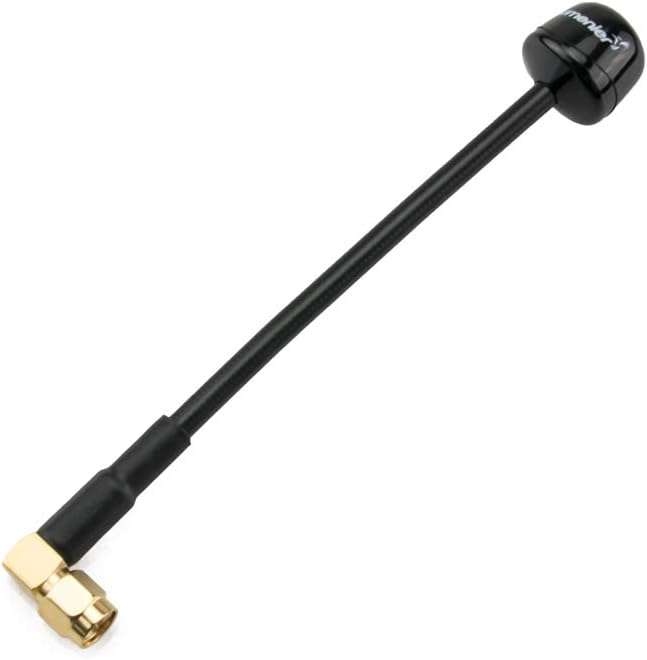
The right-angle AXII 2 refines the original with better range and bandwidth. It holds a 5.0 rating for lightweight racing builds and freestyle quads. Its RHCP design supports goggles with clear signal reception.
We may earn a commission when you buy through this link, at no additional cost to you.
Durability and performance improvements make it a true successor. It fits FPV goggles securely and delivers improved transmission. The angle design helps avoid interference on certain drone frames during flight.
While the angle might snag on tight setups it enhances performance for specific builds. It balances weight and signal quality well. Users appreciate the refined tuning for high-speed maneuvers and long range.
Race pilots seeking an edge should consider this refined antenna. It optimizes performance for freestyle quads. Ensure your frame accommodates the angle style for best fit and signal stability.
Improved bandwidth supports cleaner signals during complex flight maneuvers.
Built to withstand daily racing impacts while maintaining consistent RF transfer.
We may earn a commission when you buy through this link, at no additional cost to you.
The Zopsc antenna offers wide frequency coverage from 0.51 to 10GHz. It delivers 3 to 6dBi gain in a compact 10cm spiral design. It supports LHCP and RHCP for diverse testing and navigation needs.
We may earn a commission when you buy through this link, at no additional cost to you.
Built with PCB spiral structure it handles spectrum analysis and direction finding well. Compatible frequencies include GPS and ADSB bands. Its compact size saves space while supporting flexible integration into systems.
Users can choose left or right polarization to match specific needs. This is useful for RF measurement work requiring broad coverage. It does not include rating data but offers solid specs for analysis.
Surveyors and hobbyists needing multi-band support should look at this model. It fits various RF tasks without large footprint. Ensure your system aligns with the SMA female connector for easy setup.
Supports GPS ADSB and video bands for broad RF measurement applications.
Equiangular spiral maintains impedance matching across wide frequency ranges.
We may earn a commission when you buy through this link, at no additional cost to you.
The Fat Shark SpiroNet antenna offers a compact solution for FPV goggles. It carries a 4.2 rating for stable signal performance. Its RP-SMA connector fits standard Fat Shark and ImmersionRC gear.
We may earn a commission when you buy through this link, at no additional cost to you.
Circular polarization helps maintain image clarity during flight. The compact form is easy to store and attach. It suits pilots needing a reliable standard antenna without extra bulk or weight.
While newer models offer higher gain this unit remains a solid choice for basic setups. It provides essential performance for casual pilots. Keep it as a backup or primary for short flights.
Owners of Fat Shark goggles will find this antenna compatible and straightforward. It ensures stable links without complex installation. Choose it for a proven standard solution in your FPV kit.
Designed specifically to integrate seamlessly with Fat Shark and ImmersionRC goggles.
Small form factor ensures easy storage and minimal weight on your kit.
We may earn a commission when you buy through this link, at no additional cost to you.
Selecting the right circular polarized antenna requires understanding frequency compatibility gain requirements and physical build quality to match your specific use case.
Antennas are tuned for specific bands like 5.8GHz for FPV or 88-108MHz for FM. Ensure the antenna matches your transmitter or receiver frequency to avoid signal loss.
Check the product specs to confirm it supports your system band before purchasing.
Gain measured in dBi indicates how focused and strong the signal is. Higher gain extends range but reduces field of view requiring precise aiming during use.
Select 3-6 dBi for casual use or 9-11 dBi for long range flights with directional control.
Common connectors include RP-SMA and SMA male female. Verify your goggles or transmitter have matching ports to avoid needing adapters or soldering.
Use connectors that secure tightly to prevent connection loss during vibrations or movement.
Outdoor or high durability use requires antennas with aluminum alloy and waterproof coatings. These protect against rain and corrosion over time.
Choose rugged builds for broadcast or surveying and lightweight PCB for FPV goggles.
Circular polarization comes in right handed or left handed versions. Mismatched polarization causes significant signal loss and static during transmission.
Ensure your transmitter and receiver antennas share the same LHCP or RHCP setting for clarity.
Lightweight antennas like 20g models prevent strain on goggle mounts during flights. Larger broadcast antennas are heavier and need sturdy support structures.
Balance weight and strength based on whether the antenna attaches to goggles or stationary gear.
Beam width determines how much area the antenna covers in a given direction. Omni antennas provide 360 coverage while directional focus more power forward.
Pick omni for freestyle and directional for long range or point to point transmission.
Some kits include terminators or coaxial cables for full setup readiness. Others require separate purchases which may increase total cost.
Look for bundles with necessary cables or adapters to simplify installation and reduce expenses.
Attach the antenna to your transmitter or goggles ensuring the connector clicks into place securely. For directional antennas align the main lobe toward your expected flight path or broadcast area.
Regularly inspect the connector pins and cable housing for signs of wear or corrosion. Clean gently with a dry cloth to remove dirt and protect against moisture exposure during outdoor sessions.
Store antennas in a padded case when not in use to prevent bending or impact damage. Keep them away from extreme heat or direct sunlight to preserve material integrity over time.
Circular polarization reduces signal loss caused by antenna orientation changes and minimizes multipath interference from reflections. This results in clearer video and more stable links when the drone rotates or moves through complex environments.
No mixing LHCP and RHCP causes significant signal loss because their electromagnetic waves do not align properly. Use matching polarization on both transmitter and receiver for optimal clarity and range.
Higher gain antennas extend range but narrow the beam width which requires precise aiming. Lower gain omni antennas offer wider coverage but shorter range for closer flying and freestyle maneuvers.
Weatherproofing protects internal elements from rain and corrosion ensuring consistent signal performance. It extends service life and prevents failure in harsh conditions like high humidity or temperature swings.
Most 5.8GHz FPV antennas use RP-SMA or SMA connectors. Check your device ports to ensure compatibility before buying to avoid needing additional adapters or modifications.
Inspect your antenna before every flight session for bends or frayed cables. Regular checks prevent unexpected signal loss and ensure the antenna remains safe for use during critical operations.
The CP200 Anbee and TrueRC X-AIR represent top choices across broadcasting budget and premium categories. Each delivers reliable performance suited to specific needs from FM radio to drone racing.
Prioritize frequency compatibility gain and build quality to match your use case. Ensure connectors and polarization match your existing gear to avoid signal loss during setup.
Check current prices and stock levels before ordering since these details change frequently. With the right antenna your signal clarity and range will improve significantly for any wireless project.