
EUDAX School Physics Labs Basic Electricity Discovery Circuit and Magnetism Experiment Kits
4.5Editor score
Comprehensive magnetism experiments
Detailed full-color manuals
Storage bag included
This guide compares the top electricity learning kits for students and educators, highlighting features, project counts, and educational value to help you
Electricity learning kits provide hands-on ways for students to explore circuits, magnetism, and energy principles. A good kit includes clear instructions, quality components, and enough variety to keep curiosity alive while teaching foundational physics concepts safely.
We evaluated ten top-rated kits based on project diversity, component quality, safety features, and instructional support. Our comparison considers age appropriateness, ease of assembly, and how well each set aligns with standard STEM curriculum goals for home or classroom use.
Each pick shows unique strengths like project counts, special experiments, or storage solutions. Note that availability and pricing can change over time, so verify current details before purchasing to ensure you get the best value for your educational goals.
4.5Editor score

4.7Editor score

4.5Editor score
This side-by-side comparison highlights key specifications across all ten kits, helping you quickly identify which set best matches your learning goals, age group, and project complexity needs.



This National Geographic kit stands out with over 120 projects covering circuits, light shows, and sound systems. Rated 4.7 stars, it offers exceptional value for learners who want extensive hands-on time without needing tools.
We may earn a commission when you buy through this link, at no additional cost to you.
The snap-together wires ensure solid connections without soldering, making it safe for kids. Video instructions via QR code add modern support, while the Toy of the Year award reflects its quality and educational impact.
Some users find the sheer number of projects overwhelming at first. Battery requirements are standard but not included, which is typical for safety reasons. These trade-offs are minor given the depth of learning available.
Ideal for curious kids aged 8+ who want to explore electricity deeply. Whether for home school or science fairs, this kit provides lasting engagement and clear pathways to understanding electrical engineering basics.
With over 120 projects, kids can build copters, keyboards, and light shows, ensuring long-term engagement and varied learning experiences.
Components connect with snap wires, eliminating the need for tools and reducing injury risks while maintaining reliable electrical contacts.
We may earn a commission when you buy through this link, at no additional cost to you.
The EUDAX School Physics Labs kit targets high school students with advanced electromagnetism experiments. Rated 4.5 stars, it combines 56 electricity and 21 magnetism components for a robust STEM experience.
We may earn a commission when you buy through this link, at no additional cost to you.
Full-color manuals explain principles clearly, guiding students through series, parallel, and Ohm's law projects. The included storage bag keeps items organized, while the brand offers responsive after-sales service for any issues.
It requires three AA batteries which are not included, adding slight extra cost. The price reflects the premium component quality and educational depth, which may be steep for casual learners.
Best for grades 9-11 needing serious physics exposure. Ideal for science clubs or advanced home study, it delivers real-world engineering concepts through structured, hands-on exploration.
Includes Oersted and Ampere's Force investigations, giving older students deeper insight into magnetic fields and electromagnetic principles.
All components fit neatly in a durable storage bag, ensuring easy transport and quick access for ongoing projects.
We may earn a commission when you buy through this link, at no additional cost to you.
This budget-friendly kit introduces kids to circuits with eight guided experiments and a dedicated circuit book. Rated 4.5 stars, it emphasizes critical thinking and problem-solving through simple electrical engineering projects.
We may earn a commission when you buy through this link, at no additional cost to you.
Projects include fruit batteries and saltwater power, making energy concepts tangible. The book offers easy-to-follow instructions, perfect for home or classroom use without requiring prior knowledge or tools.
It lacks the project variety of pricier sets, which may limit long-term engagement. Components are basic but functional, suitable for foundational learning rather than complex builds.
Perfect for ages 8-14 starting their STEM journey. Whether for fairs or curiosity, it provides a solid, cost-effective way to light a bulb and spark interest in electricity.
Fruit and saltwater power experiments show how everyday items can generate electricity, making abstract concepts concrete and memorable.
The included book guides learners through each step, reinforcing theoretical knowledge alongside practical assembly.
We may earn a commission when you buy through this link, at no additional cost to you.
Mysterystone offers over 50 experiments including unique items like Joule's law modules. Rated 4.4 stars, it encourages designing custom experiments beyond the manual, fostering creativity and deeper physics understanding.
We may earn a commission when you buy through this link, at no additional cost to you.
The well-written manual explains not just how but why experiments work, guiding discovery. Components are stored in a sturdy case with fixed places, making setup and cleanup convenient for students.
Some experiments require adult supervision due to complexity. Batteries are needed but not included, which is standard. The price reflects the specialized components like magnetic switches.
Ideal for students wanting to go beyond basics. Great for physics enthusiasts or clubs, it turns abstract principles into tangible, customizable learning experiences.
Students can design their own experiments beyond the 50 provided, encouraging innovation and creative problem-solving.
The manual details scientific principles, helping learners connect hands-on work to classroom theory.
We may earn a commission when you buy through this link, at no additional cost to you.
This kit focuses on motors with two units and propellers for kinetic projects. Rated 4.2 stars, it is ideal for children aged 8+ who want to see electricity in motion quickly.
We may earn a commission when you buy through this link, at no additional cost to you.
Components include a buzzer, rocker switches, and motor holders. Instructions are simple, enabling quick assembly. The low 1.5-3V operation ensures safety for young learners.
Users note circuit heating if used too long, so timing is key. Components are basic but sufficient for introductory motor experiments and simple circuit building.
Best for introducing motor mechanics. Perfect for back-to-school gifts or short STEM sessions, it lets kids build and test electrical motors easily.
With two motors and propellers, kids learn how electrical energy converts to mechanical motion practically.
Operating at 1.5-3V minimizes risks, making it safer for unsupervised play under general adult oversight.
We may earn a commission when you buy through this link, at no additional cost to you.
Teenii provides 50 pieces with 18 experiments including electric bells and hand cranks. Rated 4.4 stars, it encourages parent-child discovery, making it a great family science gift for ages 8+.
We may earn a commission when you buy through this link, at no additional cost to you.
Components include an ampere/voltmeter, various magnets, and a 40-page full-color manual. The design supports observation and critical thinking, aligning well with STEM enrichment goals.
Some parts like resistors may need careful handling. The project count is moderate compared to larger kits, but quality and safety are prioritized for young learners.
Ideal for family STEM time or school projects. The voltmeter adds real measurement skills, helping kids connect theory to practical electrical engineering.
Kids learn to measure current and voltage directly, building foundational engineering skills early.
The manual and components are designed to foster shared discovery between parents and children.
We may earn a commission when you buy through this link, at no additional cost to you.
This Physics Labs kit mirrors the EUDAX premium set with 55 electricity and 22 magnetism items. Rated 4.5 stars, it targets junior and senior high students exploring electric circuits and magnetic fields.
We may earn a commission when you buy through this link, at no additional cost to you.
Includes a sensitive ammeter and Joule's law modules, offering precise measurement. The sturdy double-layer storage box keeps items organized, and the manual explains steps and equipment requirements clearly.
It requires three AA batteries not included, adding minor prep. Complexity suits older students better, so younger kids may need supervision.
Perfect for high school physics labs or advanced hobbyists. It delivers structured, realistic experiments that deepen understanding beyond basic series and parallel circuits.
A sensitive ammeter allows accurate current readings, essential for scientific exploration.
Double-layer storage ensures items stay organized and secure during transport or storage.
We may earn a commission when you buy through this link, at no additional cost to you.
Rated 4.6 stars, this EUDAX basic kit focuses on series and parallel circuits with clear English instructions. It helps students consolidate textbook knowledge through safe hands-on assembly for grades 7-9.
We may earn a commission when you buy through this link, at no additional cost to you.
Components include switches, wires, and bulbs, packed in a plastic storage box. It is ideal for science fairs, summer camps, and home unit studies where foundational concepts are key.
It lacks magnetism experiments found in upgraded versions. Batteries are not included, but the straightforward design ensures quick setup and learning.
Best for beginners needing a focused intro. Whether for school clubs or home learning, it builds confidence in building simple, safe electrical circuits.
The kit aligns with standard science curricula, helping students visualize circuit concepts from class.
Low complexity and clear instructions minimize frustration for early learners.
We may earn a commission when you buy through this link, at no additional cost to you.
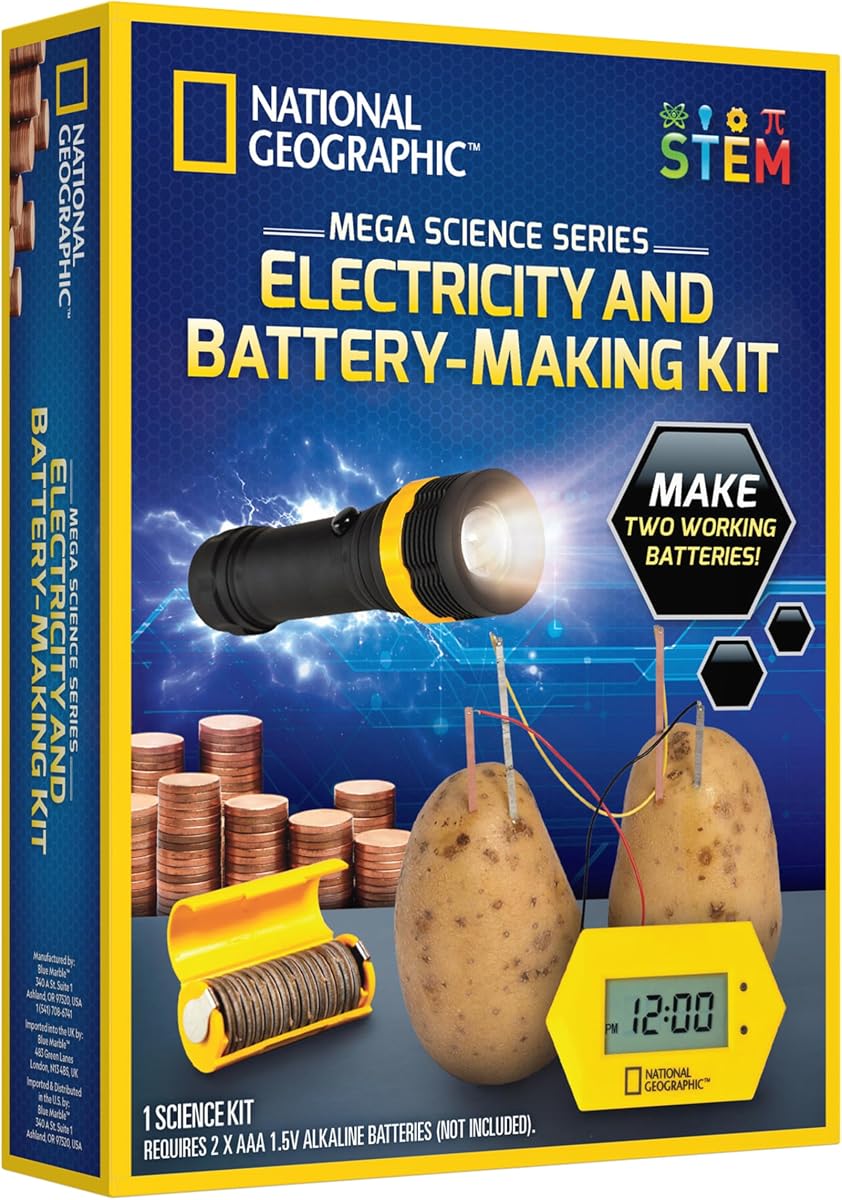
This kit teaches battery basics through potato and coin power projects. Rated 4.5 stars, it offers two distinct experiments that show how chemical reactions generate electricity.
We may earn a commission when you buy through this link, at no additional cost to you.
Components include a voltmeter and coins for the flashlight. Instructions are easy-to-follow, and the detailed guide explains the science behind circuits and batteries thoroughly.
With only two projects, it is less about quantity and more about deep dives into energy sources. Best as a supplement or focused lesson.
Ideal for curious kids loving energy science. It provides memorable, tangible examples of batteries and circuits that spark lasting interest in engineering.
Kids build real batteries from everyday items, seeing chemistry and electricity merge.
Using the included voltmeter helps students quantify their findings for scientific accuracy.
We may earn a commission when you buy through this link, at no additional cost to you.
The EUDAX upgrade kit adds projects like stair switches, traffic lights, and wind power cars. Rated 4.4 stars, it builds on the basic set for teachers and students seeking more complex designs.
We may earn a commission when you buy through this link, at no additional cost to you.
Components include LEDs and switches for advanced circuits. The transparent storage box keeps parts visible and organized. It is ready to use with just two AA batteries.
The project list is creative and practical, but battery inclusion is standard. Some users may prefer more magnetism if focused on that area.
Best for teachers or students advancing beyond basics. It offers diverse, functional projects that demonstrate real-world circuit applications like control and renewable energy.
Traffic light and stair switch circuits mimic real electrical engineering challenges.
The clear box makes finding parts quick and easy for ongoing projects.
We may earn a commission when you buy through this link, at no additional cost to you.
Choosing the right electricity learning kit involves balancing project variety, age appropriateness, and educational depth. Use these factors to find a set that keeps learners engaged while building solid STEM skills.
Kits range from 2 to over 120 projects. More projects provide longer engagement and diverse learning opportunities. Look for variety like batteries, circuits, and motors to cover multiple concepts.
Choose a count that matches your time and interest level.
Age recommendations vary from 8+ to high school. Younger learners need simpler components and safer designs, while older students can handle advanced magnets and measurement tools.
Match the kit to the learner's current skills and maturity.
Durable wires, switches, and connectors prevent frustration. Safety features include low-voltage operation and secure connections to avoid short circuits or heat issues.
Prioritize kits with tested materials and safety warnings.
Clear manuals and video instructions help learners progress independently. Full-color guides with diagrams explain both setup and scientific principles behind experiments.
Better support reduces downtime and enhances learning outcomes.
Storage bags or boxes keep components tidy between sessions. Organized cases prevent lost parts and make transport easier for classroom or group use.
Look for labeled compartments or transparent containers.
Kits with voltmeters or ammeters teach real engineering skills. These tools allow quantitative measurements, bridging theory and hands-on practice effectively.
Include measurement tools for deeper exploration.
Most kits need AA batteries which are not included for safety. Check voltage limits to ensure compatibility and avoid damage from overloading circuits.
Plan for battery costs and availability.
Established brands often offer warranties or customer service. Award-winning products usually reflect tested quality and educational value.
Read reviews and check support options before purchasing.
Start by reading the manual completely to understand all components and safety warnings. Organize parts in the provided storage before beginning experiments to save time.
Use fresh batteries and avoid mixing old or different types to prevent leaks or performance issues. Monitor circuit temperature during use and disconnect after short sessions to avoid overheating.
After each session, disconnect all wires and store components neatly. Keep the manual accessible for reference and note any ideas for custom experiments in a notebook.
Most kits target ages 8 to 14, with advanced sets for high school students. Younger kids need adult supervision and simpler builds, while teens can handle complex circuits and measurement tools safely.
Many kits are tool-free with snap or screw-in connections. However, some advanced sets might need small screwdrivers. Always check the product specs for tool requirements before purchasing.
Kits designed for ages 8+ use low voltages and durable materials to minimize risks. Always supervise young learners, avoid short circuits, and follow battery safety guidelines carefully.
Project counts range from 2 to over 120 depending on the kit. Some allow custom builds, while others focus on guided experiments. Choose based on your desired learning depth.
Most kits do not include batteries due to safety and shipping regulations. You will typically need AA batteries as specified. Always check product details for requirements.
Yes, many kits are designed for school projects, STEM labs, and clubs. Their durability and organized storage make them suitable for repeated group use and science fair displays.
Contact the manufacturer for replacements if possible. Many offer after-sales support or warranties. Store spare parts and handle components carefully to extend their lifespan.
Absolutely. They provide structured, hands-on learning aligned with science curricula. The manuals and projects can replace textbook lessons and offer practical engineering experience.
Our top picks include the National Geographic 120-project kit for breadth, the EUDAX premium set for magnetism depth, and the affordable STEM starter kit for beginners.
Prioritize safety, age-appropriate complexity, and strong instruction when selecting. Kits with measurement tools or storage solutions add significant long-term value.
Prices and availability change regularly, so check current listings and reviews before buying. Investing in the right kit ensures engaging, educational exploration of electricity for years.