
10Gtek 10Gb PCI-E NIC Network Card
4.4Editor score
Intel 82599EN Controller
Single SFP+ Port
Compatible with Linux Server
This guide compares the top 10GbE Network Card options for performance and value helping you choose the right adapter for your network needs.
Finding the right 10GbE Network Card can transform your network speed and efficiency. These adapters allow you to leverage high-speed data transfers essential for modern computing tasks like video editing and large file backups.
We evaluated ten leading models based on compatibility performance and reliability. Each card was assessed for its chipset quality port types and overall value to ensure you get a dependable solution for your specific setup.
Our selections highlight diverse needs from budget-friendly single port options to robust dual port enterprise solutions. Keep in mind that prices fluctuate regularly so always check current listings before making your final purchase decision.
4.4Editor score

4.2Editor score

4.6Editor score
This table provides a side-by-side look at the key specifications and features of each adapter to help you quickly identify the best fit for your system requirements.




The TP-Link TX401 stands out as a top choice for users seeking reliable 10Gbps speeds. It earns a solid rating for its consistent performance across various Windows and Linux environments. The included cable ensures you can get started immediately without extra costs.
We may earn a commission when you buy through this link, at no additional cost to you.
This card leverages 10GBase-T technology to deliver speeds ten times faster than standard Gigabit connections. It automatically negotiates down to lower speeds ensuring compatibility with older network equipment. Quality of Service features help prioritize gaming traffic effectively reducing latency during intense sessions.
While the performance is robust the card can run warm during extended heavy data transfers. This is typical for passive cooling designs so ensuring adequate case airflow is recommended. The low profile bracket makes it suitable for smaller form factor builds without sacrificing connectivity.
For most home users and small businesses this adapter offers the best balance of speed and ease of use. If you need a straightforward upgrade to 10GbE without complex configuration this is the ideal pick for your desktop or server.
Supports Windows and Linux systems with automatic speed negotiation for easy integration.
Includes a CAT6A cable and low profile bracket for immediate setup and fit.
We may earn a commission when you buy through this link, at no additional cost to you.
This adapter is purpose-built specifically for Synology NAS systems providing unmatched reliability for storage applications. With two 10GbE ports it allows for link aggregation or failover configurations enhancing network resilience. The high rating reflects its seamless integration with DSM software.
We may earn a commission when you buy through this link, at no additional cost to you.
The dual port design enables users to maximize throughput or set up redundant connections for critical data. It automatically negotiates speeds between 10 Gbps and 1 Gbps ensuring flexible connectivity options. The five year warranty offers peace of mind for long term deployments.
However compatibility is strictly limited to Synology systems which may restrict its use in mixed environments. You must ensure your NAS model supports this specific adapter before purchasing. It is not a general purpose card for standard desktop PCs.
If you own a compatible Synology NAS this card is the definitive upgrade for your storage network. It delivers high performance storage applications with stability and support that generic alternatives cannot match for enterprise level needs.
Dual ports support high-performance storage applications with automatic speed negotiation.
Backed by a comprehensive five year warranty for extended protection.
We may earn a commission when you buy through this link, at no additional cost to you.
This 10Gtek adapter offers an economical entry into 10G networking with a trusted Intel controller. It is highly rated for its stability in server environments and compatibility with Linux and VMware. The SFP+ port allows for flexible optical or copper connections.
We may earn a commission when you buy through this link, at no additional cost to you.
Equipped with the original Intel 82599EN controller it supports virtualization and provides stable server performance. It connects via SFP+ modules or DAC cables making it ideal for data center environments. The card fits both x8 and x16 slots providing installation flexibility.
Users on Windows 11 may face driver challenges requiring specific configuration to work correctly. Additionally it only supports 10G speeds without lower rate negotiation which limits some home use cases. Always check the manual for installation notes before purchase.
This card is best for users who need a reliable SFP+ connection at a low cost. If you are building a homelab or need a backup link for a server this budget option delivers solid performance without breaking the bank.
Uses original Intel 82599EN controller for I/O virtualization and stability.
Includes brackets for standard and low profile cases.
We may earn a commission when you buy through this link, at no additional cost to you.
Powered by the Realtek RTL8127 chipset this card supports speeds from 100Mbps up to 10Gbps. It is designed for efficiency making it suitable for mini PCs and compact systems. The PCIe 4.0 interface ensures future-ready performance.
We may earn a commission when you buy through this link, at no additional cost to you.
The card supports automatic negotiation across multiple speeds including 10Gbps 5Gbps and 2.5Gbps. This flexibility allows it to integrate seamlessly with routers and switches that may not all support full 10G. It is built for stable low-latency performance in gaming and file transfers.
While highly versatile some Linux or NAS platforms may require specific driver configurations to function optimally. Power consumption is lower than traditional solutions which helps keep heat output manageable in small cases. Always verify compatibility with your specific OS version.
This adapter is perfect for users upgrading a compact build who need broad speed compatibility. It offers a modern PCIe 4.0 interface and energy efficient design that fits well in ITX builds and home lab systems.
Designed with PCIe 4.0 x1 to maximize slot efficiency and performance.
Lower power consumption and reduced heat output for compact cases.
We may earn a commission when you buy through this link, at no additional cost to you.
This dual port adapter uses the Intel X550AT2 controller to deliver robust enterprise level performance. It supports a wide range of operating systems and virtualization platforms making it versatile. The card allows for link aggregation to increase total bandwidth.
We may earn a commission when you buy through this link, at no additional cost to you.
It features dual RJ45 ports that support speeds from 100Mb up to 10Gb. The card includes an NVM update utility allowing firmware refreshes within the OS without boot drives. This streamlines maintenance for data center servers significantly.
Some users report that negotiating to 2.5G or 5G speeds might require manual configuration. This can be a minor hurdle for home users who prefer plug and play setups. Otherwise the build quality and support are solid.
If you need a dual port solution for a workstation or server this card is a strong contender. It provides reliable throughput and management tools that are essential for business environments and power users.
Equipped with NVM Update Utility for in-system firmware refresh.
Supports Windows Linux FreeBSD and VMware ESXi.
We may earn a commission when you buy through this link, at no additional cost to you.
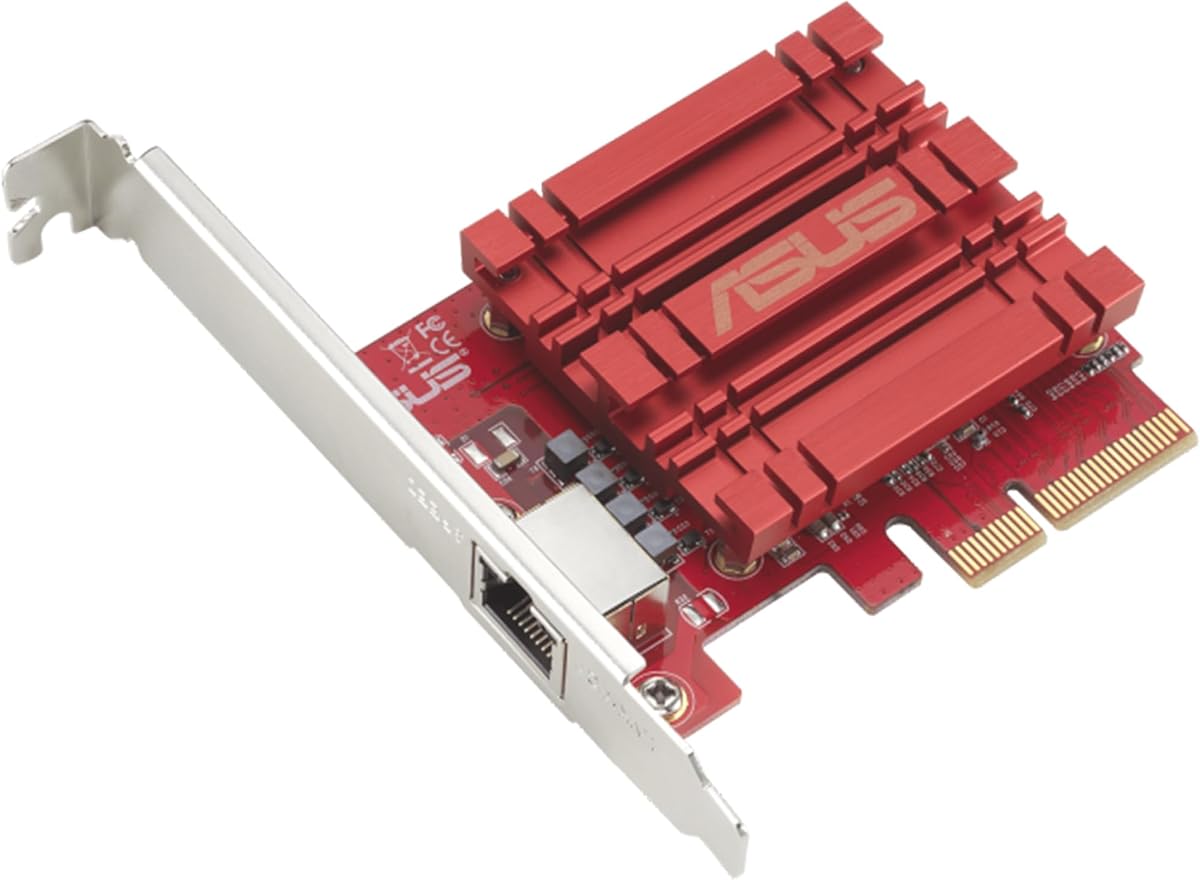
Asus brings its reputation for quality to this single port 10G adapter. It delivers fast data transfers and supports backward compatibility with lower speeds. The card is designed to integrate smoothly with existing Asus motherboards.
We may earn a commission when you buy through this link, at no additional cost to you.
Hyper-fast 10Gbps networking ensures bandwidth-demanding tasks run without lag. Built-in QoS technology prioritizes data packets for a smoother online experience. It works with Windows and Linux providing flexible OS integration for most users.
The main trade-off is a slightly higher price compared to third-party alternatives. However the build quality and driver support from a major brand often justify the extra cost. It is a safe choice for those avoiding unbranded cards.
For users valuing brand trust and seamless integration this card is a solid investment. It upgrades your desktop to 10Gbps networking reliably using standard copper cables and proven driver packages.
Hyper-fast 10Gbps networking delivers 10X-faster data-transfer speeds.
Prioritize your data with built-in Quality-of-Service technology.
We may earn a commission when you buy through this link, at no additional cost to you.
This single port adapter is tailored specifically for Synology systems ensuring peak performance. It has earned a perfect rating for its reliability and seamless integration with DSM. The five year warranty adds significant value.
We may earn a commission when you buy through this link, at no additional cost to you.
It supports auto-negotiation between speeds making it versatile with various network switches. The card is validated for full compatibility with Synology NAS units. This guarantees that you get the maximum throughput without compatibility issues.
The only limitation is having just one port which limits redundancy options. For many users a single fast connection is sufficient however. It remains a top choice for expanding existing NAS network capabilities.
If you have a compatible Synology NAS this adapter is the ideal single port upgrade. It delivers high performance for demanding storage applications with the confidence of a long warranty.
Validated for full compatibility and performance with Synology systems.
Covered by Synology's 5-year limited warranty.
We may earn a commission when you buy through this link, at no additional cost to you.
This card stands out by rejecting vendor lock-in allowing any third-party SFP modules to work. It is highly compatible with Proxmox TrueNAS and other hypervisors out of the box. The Intel 82599EN ensures sustained 10Gbit throughput.
We may earn a commission when you buy through this link, at no additional cost to you.
Unlike branded Intel cards this one accepts DAC twinax AOC and multimode optics freely. This flexibility significantly lowers costs for users needing multiple connections. It includes both brackets and fits in various slots easily.
The passive heatsink can get warm so adequate airflow is necessary to avoid throttling. This is a common trade-off for passive cooling designs. Users should ensure their case has sufficient ventilation.
For home lab enthusiasts this card is a favorite due to its openness and ease of use. It offers a plug and play experience on major platforms without expensive branded optical modules.
No vendor lock on the SFP+ cage supports third-party modules.
Plug and play on Proxmox Truenas and Unraid.
We may earn a commission when you buy through this link, at no additional cost to you.
TRENDnet offers a reliable adapter that meets government compliance standards like NDAA and TAA. It is built for stability and works with a wide range of operating systems. The card supports 2.5G speeds which is useful for modern networks.
We may earn a commission when you buy through this link, at no additional cost to you.
The PCIe Gen 2.0 interface is standard for this price point. It converts a PCIe slot into a 10G port effectively. The manufacturer protection and technical support are robust for business needs.
The compliance features make it slightly more expensive than generic options. However for government or enterprise projects this is often a mandatory requirement. The support team is accessible during business hours.
If you need a compliant solution for professional environments this adapter is a top choice. It ensures you meet regulatory standards while delivering reliable high-speed connectivity.
NDAA TAA compliant for government customers.
Backed by 3 years of manufacturer protection.
We may earn a commission when you buy through this link, at no additional cost to you.
This card uses the Intel X550-AT2 controller for stable server performance at a budget price. It is compatible with various Windows versions and Linux distributions. It offers a solid entry into 10GbE networking.
We may earn a commission when you buy through this link, at no additional cost to you.
The chipset supports speeds from 100M up to 10G ensuring flexibility with older equipment. It includes low profile brackets for small cases and works well in VMware environments. The price point is highly competitive.
A limitation is the lack of firmware update support compared to official cards. This means you rely on the initial firmware state. However for basic high-speed needs this is often acceptable.
For users seeking an affordable X550-based solution this card is a great option. It balances cost and performance effectively for home labs and small offices without major compromises.
Equipped with original Intel X550-AT2 controller chip.
3 Year Free Warranty and Lifetime Technology Support.
We may earn a commission when you buy through this link, at no additional cost to you.
Selecting the right adapter requires considering several technical factors to ensure compatibility and performance.
Most cards offer either RJ45 copper ports or SFP+ fiber ports. RJ45 uses standard Ethernet cables while SFP+ requires modules or direct attach cables. Ensure your network switch supports 10G speeds to avoid bottlenecks.
Look for auto-negotiation features that allow the card to switch between 10G 5G 2.5G and 1G speeds automatically for maximum compatibility.
Check your motherboard slot availability. Some cards require PCIe x4 or x8 lanes to function at full speed while others fit in x1 slots. Using the wrong slot can throttle your network performance.
Always match the card's lane requirements with an available slot on your motherboard for optimal bandwidth.
Not all cards support Linux or macOS out of the box. Windows 10 and 11 have better driver support for newer chips. Server environments often need specialized drivers for hypervisors like ESXi or Proxmox.
Verify the manufacturer's compatibility list for your specific OS version before buying to avoid driver issues.
10GbE adapters can generate significant heat during operation. Some have passive heatsinks which rely on case airflow. Others may need active cooling in compact builds to prevent thermal throttling.
Ensure your PC case has adequate ventilation to keep the adapter running cool under heavy loads.
Desktop towers use standard height brackets while small form factor PCs need low-profile options. Most cards come with both included so check the packaging details to confirm.
Select a card with the correct brackets for your specific case size.
Established brands often provide better driver support and longer warranties. Third-party cards might offer cheaper prices but could lack official firmware updates or support channels.
Prioritize vendors with strong technical support if you plan to use the card in critical applications.
Begin by installing the card into a compatible PCIe slot on your motherboard. Secure it firmly and attach the appropriate bracket for your case size.
Download the latest drivers from the manufacturer's website before powering on your system. This ensures stability and avoids generic driver conflicts.
Configure your network settings to enable 10G speeds on your router or switch. Use Cat6a cabling for copper connections to support the highest bandwidth possible.
For RJ45 copper connections you will need Cat6a cables rated for 10G speeds. Standard Cat5e cables may work for shorter distances at lower speeds but will not achieve full 10Gbps performance reliably.
Yes the card will automatically negotiate down to 1Gbps if connected to a Gigabit router. You will not get 10G speeds but the connection will remain stable for regular internet use.
Support varies by chipset and manufacturer. Some Realtek chips may require additional drivers while Intel chips often work better. Always check specific macOS compatibility on the product page before purchasing.
If you have a NAS or frequently transfer large video files it is definitely worth it. For general browsing or light gaming standard Gigabit might suffice but 10G offers future proofing.
Most 10GbE adapters support VLAN tagging through software configuration. Check the driver capabilities and network settings menu to confirm specific VLAN features on your operating system.
Dual port cards can use link aggregation to combine bandwidth on supported switches. This requires specific network setup and switch configuration to work effectively.
We reviewed ten top options including the TP-Link TX401 for ease of use and Synology adapters for NAS performance. Each serves distinct needs from budget homelabs to enterprise servers.
Prioritize compatibility with your existing switch and operating system to ensure a smooth upgrade. Consider whether copper or fiber ports suit your cabling setup best for optimal results.
Always check current availability and pricing as market conditions change frequently. Select the adapter that fits your budget and performance goals for the best experience.