
Battery Equalizer 48V
4.3Editor score
Fits 24V 36V 48V systems
Low standby power draw
Works with most chemistries
This guide compares the top 12V 24V 48V Battery Equilizer Balancer models for 2026 to help you choose the right active equalizer for your battery bank needs.
Battery imbalance is a silent killer in multi-battery systems. When cells drift apart in voltage, capacity drops and lifespan shortens dramatically. A quality balancer keeps your system healthy by equalizing charge levels automatically and safely.
We evaluated ten active balancers based on voltage range, battery chemistry support, and protection features. Each unit was checked for compatibility with lead-acid and lithium chemistries as well as ease of wiring in series or parallel setups.
Every pick below highlights key strengths and trade-offs found in real-world scenarios. Prices and stock change frequently, so verify current offers before purchasing. Use the guide to match a balancer to your specific bank voltage and chemistry.
4.3Editor score

4.3Editor score

4.1Editor score
The table below offers a side-by-side look at each model's voltage range, battery type support, and standout features. Use this quick reference to identify which balancer fits your system's chemistry and wiring needs.



The LiTime 48V Battery Balancer stands out as a robust active equalizer for multi-voltage banks. It earned a solid 4.3 rating from users who value reliability and safety in long-term installations.
We may earn a commission when you buy through this link, at no additional cost to you.
Its active balancing function runs automatically when voltage differences exceed 10mV and stops when balanced, which keeps banks healthy without manual checks. Reverse polarity and high temperature protection add peace of mind for DIY installs.
While it only offers four ports per unit, it can still cover most 48V series setups. The max 10A working current is generous but may need pairing for very high-capacity banks.
Buy this if you need a dependable balancer for RVs, trolling motors, or off-grid systems using LiFePO4 or lead-acid. It provides the features most hobbyists need at a fair value point.
The balancer wakes only when needed and drops to standby below 10mV, so it doesn't waste energy while your system sits idle.
It works with LiFePO4, lithium ion, lead-acid, GEL, and SLA types, making it adaptable as your bank chemistry evolves.
We may earn a commission when you buy through this link, at no additional cost to you.
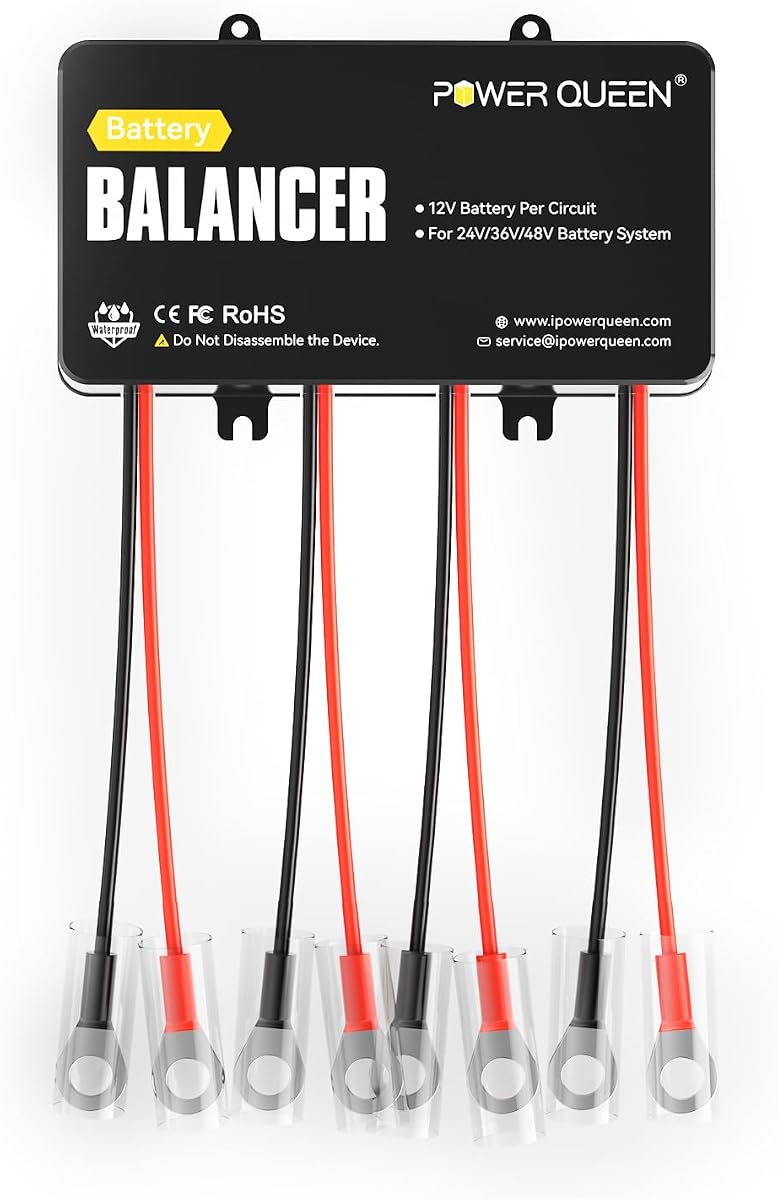
The Power Queen Battery Balancer 48V matches many top models in performance while staying approachable for home and marine installs. Users highlight its straightforward setup and reliable protection features.
We may earn a commission when you buy through this link, at no additional cost to you.
It activates when differences exceed 10mV and balances until below that threshold, helping cells converge without constant monitoring. High temperature and reverse polarity protection guard against common wiring and environment issues.
The unit handles LiFePO4, lead-acid, GEL, and SLA chemistries equally well. It offers four ports per balancer, which suits a standard 48V string of four 12V units without extra modules.
This is a safe pick for RV solar systems or off-grid battery banks where chemistry mix and voltage drift matter. Its low standby draw ensures it won't drain cells during long storage periods.
Once balanced, it draws under 5mA, so the balancer itself won't become a hidden drain in winter storage or infrequent-use scenarios.
Notes recommend connecting in parallel first then series, which simplifies wiring in multi-string arrays common in larger 48V banks.
We may earn a commission when you buy through this link, at no additional cost to you.
The MAZAVA Battery Equalizer HX02 brings a premium edge with its LCD monitor and aluminum housing. It earned a 4.1 rating from users who want visible status feedback alongside active balancing.
We may earn a commission when you buy through this link, at no additional cost to you.
Its LCD display shows real-time data so you can verify balance progress without external tools. The aluminum alloy shell helps dissipate heat, which is valuable during extended balancing sessions or warm climates.
Multiple modules can be paralleled for higher capacity, which is ideal when scaling to 48V or larger setups. Single battery support covers 7 to 18 volts, making it flexible across various string arrangements.
Choose this if you prefer clear visual monitoring and a rugged build. It's a solid fit for solar or mobile installs where quick diagnostics and durable enclosures justify the higher cost.
The display gives you quick visibility into voltage and balance state, saving time compared to checking a multimeter each day.
You can add extra units in parallel to handle larger banks, which helps future-proof your system without swapping hardware.
We may earn a commission when you buy through this link, at no additional cost to you.
This Voltage Balancer model covers a very wide voltage span from 12V to 96V, which is rare among budget-friendly options. Its 4.5 rating reflects strong user satisfaction for high-voltage and mixed-chemistry uses.
We may earn a commission when you buy through this link, at no additional cost to you.
Each module corresponds to two batteries, which keeps things simple for small string installs. The rail-type buckle mounting makes it easy to secure inside a distribution box or panel without extra hardware.
Beyond LiFePO4 and lead-acid, it also supports nickel-cadmium and nickel hydrogen types. That broad chemistry range helps when managing legacy equipment or niche battery packs.
Opt for this if you need flexibility across voltages and chemistries. It's especially handy for electric forklifts, motorcycles, and custom solar banks that push beyond standard 48V setups.
Supporting Ni-Cd and Ni-MH alongside LiFePO4 and lead-acid means this balancer can manage older or mixed packs that others might reject.
The rail buckle simplifies mounting and lets you snap modules into place quickly, which speeds up installs in tight boxes.
We may earn a commission when you buy through this link, at no additional cost to you.
The HC02 Balancer offers an LED display that makes it easy to track status without extra tools. It carries a 3.7 rating, suggesting it may be best for users who prioritize visuals over raw specs.
We may earn a commission when you buy through this link, at no additional cost to you.
By default, it connects four 12V batteries in series or parallel, which suits many 48V builds. Low voltage disconnect helps protect cells from over-discharge and extends their usable life over time.
For higher voltages like 96V, you can parallel multiple 48V equalizers. This modularity helps when you need to scale the system without replacing the core balance module.
This unit is a good pick for RVs or solar storage where visual feedback matters. It balances basic chemistry support with an accessible interface for hobbyists and maintenance crews.
The low-voltage disconnect keeps batteries healthy by cutting off discharge before they drop too far, which improves cycle life in daily-use systems.
When paired in parallel, these 48V equalizers can support 96V groups, giving you a straightforward path to scale up.
We may earn a commission when you buy through this link, at no additional cost to you.
The Redodo Battery Balancer 24V earns a 4.4 rating for its reliable performance and solid build quality. It shines for 24V systems using LiFePO4, lead-acid, or GEL chemistries in series or parallel.
We may earn a commission when you buy through this link, at no additional cost to you.
With a maximum equalization current of 10A, it can handle larger 12V banks efficiently. The included 50CM cables and M8 OT terminals reduce wiring hassle and keep connections secure.
Dual protection functions include reverse connection and high temperature safeguards, which reduce the risk of accidental damage. A one-year warranty and 24/7 technical support add confidence for buyers.
Pick this if you need a well-supported 24V balancer for boats, golf carts, or solar storage. It balances performance with practical accessories that make installs quicker and cleaner.
Cables and M8 OT terminals arrive ready to use, which cuts install time and ensures you have the right connectors on hand.
Reverse and temperature protection prevent common mishaps, keeping the balancer and batteries safe during charging or unexpected wiring errors.
We may earn a commission when you buy through this link, at no additional cost to you.
This Power Queen 48V equalizer matches the features of its sibling model with consistent performance. Its 4.1 rating reflects steady results for RV and off-grid users who value simplicity and safety.
We may earn a commission when you buy through this link, at no additional cost to you.
It detects voltage differences above 10mV and balances until below that threshold. High temperature and reverse polarity protection guard the unit and batteries, while standby mode keeps idle draw near zero.
Designed for LiFePO4, lithium-ion, and lead-acid chemistries, it handles common bank setups without needing complex tuning. The four ports make it ready for standard 48V configurations right out of the box.
Choose this if you want a reliable, no-fuss balancer for long-term use. It keeps batteries healthy with minimal power consumption and provides essential safeguards for DIY or professional installs.
At under 5mA in standby, the unit does not drain your battery bank during storage, which helps preserve charge over weeks or months.
Supporting LiFePO4, lithium-ion, and lead-acid means this balancer fits most common system mixes found in modern solar or marine setups.
We may earn a commission when you buy through this link, at no additional cost to you.
This Budget-friendly Voltage Balancer offers strong value with core features needed for 24V, 36V, and 48V systems. Its 4.3 rating shows that users find it reliable for everyday balancing needs.
We may earn a commission when you buy through this link, at no additional cost to you.
It triggers automatically when voltage discrepancies exceed 10mV and provides up to 5A compensation current. Smart indicator lights give quick status feedback, while reverse polarity and low-voltage cutoff protect batteries.
The two-battery module design lets you parallel units for larger banks, which scales to 48V or higher. It works with a wide range of chemistries, including LiFePO4, Ni-Cd, and Ni-MH.
Buy this if you need a capable balancer without overspending. It covers common solar, RV, and truck applications while keeping wiring and status clear for easy maintenance.
Indicator lights show working status at a glance, so you can confirm balance activity without reaching for a meter.
Connecting multiple modules in parallel lets you handle 48V or higher banks while keeping each module's job simple and focused.
We may earn a commission when you buy through this link, at no additional cost to you.
The HA01 Battery Equalizer brings a clear LED digital display to help you track voltage balance without external tools. It holds a 4.3 rating from users who want straightforward status visibility.
We may earn a commission when you buy through this link, at no additional cost to you.
It compensates at 0 to 5A and activates when voltage differences reach 20mV. The flame retardant shell adds safety and the low power draw means it can stay connected long term without worry.
This unit is tuned for 12V lead-acid and lithium packs in series or parallel. Wiring steps are simple and the middle-point connection helps keep series strings balanced effectively.
Pick this for 24V or 48V setups where you want to monitor voltage changes easily. Its durable build and clear readout make it useful for RVs, solar systems, or small workshops.
The LED display lets you see battery voltage at a glance, which speeds checks and keeps you informed about balance progress.
A flame retardant shell reduces risk in hot or enclosed installs, which is valuable for indoor battery racks or tight engine compartments.
We may earn a commission when you buy through this link, at no additional cost to you.
The Victron Energy Battery Balancer is a proven tool for 24V battery systems used in boats and off-grid installs. It earned a 4.2 rating for dependability in series string balancing.
We may earn a commission when you buy through this link, at no additional cost to you.
It triggers when the system charge voltage exceeds 27V and compares series voltages to converge their state of charge. Its 1A current draw is modest but sufficient for small to medium strings.
Multiple units can be paralleled to balance higher banks like 48V, which gives you a modular path to scale without redesigning the system. It's simple to wire and maintains balance with minimal setup.
This is a strong pick for 24V marine or RV banks where reliability matters. For larger setups, plan to use multiple units to ensure adequate current across the whole string.
Balancing starts only when charge voltage exceeds 27V, so the unit focuses on charging periods and doesn't waste energy at rest.
Victron's reputation for marine-grade equipment gives confidence that this balancer will endure vibration, humidity, and long-term use on boats.
We may earn a commission when you buy through this link, at no additional cost to you.
Selecting a balancer requires matching voltage range, chemistry support, and protection features to your system. This guide covers the key factors that influence performance, safety, and long-term value.
Check that the balancer supports your bank's highest system voltage. Many units are rated for 24V to 48V but may need parallel modules for 96V or higher setups.
Confirm the device can connect in series and parallel as your wiring plan requires.
Ensure the unit handles your battery chemistry. Many active balancers cover LiFePO4, lead-acid, GEL, and SLA but may differ on Ni-Cd or Ni-MH.
Using a balancer designed for your chemistry helps avoid damage and keeps cycle life consistent.
Look for auto-balance settings around 10mV to 20mV, which balance cells before they drift too far. Lower thresholds reduce imbalance time while limiting unnecessary current flow.
Units that go to standby below the threshold save power during long idle periods.
A low standby draw under 5mA ensures the balancer does not drain your bank during storage. This is critical for seasonal RVs or infrequently used solar systems.
Avoid models with continuous high idle draw as they can reduce available capacity over time.
Reverse polarity protection and high temperature protection are essential safeguards that prevent damage from wiring errors or overheating. Low-voltage cutoff helps keep cells safe during discharge.
Prioritize units that include these protections so you can leave the balancer connected without constant monitoring.
Some units handle four 12V strings per module while others support two. This affects how many modules you need to reach 48V or higher configurations.
Choose a design that simplifies wiring and lets you add modules easily if you plan to expand.
Units with LED or LCD displays make it easy to verify balance without a multimeter. Visual indicators help identify imbalance quickly during routine checks.
If you don't need constant monitoring, simpler units without displays can reduce cost and complexity.
A clear warranty and accessible support reduce risk when installing critical safety hardware. Look for brands that offer at least one year of coverage.
Strong documentation and responsive support can save time when troubleshooting or planning your install.
Plan your wiring so each balancer module connects to the intended battery strings. For series-parallel banks, connect in parallel first then series to match the module's configuration.
Install the balancer in a ventilated area away from direct sunlight and heat sources. Use secure mounting points like rail buckles or panels to prevent vibration damage.
Leave the unit connected during charging and regular use. Check status indicators occasionally and clear any warning signals by verifying polarity and battery health.
Even matched batteries drift over time due to temperature, discharge depth, and age. A balancer keeps them aligned, which preserves capacity and reduces early failures. It is especially valuable for series strings where one weak cell can drag down the bank.
Many units support 24V and 48V but you must verify the module's port count and current limits. For 48V, ensure the balancer can connect all required strings in one unit or plan to parallel multiple modules.
Most models activate when differences exceed 10mV or 20mV and balance until below that threshold. A lower threshold helps cells converge faster while a higher threshold reduces continuous current draw.
Yes, leaving it connected helps maintain balance across charge cycles. Look for models with low standby draw so the unit does not drain your bank during long idle periods.
No, you should not mix chemistries in the same series bank. A balancer works best when all cells are the same type. It helps if your bank uses a single chemistry across all modules.
For four 12V strings, a four-port balancer is often sufficient. If your unit handles only two batteries per module, you will need to parallel modules or use a 48V-rated unit with more ports.
It can help but severely mismatched cells may require separate charging before the balancer can stabilize them. Use the balancer as a continuous maintenance tool rather than a single repair step.
Yes, it prevents damage from accidental wiring mistakes. Many failures occur during initial install, so a unit with built-in reverse polarity protection reduces that risk and protects both the balancer and batteries.
The LiTime 48V Battery Balancer leads with strong active balancing and essential protections, while the Budget-friendly Voltage Balancer and MAZAVA HX02 offer excellent value and visual monitoring for different priorities.
Focus on chemistry support, voltage range, and standby draw to ensure your balancer fits your use case. Safety features like reverse polarity and temperature protection should be non-negotiable for long-term installs.
Verify current pricing and stock before purchasing since offers change frequently. Use the comparison table and reviews to match a model to your system's chemistry and wiring needs.