
Entina Tina2C
4.4Editor score
Starts in eight minutes
App guided setup
Compact safe footprint
Compare the top 3D printer for educational use models featuring safety, ease of use, and STEM features for students and classrooms in 2026.
Selecting the right 3D printer for educational use requires balancing safety, ease of operation, and creative potential. Schools and homes need machines that inspire curiosity without demanding constant technical intervention from teachers or parents.
We compared ten leading models based on their calibration ease, print quality, safety certifications, and software ecosystems. Our analysis focuses on how well each device supports STEM learning goals and handles daily classroom or home workflows efficiently.
Each pick below highlights unique strengths for different educational needs from compact units for individual students to robust systems for makerspaces. Remember that specifications and availability change frequently so always verify details before purchasing for your specific environment.
4.4Editor score

4.7Editor score

4.6Editor score
The following comparison table outlines key specifications for each model to help you quickly identify the right fit for your educational setting.





The Bambu Lab A1 stands out as a top choice for educational environments due to its exceptional reliability and speed. It combines high acceleration with full-auto calibration to ensure students spend time designing rather than troubleshooting mechanical issues.
We may earn a commission when you buy through this link, at no additional cost to you.
Its active flow rate compensation guarantees smooth surfaces and consistent quality even for complex STEM projects. The simplified touchscreen interface and one-clip quick swap nozzle make maintenance accessible for younger users or busy teachers.
While the AMS lite module for multi-color printing is an extra purchase, the base unit delivers professional-grade results on standard filaments. The quiet operation ensures it fits comfortably in classrooms or home study areas without disruption.
Educators seeking a plug-and-play experience should prioritize this model for its balance of performance and ease of use. It is an excellent investment for schools aiming to introduce 3D printing without extensive technical overhead.
Automatic Z-offset and bed leveling remove the guesswork for students learning the basics of 3D printing.
Active motor noise canceling and high acceleration allow for rapid prototyping without disturbing learning environments.
We may earn a commission when you buy through this link, at no additional cost to you.
The Entina Tina2C is designed specifically for younger students and beginners who need a safe and simple introduction to additive manufacturing. Its fully assembled design allows users to start their first print in as fast as eight minutes.
We may earn a commission when you buy through this link, at no additional cost to you.
Guided setup through the Poloprint Cloud app makes this model particularly friendly for classrooms without dedicated tech support. The included STEM learning courses and interactive tools turn printing into a structured educational experience.
While the compact build volume limits large-scale projects, it is perfect for individual student assignments or small creative builds. The safe quiet design ensures it can be placed in bedrooms or small home offices safely.
For schools on a tight budget needing multiple units, this mini printer offers an accessible entry point. Its combination of app guidance and safety features makes it a practical choice for early STEM education.
The Poloprint Cloud app provides tutorials and AI-powered search to help students find inspiration for projects.
Rounded edges and smooth operation ensure the device is safe for home and classroom environments.
We may earn a commission when you buy through this link, at no additional cost to you.
The Ugee Funbox represents a premium approach to educational printing with a focus on safety and creative freedom. It features UL GREENGUARD certification ensuring low emissions and a fully enclosed design to protect young fingers.
We may earn a commission when you buy through this link, at no additional cost to you.
Powered by multiple AI engines it can turn text or drawings into printable models instantly which simplifies the design process for children. The 12000 plus model library offers endless possibilities for exploration and play.
While it is limited to single-color printing the Funbox encourages assembly skills by having students build multi-part toys. The built-in HD camera allows parents and teachers to monitor progress without entering the room.
For households prioritizing safety and ease of use this machine delivers a truly stress-free experience. It is ideal for homes where a reliable and safe creative tool is needed for daily projects.
UL GREENGUARD Gold certification ensures the printer emits low chemicals making it safe for indoor air quality.
Four AI engines transform sketches and voice commands into ready to print 3D models instantly.
We may earn a commission when you buy through this link, at no additional cost to you.
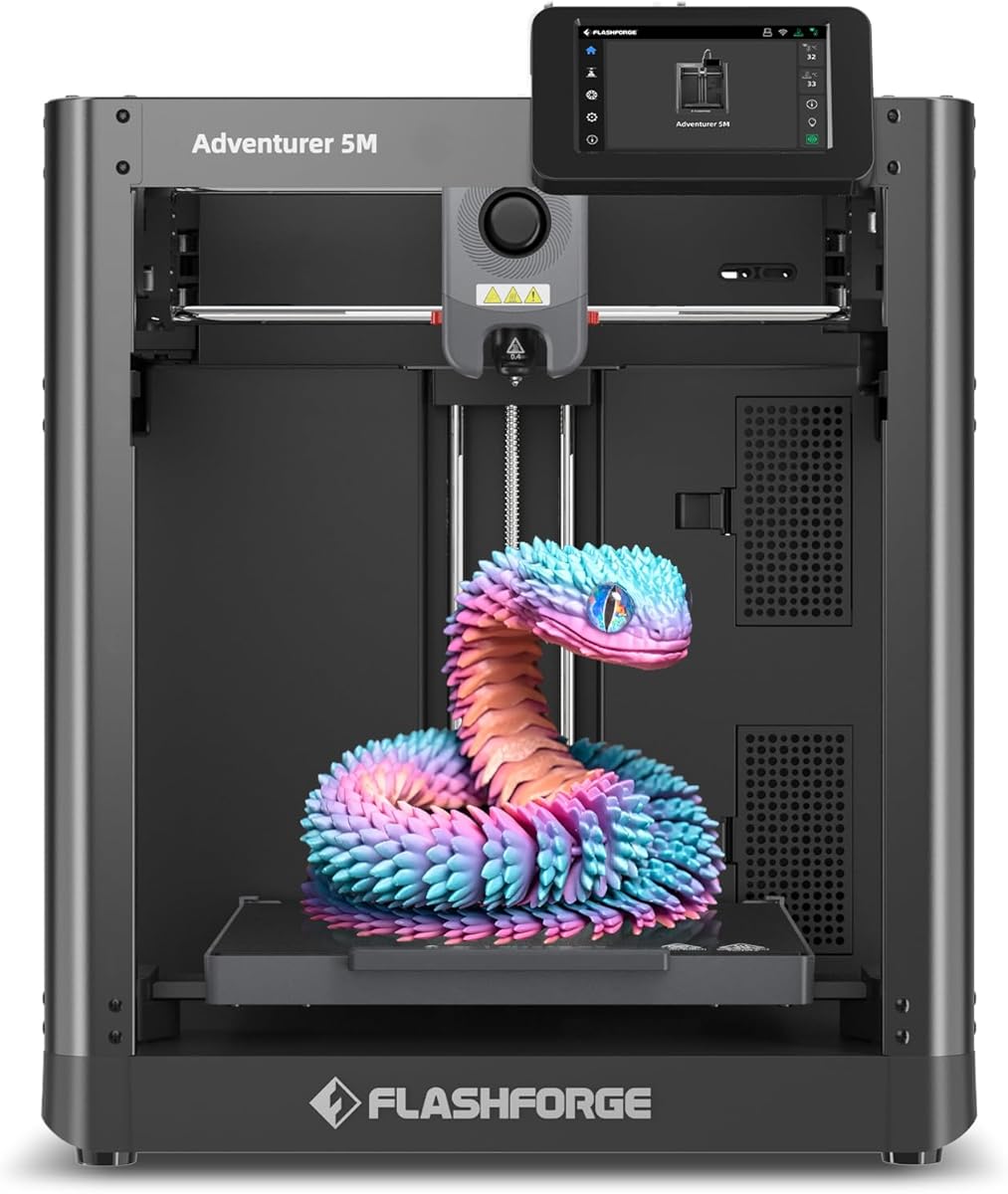
The FLASHFORGE Adventurer 5M is engineered for efficiency with a CoreXY structure that supports high-speed printing up to 600mm/s. This makes it suitable for classrooms where time is limited and rapid prototyping is essential.
We may earn a commission when you buy through this link, at no additional cost to you.
Automatic bed leveling ensures consistent first layers without manual adjustments which simplifies the workflow for students. The 3-second detachable nozzle allows for easy maintenance and quick swaps between different filament types.
Real-time app monitoring enables teachers to track progress remotely reducing the need for constant physical supervision. However the device relies on a well-ventilated environment due to its open design.
This model is a strong choice for schools needing a fast and reliable workhorse for basic projects. Its balance of speed and automatic features makes it a practical option for busy labs.
The CoreXY motion system and acceleration allow for rapid prints that fit into short class periods.
The Flash Studio app allows users to adjust settings and receive status alerts from anywhere.
We may earn a commission when you buy through this link, at no additional cost to you.
The Bambu Lab P1S offers a fully enclosed body that enables printing with advanced materials like ABS and ASA. This is beneficial for educational programs requiring durable functional parts or engineering-grade prototypes.
We may earn a commission when you buy through this link, at no additional cost to you.
Its automatic bed leveling ensures high-quality prints with minimal user intervention which is ideal for mixed-skill classrooms. The printer can be set up in just 15 minutes allowing immediate use for projects.
When connected to the AMS it supports multi-color printing which adds a creative dimension to student designs. The 500mm/s speed ensures that even complex models print quickly to maximize classroom time.
For schools planning to expand beyond basic PLA this printer provides the necessary infrastructure for advanced learning. Its reliability and material versatility make it a valuable asset for STEM programs.
The enclosed chamber maintains temperature stability required for engineering materials like ABS and ASA.
User-friendly design allows for assembly and first print within 15 minutes of unboxing.
We may earn a commission when you buy through this link, at no additional cost to you.
The FLASHFORGE AD5M features a durable all-metal CoreXY structure that ensures stable and smooth motion during high-speed printing. This design minimizes vibrations and leads to precise results for detailed educational models.
We may earn a commission when you buy through this link, at no additional cost to you.
Its fully automatic one-click leveling system measures the nozzle-to-build plate distance to guarantee accurate offsets every time. The quick-swap nozzle simplifies maintenance for students who may not have technical training.
The Orca-flashforge slicer enables one-click batch file transmission which is useful for managing multiple prints in a classroom. Power loss recovery adds reliability by saving ongoing layers during unexpected outages.
This model is well-suited for labs where durability and precision are prioritized over advanced material support. Its ease of maintenance and network monitoring capabilities make it a practical choice for educators.
Patent quick-release nozzles allow for changes in as little as three seconds.
Multi-printer network monitoring allows teachers to oversee several devices from a single interface.
We may earn a commission when you buy through this link, at no additional cost to you.
The Bambu Lab P2S Combo delivers a complete solution for multi-color printing with the AMS 2 Pro included. It enables students to create vibrant models with multiple hues without interrupting the printing process.
We may earn a commission when you buy through this link, at no additional cost to you.
Built-in filament drying at up to 65 degrees keeps materials ready for printing which prevents moisture-related print failures. The adaptive airflow system balances cooling for overhangs and heat retention for engineering materials.
AI failure detection ensures that problems are caught early saving time and materials in a classroom setting. This system offers a professional workflow from design to finished print using Bambu Studio.
For schools focused on design and visualization this combo provides an unmatched creative tool. Its ability to handle complex multi-material projects makes it a premium choice for advanced makerspaces.
The AMS 2 Pro enables seamless switching between colors during a single print.
Integrated drying ensures spools are ready to print by removing excess moisture.
We may earn a commission when you buy through this link, at no additional cost to you.
This variant of the Adventurer 5M focuses on high-speed printing with a max speed of 600mm/s. It is ideal for environments where rapid output is necessary for class projects or prototyping.
We may earn a commission when you buy through this link, at no additional cost to you.
Vibration compensation helps eliminate ghosting in prints ensuring smooth surfaces even at high speeds. The 32mm³/s flow nozzle and 200°C heating in 35 seconds contribute to efficient workflow.
Power loss recovery and filament run-out sensors add reliability by pausing operations when supplies are low or power is interrupted. The flexible PEI plate makes removing prints easy for users.
For educators needing speed and durability this machine offers a reliable platform. Its ability to deliver consistent results quickly makes it a practical choice for busy educational settings.
Advanced vibration compensation eliminates ghosting to ensure smooth surfaces at high speeds.
Filament run-out sensors and power loss recovery ensure prints are not ruined by interruptions.
We may earn a commission when you buy through this link, at no additional cost to you.
The Snapmaker U1 features a unique four-toolhead system that allows for true multi-material and multi-color printing without manual swaps. It changes toolheads in five seconds which is significantly faster than traditional systems.
We may earn a commission when you buy through this link, at no additional cost to you.
This capability enables students to create parts with rigid and flexible materials in a single print. It also supports water-soluble supports making complex geometries easier to print and clean.
The built-in model library and Snapmaker Orca software simplify the workflow for beginners while offering advanced features for pros. Smart calibration and vibration compensation ensure reliable print quality.
For schools looking to expand into multi-material engineering this printer provides exceptional flexibility. Its ability to handle various materials in one job saves time and encourages complex designs.
Automatic tool changer reduces tool change time from minutes to just five seconds.
Combine rigid flexible and support materials in a single print for advanced prototypes.
We may earn a commission when you buy through this link, at no additional cost to you.
The Bambu Lab A1 Mini Combo brings multi-color printing to a compact form factor ideal for smaller spaces. It includes the AMS lite which unlocks vibrant and multi-colored 3D prints right out of the box.
We may earn a commission when you buy through this link, at no additional cost to you.
With 10000 mm/s² acceleration this printer delivers fast results without sacrificing accuracy. The active noise cancellation ensures a quiet environment suitable for study areas.
Full-auto calibration handles Z-offset and bed leveling automatically making it easy for students to achieve good results. Its compact size allows for easy placement in individual desks or shared rooms.
This model is perfect for schools needing multi-color capabilities in a smaller unit. It balances performance and convenience making it a strong choice for personal or shared educational use.
The combo includes AMS lite to enable multi-color printing in a compact footprint.
A 1-Clip quick swap nozzle allows for convenient maintenance and versatile printing options.
We may earn a commission when you buy through this link, at no additional cost to you.
Choosing the right 3D printer for educational use requires careful consideration of safety, ease of use, and technical capabilities. This guide outlines key factors to help you make an informed decision.
Safety is paramount when selecting a 3D printer for schools or homes. Look for models with GREENGUARD certifications or enclosed designs that minimize exposure to emissions. Ensure the device has features like anti-pinch doors or cool-touch exteriors to protect students.
Prioritize devices with official safety certifications to ensure they meet health and safety standards for indoor environments.
Educators need printers that minimize time spent on mechanical adjustments. Fully automatic calibration systems save valuable class time and reduce frustration for beginners. A seamless setup ensures students can start designing immediately.
Choose models with auto-leveling and automatic calibration to reduce manual intervention.
While PLA is common for beginners, advanced classes may need PETG or ABS for durability. Enclosed printers are better suited for engineering materials that require temperature stability. Verify which filaments the printer supports before buying.
Select a machine that matches the filament requirements of your curriculum.
High-speed printing allows for completing projects within class periods. A larger build volume supports more complex designs but may require more space. Balance speed and size based on your specific educational needs.
Look for high acceleration and sufficient build volume to meet project demands.
A robust software ecosystem simplifies the workflow from design to print. User-friendly interfaces and educational modules enhance the learning experience. Ensure the software is compatible with your operating system.
Prioritize printers with intuitive software and educational resources.
Educational printers are used frequently so durability is key. Easy maintenance features like quick-swap nozzles reduce downtime and keep the lab running. Choose models with proven reliability for classroom use.
Opt for durable construction and easy maintenance to ensure long-term use.
Remote monitoring allows teachers to supervise prints without constant physical presence. Power loss recovery prevents wasted materials during outages. These features add a layer of reliability and peace of mind.
Select printers with app support and power recovery features.
Educational budgets vary so consider the total value beyond just the hardware. A model that reduces setup time and failed prints offers better long-term value. Compare features against the specific needs of your students.
Balance initial cost with reliability and feature richness.
Begin by reading the user manual to understand the specific setup instructions for your model. Most educational printers require leveling and loading filament before the first print. Follow the guided steps carefully to avoid errors.
Keep the printer in a well-ventilated area to ensure air quality remains safe during operation. Regularly clean the print bed to maintain proper adhesion and prevent print failures. Wipe down the surface with isopropyl alcohol if needed.
Store filaments in a dry place to prevent moisture absorption which can cause printing defects. If the printer is not used for extended periods, check the calibration and nozzles before resuming. Consistent maintenance ensures reliable results for every project.
The safest options include fully enclosed units with safety certifications like GREENGUARD. These models reduce exposure to emissions and protect users from hot parts. Always check for safety ratings before purchasing.
Most modern educational printers require minimal maintenance due to auto-leveling and auto-swappable parts. Regular cleaning of the build plate and nozzle checks are usually sufficient. Consistent upkeep ensures the printer remains reliable.
Yes, many models are designed with beginner-friendly interfaces and guided setup apps. Auto-calibration features simplify the process so students can focus on design. Choose units with high automation for ease of use.
PLA is the standard for beginners due to its ease of use and safety. PETG offers more durability for functional projects. Select a printer that supports a variety of filaments if the curriculum is advanced.
Look for printers that offer network monitoring or app control. These tools allow teachers to check status remotely and manage batches. This approach saves time and ensures all machines are working.
Most use standard slicing software like Cura or their own proprietary apps. Educational-focused models often include guided tools to simplify the workflow. Ensure the software runs on your computers.
Many models include power loss recovery to pause and resume after outages. This feature prevents material waste and protects the model. Always check for this feature if reliability is a priority.
Print time depends on the size and complexity of the model. High-speed printers can finish small projects in under an hour. This allows for completing assignments within typical class periods.
Choosing the right 3D printer for educational use ultimately depends on your specific learning goals. The top picks like the Bambu Lab A1 and Ugee Funbox offer distinct advantages for reliability and safety.
Prioritize models that minimize technical hurdles so students can focus on creativity and engineering concepts. Features like auto-calibration and robust safety certifications are essential for a smooth learning experience.
Remember to verify current availability and specifications before purchasing to ensure they meet your classroom needs. The right printer can transform how students engage with design and manufacturing.