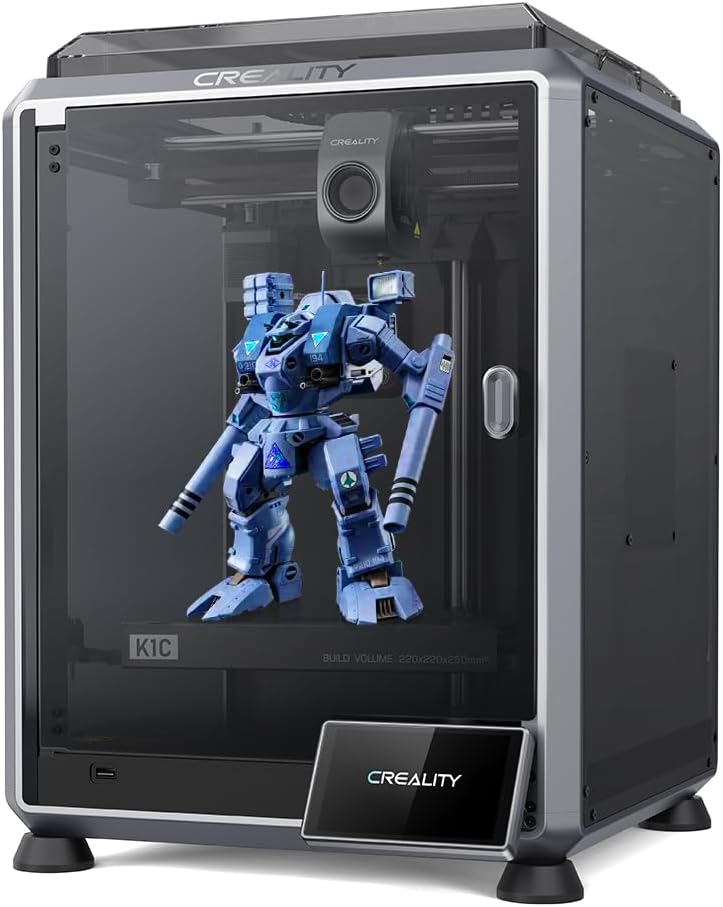
Creality K1C
4.3Editor score
Supports carbon fiber filaments
Clog-free direct extruder
Nozzle up to 300 C
This guide compares the top 3D printer for high temperature filaments including Bambu Lab, Creality, and Flashforge to help you find the best machine for
Finding the right 3D printer for high temperature filaments is essential for engineering projects requiring durable parts. These machines must maintain consistent heat and handle abrasive materials like carbon fiber reinforced polymers without compromising print quality or reliability during long runs.
We evaluated ten leading models based on their ability to handle materials requiring nozzle temperatures above 250 degrees Celsius. Our analysis focused on heated chamber capabilities, extruder robustness, cooling systems, and overall build quality to ensure every recommendation meets the demands of professional and advanced hobbyist users.
Each pick highlights specific strengths such as speed, multi-color capabilities, or industrial-grade heating systems. Keep in mind that pricing fluctuates based on sales and bundle configurations so always verify the current cost before making your final purchase decision for your workshop or studio setup.
4.3Editor score

4.7Editor score

4.4Editor score
The following comparison table details the critical specifications and capabilities of each model to help you make an informed decision based on your specific printing needs and material requirements.



The Bambu Lab P2S Combo stands out as a top choice for users needing reliable high temperature printing. With a capable rating of 4.7 it delivers precision and speed while managing thermal requirements for advanced polymers like PC and Nylon.
We may earn a commission when you buy through this link, at no additional cost to you.
Its adaptive airflow system automatically balances cooling and heat retention ensuring that overhangs remain crisp while maintaining a stable 50 C chamber for engineering materials. The AMS 2 Pro includes a built-in dryer to keep spools dry and ready for flawless results without manual intervention.
While the price is higher than some competitors the inclusion of AI failure detection and active flowrate compensation justifies the investment. Users can expect fewer failed prints and consistent quality across long runs of functional prototypes.
This machine is ideal for professionals who need consistent high temperature performance without compromising on speed or workflow automation. It is a solid recommendation for anyone serious about engineering grade 3D printing.
The system maintains a 50 C chamber to prevent warping in ABS and ASA while using cool air for overhangs to ensure crisp details.
Built-in drying up to 65 C keeps moisture out of the filament which is critical for hygroscopic materials like Nylon and PETG.
We may earn a commission when you buy through this link, at no additional cost to you.
The Creality K1C offers an accessible entry point for those needing to print with engineering grade materials. With a rating of 4.3 it is designed to handle abrasive filaments like carbon fiber which often clog standard extruders.
We may earn a commission when you buy through this link, at no additional cost to you.
Its clog-free direct extruder uses a steel-stipped copper nozzle and titanium alloy heatbreak to block heat creep and prevent premature melting. This setup allows for reliable 300 C printing which is essential for materials like PC and high-temp PETG.
While the build volume is compact at 8.66 inches and it offers excellent value for hobbyists needing high temperature capabilities. The auto calibration and AI camera add convenience without significantly increasing the cost of the unit.
Buyers looking for a budget-friendly option that handles high temperature and abrasive filaments will find this model a smart choice. It balances performance and affordability well for small workshops and home studios.
The steel-stipped copper nozzle handles carbon fiber filaments without wearing down quickly which extends the life of your printer.
Auto Z offset and leveling save setup time allowing you to focus on printing rather than tinkering with the machine.
We may earn a commission when you buy through this link, at no additional cost to you.
The Bambu Lab P1S is a robust choice for users needing a fully enclosed environment for high temperature printing. With a rating of 4.5 it provides the stability required for ABS and ASA without the complexity of industrial machines.
We may earn a commission when you buy through this link, at no additional cost to you.
Its enclosed body helps maintain internal temperatures which reduces warping and improves print quality for engineering filaments. The user-friendly design allows setup in just 15 minutes making it a quick addition to your workshop.
While it does not support carbon fiber filaments it excels with standard high temperature materials. The automatic bed leveling ensures consistent first layers which is critical when using materials that shrink during cooling.
This printer is suitable for those who want a reliable enclosed solution without a high price tag. It is a strong contender for anyone focusing on functional prototypes and durable parts.
The fully enclosed design maintains heat and prevents drafts which reduces warping for materials like ABS and ASA significantly.
With a 15 minute setup time you can start printing almost immediately after unboxing the device for immediate projects.
We may earn a commission when you buy through this link, at no additional cost to you.
The Bambu Lab A1 is designed with beginners in mind but offers features that make it versatile for various filaments. With a rating of 4.7 it is praised for its ease of use and quiet operation.
We may earn a commission when you buy through this link, at no additional cost to you.
Full-auto calibration handles Z offset and bed leveling automatically reducing the learning curve for new users. The 1-Clip quick swap nozzle makes maintenance easy and ensures you can change nozzles for different materials without hassle.
While it is not designed for high temperature materials like PC it is a great entry point for learning the basics of FDM printing. Its speed and reliability make it a favorite for hobbyists and educational settings.
This printer is best for those starting out or needing a secondary machine for general purpose prints. It simplifies the printing process significantly compared to traditional desktop models.
Automatic calibration and simple interface make it easy for beginners to get started without frustration or manual adjustments.
Active motor noise canceling ensures the printer runs quietly so it does not disturb work or living environments.
We may earn a commission when you buy through this link, at no additional cost to you.
The FLASHFORGE AD5X combines speed and temperature capability at a competitive price point. With a rating of 4.4 it is well suited for users needing high temperature nozzles without the cost of industrial machines.
We may earn a commission when you buy through this link, at no additional cost to you.
Its 300 C nozzle allows printing with a wide range of filaments including ABS and PETG. The IFS technology enables vibrant multi-color prints without manual filament swaps saving time on complex projects.
While the build volume is moderate at 220mm the high speed compensates for production time. The fully automatic leveling ensures consistent starts which is vital for maintaining print quality over multiple batches.
This model is a great choice for makers who want to experiment with different materials and colors. It offers excellent features for the price making it a reliable addition to a home lab.
IFS technology allows printing with up to four colors simultaneously creating vibrant models without manual intervention.
Up to 600 mm/s speed reduces print times significantly allowing for faster iteration and prototyping.
We may earn a commission when you buy through this link, at no additional cost to you.
The FLASHFORGE Creator 5 Pro is an industrial-grade machine designed for professional high temperature printing. With a rating of 4.4 it offers robust features that ensure safety and reliability in any environment.
We may earn a commission when you buy through this link, at no additional cost to you.
Its active chamber heating maintains stable temperatures up to 65 C which is critical for materials like PC and Nylon. The HEPA13 filtration system captures volatile particles ensuring a clean workspace for office or home use.
With four independent extruders you can print multi-color parts without purging waste. This efficiency saves material and time on complex projects requiring color separation or support materials.
This printer is best for professional workshops needing high throughput and material safety. It is a premium solution for those who require consistent industrial results.
Maintaining a stable 65 C ensures consistent interlayer adhesion and minimizes warping for advanced materials.
The filtration system captures ultrafine particles and odors creating a safe environment even during long prints.
We may earn a commission when you buy through this link, at no additional cost to you.
The Anycubic Kobra S1 Max is designed for large-scale engineering projects requiring significant build volume. With a rating of 4.0 it offers features tailored for advanced materials and big prints.
We may earn a commission when you buy through this link, at no additional cost to you.
Its 350 C hotend and 65 C heated chamber handle demanding filaments like PC and PA-CF. The CoreXY system ensures stability at speeds up to 600 mm/s reducing vibration and improving quality on large models.
The heated bed reaching 120 C ensures strong adhesion for materials that require high temperatures. This is crucial for preventing warping when printing large functional parts or prototypes.
This printer is ideal for teams needing large prints without compromising on material capability. It is a powerful option for those requiring both size and thermal performance.
A 350 C hotend handles abrasive engineering filaments and specialized high temperature materials effectively.
CoreXY motion ensures high precision and stability even at maximum speeds for large scale prints.
We may earn a commission when you buy through this link, at no additional cost to you.
The Flashforge AD5X provides versatile printing capabilities with a focus on multi-color production. With a rating of 4.2 it combines speed and temperature control for advanced users.
We may earn a commission when you buy through this link, at no additional cost to you.
Its IFS system allows for direct printing with up to four colors using different materials like PLA and TPU. This feature is perfect for creating functional prototypes with varied material properties.
The 300 C all-metal hotend handles high temperature materials well. Dual-band Wi-Fi ensures reliable monitoring from your mobile device so you can track progress remotely.
This model is a great choice for artists and makers who want color variety without sacrificing material performance. It balances creative features with engineering needs effectively.
The IFS system allows swapping materials for gradients or functional parts without purging the nozzle.
Connect via 2.4G or 5G networks for stable monitoring and control of your print jobs.
We may earn a commission when you buy through this link, at no additional cost to you.
The Snapmaker U1 offers a unique approach to multi-material printing with its toolchanger system. With a rating of 4.5 it is designed to reduce waste and increase speed during complex prints.
We may earn a commission when you buy through this link, at no additional cost to you.
Four independent toolheads switch in just 5 seconds enabling true multi-material prints without purging. This reduces filament waste significantly and allows mixing rigid and flexible materials in one part.
Its rigid CoreXY structure maintains speed and accuracy at 500 mm/s. The software includes automatic calibration ensuring high precision across all toolheads.
This machine is best for prototyping teams needing complex parts in a single print. It is an efficient solution for multi-material workflows requiring high precision.
Automatic tool change reduces switch time from minutes to seconds increasing overall printing efficiency.
Combine rigid and flexible materials to create complex parts with integrated hinges or soft grips.
We may earn a commission when you buy through this link, at no additional cost to you.
The FLASHFORGE Creator 5 Pro offers industrial capabilities with a focus on material efficiency. With a rating of 4.0 it is built for high performance and low waste production.
We may earn a commission when you buy through this link, at no additional cost to you.
Its Near-Zero waste system eliminates purge waste during tool changes saving material and cost over time. The active heated chamber up to 65 C ensures reliable prints with engineering filaments.
Dual HEPA and activated carbon filtration provide a safe environment for users. The system is designed to maintain a stable and odorless workspace.
This model is perfect for teams focusing on production runs needing high efficiency and safety. It is a strong solution for industrial prototyping.
Eliminates purge waste during nozzle swaps which reduces material costs and environmental impact.
Maintains a stable 65 C for consistent interlayer adhesion in ABS and PC materials.
We may earn a commission when you buy through this link, at no additional cost to you.
Selecting the right printer requires understanding the specific needs of your engineering materials and production environment.
For materials like ABS and PC a heated chamber is critical to prevent warping. Look for models that offer active heating capable of maintaining at least 50 C to ensure stable internal temperatures.
Prioritize printers with active heating rather than passive insulation to achieve consistent results with engineering filaments.
Ensure the printer's nozzle can reach at least 300 C to handle high temperature filaments like Nylon and PC. Standard printers limited to 240 C will struggle with these materials.
Select a model with a 300 C nozzle rating to future-proof your setup for advanced engineering projects.
Abrasive filaments like carbon fiber require hardened nozzles and durable extruders. Standard brass nozzles will wear out quickly when printing with these materials.
Choose a printer with a steel-stipped or hardened steel nozzle to ensure long-term reliability.
Determine the size of parts you plan to print. Large functional prototypes may require a build volume exceeding 300mm in all dimensions.
Ensure the build volume fits your largest intended part to avoid the need for complex joining techniques.
High temperature printing can produce fumes so HEPA filtration is important for indoor use. Active cooling systems also help manage overhangs on complex parts.
Look for integrated filtration to maintain a safe and clean printing environment in your workspace.
High acceleration and speed reduce production time without sacrificing quality. Look for CoreXY systems that maintain stability at high speeds.
Prioritize printers with high acceleration ratings to improve your overall workflow efficiency.
If you need complex parts with multiple materials choose a system with independent toolheads or IFS technology. This avoids the need for manual swaps and purging.
Independent systems save material and reduce waste during production runs.
Automatic calibration and AI detection help manage failed prints. This is especially helpful for expensive engineering filaments.
Choose models with advanced software features to reduce manual intervention.
To ensure longevity always use the correct nozzle material for your filaments. Hardened nozzles prevent wear when printing abrasive materials like carbon fiber.
Keep filament dry using a dehumidifier or dryer since moisture ruins high temperature prints. This prevents bubbles and weak layers during the printing process.
Regularly clean the chamber and bed to avoid residue build-up. This maintains consistent heating and adhesion for every new print job.
The FLASHFORGE Creator 5 Pro and Bambu Lab P2S are top choices due to their active heated chambers capable of maintaining high temperatures. These printers handle the thermal requirements of Polycarbonate effectively.
No standard nozzles wear out quickly with abrasive filaments. You need hardened steel nozzles to prevent damage to the printer and ensure consistent extrusion.
Yes a heated chamber prevents warping in ABS. Look for machines that offer at least 50 C of internal heating for successful results.
Most high temperature capable printers reach 300 C. Some specialized units like the Anycubic Kobra S1 Max go up to 350 C for advanced materials.
Filtration is highly recommended because high temperature materials release fumes. HEPA and activated carbon filters keep your workspace safe and odor-free.
Use a dedicated filament dryer to reach temperatures up to 65 C. This prevents moisture absorption which can ruin high temperature prints.
We have reviewed ten top machines including the Bambu Lab P2S and FLASHFORGE Creator 5 Pro. Each offers unique advantages for handling high temperature filaments like PC and Nylon.
Prioritize a heated chamber and hardened nozzle if you plan on engineering grade parts often. These features ensure reliability and quality over time.
Remember to verify current prices and availability before purchasing. Models and configurations change regularly so always check the latest specs.