
Astromania Laser Collimator Telescope Alignment
4.5Editor score
Removable 2 inch adapter included
Seven brightness level settings
Class 3R laser safety standard
Achieving sharp views through your telescope requires precise optical alignment. A laser collimator for telescope alignment streamlines this process by projecting a beam that reveals misalignment in your optics. These tools are essential for Newtonian reflectors to ensure light travels correctly to the eyepiece for crisp images.
We evaluated ten leading laser collimators based on build quality, calibration stability, and ease of use. Our comparison includes models with adjustable brightness, dual adapters, and advanced features like self-centering technology. Each entry highlights key specifications and real-world performance traits for accurate selection.
Every product pick shows unique strengths for different observer needs and budgets. Some offer budget-friendly entry points while others provide premium engineering for imaging enthusiasts. Prices change frequently so check current listings before purchasing to secure the best value for your setup today.
4.5Editor score
4.7Editor score

As an Amazon Associate we earn from qualifying purchases.
This side-by-side comparison outlines the core specifications and design traits of each collimator. Use it to quickly identify fit sizes, laser classes, and unique features like adapters or digital interfaces before diving into detailed reviews.
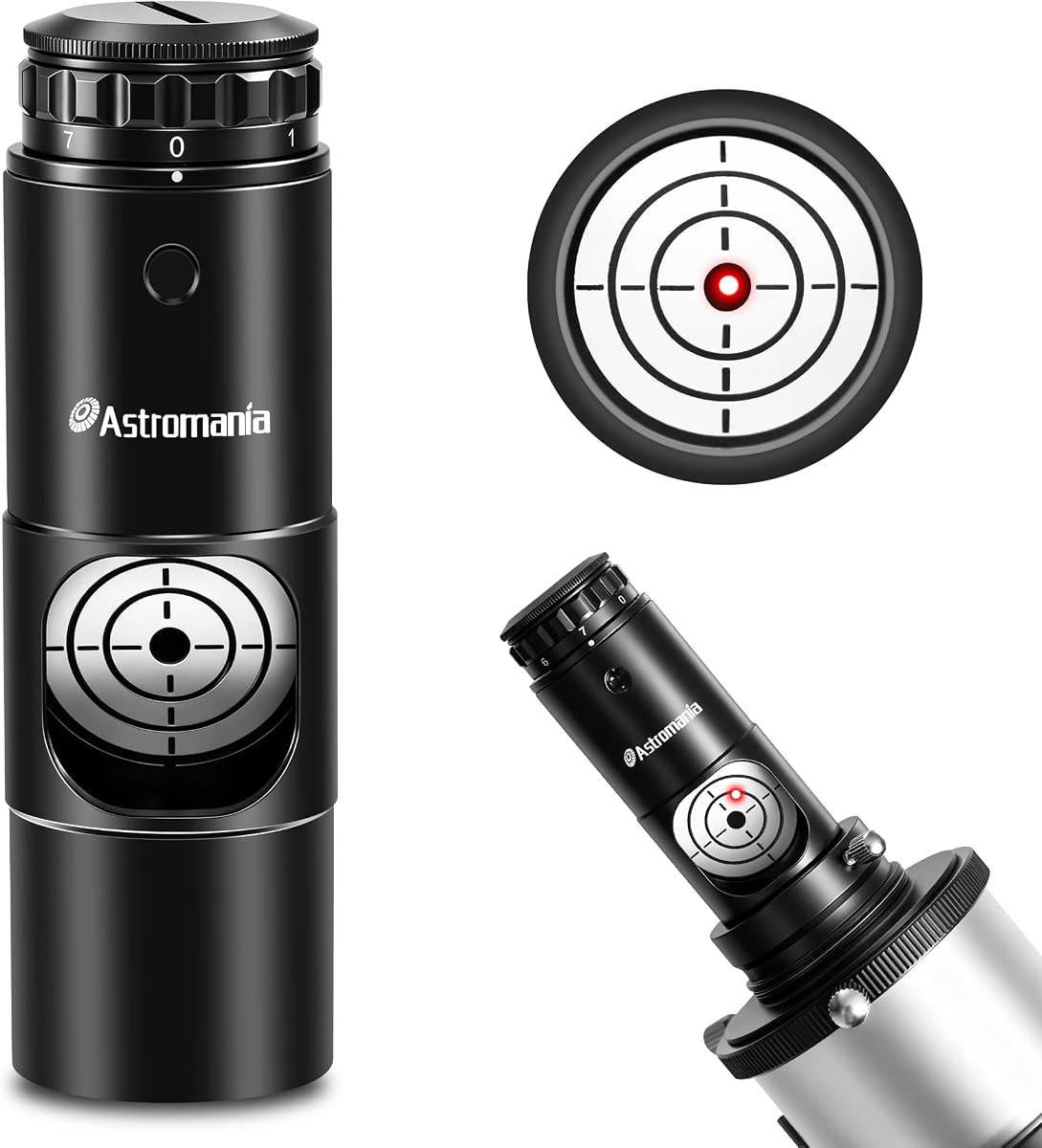


This Astromania collimator delivers strong performance for Newtonian owners seeking reliable alignment. With a 4.5 rating users praise its ease of use and durable build. The dual adapter ensures it fits most standard focusers without extra purchase.
We may earn a commission when you buy through this link, at no additional cost to you.
Its 7 brightness levels make it usable in varying light conditions from daylight to dark skies. The Class 3R safety standard keeps eye risk low while the metal body resists wear. Precise instructions guide beginners through the process effectively.
Some users note the battery may need replacement sooner than expected. There is no self-centering adapter so extra care is needed when inserting it into the focuser. These are minor trade-offs given the low price and solid results.
Buy this if you want an affordable tool that works across 1.25 and 2 inch systems. It is ideal for beginners who need clear guidance and adjustable features without paying premium prices for extra engineering.
The removable 2 inch adapter allows seamless transition between focusers so you do not need separate collimators for upgrades.
Seven brightness levels ensure the laser beam is visible without overwhelming your eyes during daytime adjustments.
We may earn a commission when you buy through this link, at no additional cost to you.
For owners with standard 1.25 focusers this model offers a budget-friendly path to precision. It shares many features with the dual version but saves cost by omitting the larger adapter. A 4.5 rating reflects consistent satisfaction among users.
We may earn a commission when you buy through this link, at no additional cost to you.
The compact size fits naturally in your hand for easy handling during alignment. Adjustable brightness helps you see the beam clearly in bright rooms or dark fields. The metal body ensures it survives transport to observing sites without damage.
It lacks the 2 inch adapter so upgrading your focuser later means buying a new unit. Battery life is decent but may require spares for long sessions. These limits are acceptable for casual observers on a tight budget.
Pick this if you already have a 1.25 inch system and want reliable collimation without overspending. It is perfect for beginners who prioritize affordability and simplicity over future-proof versatility.
The lightweight design fits easily in any observing kit so you can take it to remote dark sky sites without bulk.
Step-by-step instructions in English and German make the initial setup simple even if you are new to telescope optics.
We may earn a commission when you buy through this link, at no additional cost to you.
This SVBONY collimator combines solid construction with a practical adapter for a competitive price. Users highlight the triple cemented lens for stable beam projection. It is a top choice for those wanting versatility without breaking the bank.
We may earn a commission when you buy through this link, at no additional cost to you.
The 2 inch adapter supports future upgrades while the metal body resists wear and tear over time. Adjustable brightness ensures visibility in diverse lighting from workshops to starlit fields. Clear instructions help newcomers align quickly.
It does not include a self-centering adapter which may introduce slight slop in looser focusers. Battery replacement is user friendly but adds a small recurring cost. These factors do not detract from its core reliability.
Choose this if you need a dual-fit collimator with proven lens stability. It suits observers who want a robust tool that grows with their telescope setup over time.
Triple cemented lenses keep the beam focused and steady which prevents drift during the adjustment process.
The removable 2 inch adapter ensures compatibility with larger focusers without needing a separate purchase.
We may earn a commission when you buy through this link, at no additional cost to you.
This bundle pairs a collimator with a wide-field eyepiece to enhance your overall observing experience. The 62 degree apparent field gives an immersive view of star clusters and nebulae. It is designed for broad-field lunar and deep sky targets.
We may earn a commission when you buy through this link, at no additional cost to you.
The Class I laser safety ensures low risk during use while the metal body protects against wear. You get a complete package that supports both alignment and visual observation without extra costs. Brightness is adjustable for any condition.
It is limited to 1.25 inch focusers so it may not fit larger systems. The collimator itself is not detailed here so check specifications before buying. This makes it best for specific users who value viewing width.
Select this if you want a collimator plus a high-quality eyepiece for wide views. It suits observers who prioritize immersive visual performance alongside basic alignment needs.
The 62 degree eyepiece delivers a lost-in-space feeling ideal for large open clusters and broad nebulas.
Class I laser safety ensures minimal risk to eyes during alignment sessions in any light condition.
We may earn a commission when you buy through this link, at no additional cost to you.
Alstar offers a reliable collimator that fits 1.25 inch focusers with ease. Users appreciate its compact form which makes transport effortless. The 4.5 rating shows consistent accuracy and durability across typical use cases.
We may earn a commission when you buy through this link, at no additional cost to you.
Adjustable brightness levels let you work in any light without straining your eyes. The side window helps verify laser reflection on itself for accurate results. Metal construction ensures it withstands bumps during travel.
Battery availability varies and the 1.25 inch limit means it won't fit 2 inch systems. These are minor drawbacks given the low cost and solid performance. It remains a strong entry-level choice for many users.
Opt for this if you need a portable and straightforward collimator for small focusers. It is ideal for beginners who want quick and simple alignment without extra complexity.
Its lightweight and compact size allows easy storage in any observing bag for field trips.
The side window with central hole allows you to confirm the beam reflects back correctly.
We may earn a commission when you buy through this link, at no additional cost to you.
This Alstar model provides dual fit support with a removable adapter at a low price. Users note its stable beam thanks to the triple cemented lens. It is a practical choice for those needing both focuser sizes in one tool.
We may earn a commission when you buy through this link, at no additional cost to you.
The 2 inch adapter enables growth without buying a new collimator. Brightness levels adjust to match daylight or dark conditions. The metal body resists damage during transport to observing sites or storage.
It lacks a self-centering adapter and battery inclusion varies which may require extra purchases. These points are offset by its low cost and reliable function. It remains a solid budget option for versatile setups.
Pick this if you have both 1.25 and 2 inch systems and want one tool for both. It suits observers who prioritize cost efficiency without sacrificing adaptability.
The included 2 inch adapter ensures you can upgrade your focuser without replacing the collimator.
Triple cemented lenses maintain beam focus during adjustments so results stay consistent over time.
We may earn a commission when you buy through this link, at no additional cost to you.
This bundle adds a phone adapter for astrophotographers who want to capture views easily. The adjustable locking mechanism secures phones with EVA pads to prevent scratches. It supports a wide range of devices from iPhone to Galaxy models.
We may earn a commission when you buy through this link, at no additional cost to you.
The collimator itself offers dual focuser support and adjustable brightness for any light. The metal body ensures longevity while the included adapter simplifies imaging setup. Clear instructions help you align the optics before attaching the phone.
Not all phones fit perfectly and the adapter adds a small layer of complexity. It is not a self-centering collimator so extra care is needed during alignment. These are acceptable limits for imaging users.
Choose this if you want to start astrophotography with your existing smartphone. It suits observers who value imaging convenience alongside solid collimation performance.
The phone adapter lets you attach your device to the eyepiece for imaging without extra tripods.
High density EVA pads and steel bolts protect your phone while keeping it firmly in place.
We may earn a commission when you buy through this link, at no additional cost to you.
This bundle pairs a laser collimator with a Cheshire eyepiece for comprehensive alignment. The Cheshire uses crosshairs and a mirror for precise centering without batteries. Together they offer redundancy so you can verify results with two methods.
We may earn a commission when you buy through this link, at no additional cost to you.
The laser works at night while the Cheshire helps during daylight sessions. Both support 1.25 and 2 inch focusers with adapters. The metal build ensures long service life for both tools. Ratings reflect high satisfaction from users.
Managing two tools takes a bit more storage and setup time. The Cheshire is limited to daytime use so it does not replace the laser at night. These are minor issues for a robust hybrid kit.
Select this if you want a complete alignment solution with dual verification methods. It suits serious observers who value redundancy and precision in their collimation workflow.
Using both laser and Cheshire allows you to cross check alignment for higher accuracy and confidence.
The Cheshire eyepiece works in daylight to help align optics without needing a laser beam.
We may earn a commission when you buy through this link, at no additional cost to you.
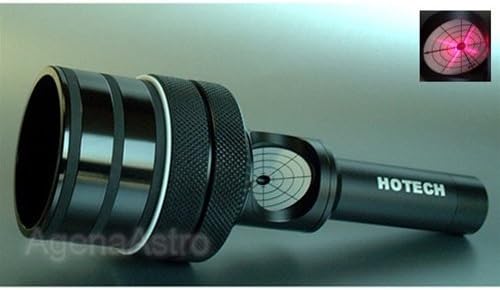
HoTech sets the premium standard with its self-centering adapter that solves common slop issues. Users rate it highly for accuracy and repeatability. It is ideal for imaging setups where optical precision matters most.
We may earn a commission when you buy through this link, at no additional cost to you.
The SCA technology ensures the laser stays centered during insertion and rotation. This removes off-axis errors that cheaper collimators introduce. The unit arrives factory pre-calibrated so you start with optimal accuracy. Included battery saves extra cost.
The higher price reflects its specialized engineering and may not be needed for casual visual observing. Some find the extra cost steep if they only need basic alignment. It remains the best choice for precision work.
Buy this if you need the highest collimation accuracy for imaging or high-end scopes. It suits observers who demand precision and are willing to invest in premium tooling.
The patented adapter fits tightly and centers itself so there is no off-axis error from the focuser.
Imagers benefit from the repeatability since consistent collimation translates to sharper stars and detail.
We may earn a commission when you buy through this link, at no additional cost to you.
The Ocal Pro V4.0 uses software guidance to simplify alignment with calibration circles. It works with Newtonian and Schmidt Cassegrain scopes for broad compatibility. This tool brings digital precision to optical alignment without manual guesswork.
We may earn a commission when you buy through this link, at no additional cost to you.
Factory pixel-level accuracy ensures you start with an optimal baseline. The all-in-one design allows field adjustments via smartphone apps. It supports high-end imaging by offering repeatability and precision. Users can track adjustments easily.
It comes at a higher price and needs a smartphone which may be a hurdle for some. The learning curve for software might be steep for non-tech users. Still it delivers unique value for digital observers.
Pick this if you want a modern digital approach to collimation. It suits tech-savvy astronomers who value software integration and high precision imaging workflows.
Software guided calibration circles help you see adjustments in real time for precise alignment.
Supports both Newtonian and Schmidt Cassegrain telescopes for versatile alignment in various setups.
We may earn a commission when you buy through this link, at no additional cost to you.
Selecting the right collimator depends on your telescope type, budget, and desired precision. This guide covers the key factors to help you narrow down choices.
Check whether your telescope uses a 1.25 inch or 2 inch focuser. Models with removable adapters offer versatility if you plan to upgrade later. Without the correct fit the collimator will not seat properly and accuracy suffers.
Choose units with dual adapters to ensure long-term compatibility as you expand your setup.
Look for Class 3R or lower to ensure eye safety during use. Higher classes increase risk of retinal damage if viewed directly. Most reputable collimators stay within safe limits for casual and professional observers.
Always verify the safety class before purchase to avoid exposure risks.
Adjustable brightness levels let you use the collimator in different lighting conditions. This helps visibility in bright workshops or reduces glare in dark skies. Fixed brightness can make alignment harder in certain environments.
Prefer models with multiple brightness settings for flexible field use.
Metal construction ensures durability during transport to observing sites. Plastic housings may crack under stress and affect internal calibration. Anodized aluminum offers good resistance to wear and corrosion.
Choose metal-bodied collimators for long service life and reliability.
Factory pre-calibrated units save time by reducing the need for adjustment. Self-centering adapters improve repeatability by ensuring tight fit. Poor calibration stability means frequent re-tuning which wastes observing time.
Select collimators that hold calibration well over repeated use.
Side windows for checking reflection simplify the alignment process for beginners. Clear step-by-step instructions help avoid mistakes. Compact designs are easier to handle during nighttime adjustments.
Look for user-friendly features that streamline the alignment workflow.
Some bundles include phone adapters or Cheshire eyepieces for broader utility. These add value if you want to combine alignment with imaging or visual checks. Extra tools reduce the need to purchase separate items.
Consider bundles if they match your needs to maximize value.
Budget models work well for casual observers while premium tools offer higher precision. Determine how critical perfect collimation is for your goals. Imaging usually demands better accuracy than casual visual use.
Balance cost with the precision you actually require for your setup.
Insert the collimator into the focuser with the adapter removed if needed. Ensure it seats tightly without wobbling. If your model has a self-centering adapter let it lock in place before tightening thumbscrews.
Turn on the laser and adjust brightness to a visible level. Look at the spot on the primary mirror or use the side window to see reflections. Rotate coll adjustment screws until the dot centers on the target mark.
Store the collimator in a padded case to protect the lens and body. Replace batteries regularly to avoid power loss mid-alignment. Clean the lens with a soft cloth to maintain beam clarity and accuracy.
Collimate whenever you notice blurry images or after moving the scope. Frequent transport can misalign optics. Regular checks before observing ensure crisp views. Beginners may need more frequent checks until familiar with the process.
Yes if brightness is adjusted down to avoid eye strain. Some models include Cheshire eyepieces specifically for daylight use. Ensure the laser is visible against the mirror but not blinding.
It is a mechanism that ensures the collimator seats tightly and centered in the focuser. This reduces slop that can cause alignment errors. It is common in premium collimators for imaging use.
Most are Class 3R or lower which are safe for brief exposure. Avoid staring directly into the beam especially at close range. Check the safety label before purchase for peace of mind.
Factory calibrated units usually do not require adjustment. Some allow fine-tuning via side screws if calibration drifts. Only adjust if you are experienced to avoid introducing errors.
Some collimators support multiple telescope types but Newtonians benefit most. Check specifications for compatibility with your scope model. Not all models are designed for SCT alignment workflows.
The HoTech SCA and Ocal Pro V4.0 lead in precision and digital features while the Astromania options deliver strong value. Each pick suits different needs from casual visual to serious imaging.
Prioritize focuser fit and build quality to ensure long-term reliability. Adjustable brightness and clear instructions help beginners succeed without frustration.
Prices change frequently so verify current listings before purchase. Select the tool that matches your telescope type and precision needs for better views.