
8-Port 10G SFP+ Switch, Layer 3 Managed, Enterprise Network Fiber Switch
4.7Editor score
10Gbps SFP+ ports
Fanless silent operation
Static routing support
This guide compares the top Layer 3 Network Switch models for enterprise and home labs, detailing features, routing capabilities, and performance specs.
Layer 3 Network Switch models offer advanced routing and switching in one device. They enable VLAN routing, static paths, and secure segmentation for modern networks.
We evaluated ten top models based on port speeds, management tools, reliability, and value. Each entry reflects real user ratings and manufacturer specifications for informed choices.
Each pick shows key strengths, ideal use cases, and notable trade-offs. Prices fluctuate often, so verify current offers before finalizing your purchase decision.
4.7Editor score

4.7Editor score

4.7Editor score
This side-by-side comparison highlights key specs across all ten Layer 3 Network Switch models. Review port types, management options, PoE support, and physical form factors.

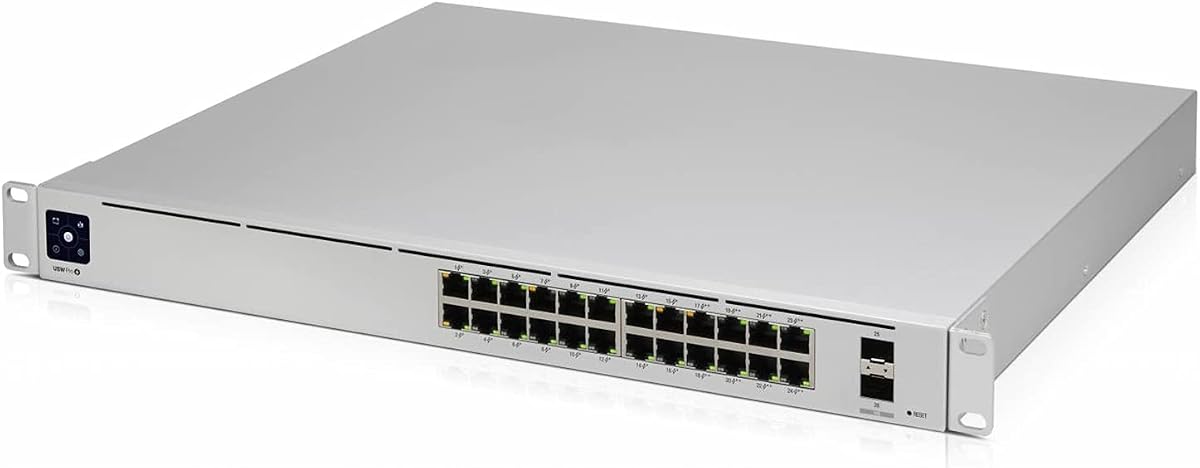




This UniFi switch stands out with top-tier reliability and smart routing features. It carries a 4.7-star rating from users who trust its consistency in production environments.
We may earn a commission when you buy through this link, at no additional cost to you.
Its 24-port design delivers solid throughput for modern LAN needs. Built-in Layer 3 routing allows efficient VLAN communication without needing a separate router. Users praise its seamless integration with the UniFi ecosystem for centralized management.
While the switch offers great performance, it works best with a UniFi controller setup. The price reflects premium quality and advanced capabilities. For those already invested in UniFi hardware, this unit is a natural and powerful extension.
IT teams and pros seeking centralized control should consider this model. It delivers enterprise-grade routing in a compact design. Prioritize this switch when UniFi management and PoE flexibility are required for your network.
Centralized control through the UniFi platform simplifies monitoring and configuration across all connected devices.
Built-in Layer 3 features enable dynamic inter-VLAN routing and reduce dependency on external routing hardware.
We may earn a commission when you buy through this link, at no additional cost to you.
The MokerLink model offers exceptional speed with eight 10G ports. Its 4.3-star rating reflects strong performance in high-throughput scenarios where raw bandwidth is critical.
We may earn a commission when you buy through this link, at no additional cost to you.
Auto-adaptive rates ensure compatibility with devices ranging from 1G to 10G. The switch supports both Web and CLI interfaces for flexible management. Its metal chassis supports heat dissipation for stable performance under heavy loads.
While it provides robust Layer 3 features, the CLI options may be less intuitive for new admins. Some routing features are simpler than full enterprise-grade devices. Still, it delivers excellent value for users needing 10G connectivity.
Enthusiasts and SMBs needing 10G access will find this switch ideal. It balances performance with practical design. Choose it if you require auto-adaptive ports and solid build quality without excessive complexity.
Auto-adaptive technology allows seamless connection with diverse devices at 10G, 5G, 2.5G, or 1G speeds.
The sturdy metal case ensures durability and effective cooling for continuous heavy-work operation.
We may earn a commission when you buy through this link, at no additional cost to you.
This version delivers reliable 24-port Gigabit performance with Layer 3 support. Its 4.4-star rating indicates strong satisfaction among users needing basic advanced routing without power delivery.
We may earn a commission when you buy through this link, at no additional cost to you.
It enables efficient data flow across VLANs and segments. The built-in power supply ensures stable operation. Rack mounting facilitates organized cabling in server rooms. Fiber support adds flexibility for high-speed uplinks.
The lack of PoE limits its use for devices requiring inline power. Some advanced routing features are less configurable than premium models. However, it offers excellent value for standard network segmentation tasks.
Organizations needing straightforward L3 connectivity without PoE should consider this option. It provides essential routing and solid Gigabit speeds. Select it for reliable LAN expansion where power delivery is not needed.
Layer 3 switching allows direct inter-VLAN routing, improving performance and reducing traffic on core routers.
Support for optical fiber media provides efficient and reliable connectivity for high-demand environments.
We may earn a commission when you buy through this link, at no additional cost to you.
This switch blends 2.5G speed with robust PoE++ delivery. Its 4.6-star rating highlights reliability for users needing high-speed access and power for Wi-Fi or cameras.
We may earn a commission when you buy through this link, at no additional cost to you.
Eight ports offer 2.5G speeds for modern servers and NAS. The 90W PoE++ supports power-hungry devices like PTZ cameras. Static routing helps segment traffic efficiently. The physical Console port enables precise IT control.
It has only eight 2.5G ports; the rest are Gigabit. Advanced routing features require command-line familiarity. Still, its power capabilities and build quality stand out for demanding setups.
Tech enthusiasts and SMBs needing high-speed PoE should consider this switch. It offers future-proof 2.5G and strong power delivery. Prioritize it when device power and speed are equally critical.
IEEE 802.3bt standard delivers up to 90W per port for advanced access points and security devices.
Physical Console port alongside SSH and Web UI allows IT professionals to manage traffic accurately.
We may earn a commission when you buy through this link, at no additional cost to you.
The CRS312 combines routing and switching in a small package. Its 4.3-star rating reflects performance that users find solid for specific professional setups.
We may earn a commission when you buy through this link, at no additional cost to you.
It offers multiple 10G Ethernet ports in a 1U white chassis. Quality materials ensure durability in server racks. RouterOS provides extensive L3 capabilities. The compact design saves rack space efficiently.
Learning RouterOS can be challenging compared to GUI-based switches. Documentation is sometimes minimal for quick setup. Still, the performance and flexibility are excellent for knowledgeable administrators.
Network admins comfortable with CLI will appreciate this compact L3 switch. It balances size and power effectively. Choose it for dense environments needing 10G connectivity in a small footprint.
The 1U form factor ensures efficient use of rack space while delivering high performance.
Quality materials ensure the switch withstands continuous operation in demanding professional environments.
We may earn a commission when you buy through this link, at no additional cost to you.
The CRS317 is a 16-port SFP+ switch with L3 capabilities. Its 4.4-star rating reflects reliable performance for fiber-centric networks.
We may earn a commission when you buy through this link, at no additional cost to you.
It provides sixteen 10G SFP+ ports for high-speed backbone connections. Managed features include VLAN and QoS. The 1U grey chassis fits standard racks. An RJ-45 console port supports configuration access.
It lacks standard RJ45 copper ports; fiber transceivers are required. RouterOS management is powerful but not beginner-friendly. For pure fiber setups, however, it is highly effective and robust.
Fiber backbone engineers should consider this switch for data centers. It delivers high-speed L3 routing and reliable connectivity. Select it when fiber-only uplinks and strong management features are required.
Sixteen 10G SFP+ ports enable massive bandwidth for data center and aggregation networks.
Layer 3 features provide advanced routing and traffic control for segmented networks.
We may earn a commission when you buy through this link, at no additional cost to you.
This 48-port switch is a solid option for large UniFi networks. Its 3.7-star rating indicates mixed user sentiment due to cost and feature depth.
We may earn a commission when you buy through this link, at no additional cost to you.
Forty-eight Gigabit ports serve extensive LAN deployments. Four 10G SFP+ ports offer fast uplinks. The touchscreen display provides quick local status. UniFi SmartPower enhances flexibility with external DC power.
While it offers L2 and L3 features, routing configuration is less detailed. The unit is costly compared to simpler Gigabit models. Still, it is a great choice for centralized UniFi systems.
Large UniFi users needing port density should consider this switch. It delivers reliable connectivity and unified management. Pick it for expansive networks where UniFi ecosystem integration is key.
Forty-eight Gigabit RJ45 ports provide ample connectivity for growing enterprise networks.
The 1.3 touchscreen display allows quick local access to status and settings.
We may earn a commission when you buy through this link, at no additional cost to you.
This model provides high-speed fiber performance at a budget-friendly price. Its 4.7-star rating reflects high user satisfaction and reliability for creative and home lab setups.
We may earn a commission when you buy through this link, at no additional cost to you.
Eight 10G SFP+ ports deliver massive throughput for NAS and workstations. The fanless design ensures silent operation. Inter-VLAN routing reduces load on main routers. It supports ERPS for rapid loop recovery.
All ports share a global rate mode, which may complicate mixed transceiver setups. It lacks copper ports for direct PC connections. Despite this, its price-to-performance ratio is unbeatable.
Budget-conscious users wanting 10G fiber access should choose this switch. It balances speed, silence, and routing power. Prioritize it for quiet environments needing high throughput and L3 capabilities.
The fanless metal chassis delivers powerful performance without noise, ideal for quiet workspaces.
AI and ACLs block network spoofing and ensure secure, reliable 24/7 connectivity.
We may earn a commission when you buy through this link, at no additional cost to you.
The USW-PRO-MAX-16 brings next-gen 2.5G access to UniFi. Its 4.5-star rating shows strong trust among users valuing speed and ecosystem compatibility.
We may earn a commission when you buy through this link, at no additional cost to you.
Sixteen ports offer 2.5G or 1G speeds for flexible connections. Advanced management allows deep control. It integrates smoothly with UniFi controllers. The Pro Max series ensures consistent performance.
This SKU does not include PoE, limiting power-dependent use. The cost is higher than standard Gigabit options. Still, it delivers top-tier performance for modern 2.5G network segments.
UniFi admins needing 2.5G should consider this switch. It offers fast speeds and seamless integration. Pick it when future-proofing is required for high-throughput LAN environments.
2.5G ports provide faster connectivity for modern devices without requiring full 10G cabling.
As part of the Pro Max series, it ensures consistent and professional-grade performance.
We may earn a commission when you buy through this link, at no additional cost to you.
This switch is a premium all-in-one networking solution. Its 4.7-star rating highlights exceptional performance and innovation that power users and enterprises value highly.
We may earn a commission when you buy through this link, at no additional cost to you.
Sixteen Etherlighting ports indicate speed and VLAN via LEDs. Four ports support 2.5G PoE++. The 180W budget powers Wi-Fi 7 and cameras. It runs silently thanks to fanless cooling.
Its cost is significant and reflects high-end capabilities. Non-PoE ports are limited to specific needs. However, it delivers unmatched convenience and visual diagnostics for complex networks.
Enterprises and tech enthusiasts valuing visual and performance will love this unit. It combines speed, power, and smart features. Choose it for advanced deployments requiring premium design and L3 control.
Etherlighting ports illuminate to indicate link, speed, and VLAN, simplifying troubleshooting.
Fanless cooling ensures high performance without noise, ideal for office and studio spaces.
We may earn a commission when you buy through this link, at no additional cost to you.
Choosing the right Layer 3 Network Switch depends on your routing needs, port count, and budget. Review factors below to align with your setup goals.
Layer 3 switches support static routes and dynamic protocols like OSPF. Ensure the model provides the routing depth your network architecture requires.
Verify the switch handles inter-VLAN routing effectively to reduce router load.
Look for 10G SFP+, 2.5G, or Gigabit RJ45 ports based on your bandwidth needs. Match speeds to your NAS, servers, or access points.
Select a mix of fiber and copper ports to ensure flexible connectivity across devices.
Power over Ethernet allows cameras and APs to draw power from the switch. Confirm the PoE standard and total budget meet your device requirements.
Calculate total wattage needed to avoid underpowering high-demand devices like PTZ cameras.
Switches may offer Web UI, CLI, or controller-based management. Pick an interface that matches your technical comfort and team workflow.
Prioritize models with secure SSH or centralized control if remote management is critical.
Consider rack, desktop, or wall-mount designs based on your physical space. 1U rackmount units fit standard server racks seamlessly.
Ensure the switch supports versatile mounting if you plan to relocate or repurpose the unit.
Metal casings and fan-based or fanless cooling impact longevity and noise levels. Metal ensures heat dissipation in hot environments.
Fanless designs suit quiet offices, while active fans help under heavy workloads.
Features like ACLs, port security, and VLAN support protect your network from threats. Review security tools for enterprise or public-facing networks.
Ensure VLAN capabilities allow segmentation for guests, IoT, and main traffic.
Prices vary widely across brands. Higher costs often come with better routing, PoE, and build quality.
Compare feature sets to find the model offering best value for your specific network needs.
Begin by connecting devices to appropriate ports and setting up VLANs for segmentation. Use the Web UI or CLI to configure static routes as needed.
Monitor traffic statistics via the dashboard to detect bottlenecks. Keep firmware updated to benefit from performance patches and security fixes.
Maintain proper airflow and avoid stacking equipment directly above the unit. Regularly check for heat or noise indicating potential hardware issues.
Layer 3 switches enable inter-VLAN routing without relying on external routers. This reduces latency and improves traffic flow across network segments.
No, only specific models include Power over Ethernet capabilities. Verify the product details for PoE standards and budget before buying.
Most supported switches support SSH, Web UI, or controller-based management. Ensure remote access is configured securely for off-site administration.
Yes, they provide advanced segmentation and routing for tech enthusiasts. Look for user-friendly interfaces if you are new to network management.
Many models include 10G SFP+ or 2.5G ports. Choose options with 10G support if you need high-speed file transfers.
With proper cooling and firmware updates, these switches often last 5+ years. Regular maintenance ensures sustained performance.
Most models support firmware upgrades via USB or Web UI. Always backup configurations before applying updates to prevent data loss.
They consolidate switching and routing in one device, simplifying topology. However, advanced routing may require CLI knowledge.
The top picks highlight reliable options for varied needs. From the UniFi 24-port to the MokerLink 10G model, there is a fit for every setup.
Prioritize routing depth, port speed, and PoE needs. Match the switch to your specific traffic flow and power requirements.
Verify current prices and stock levels before purchasing. Models fluctuate often and promotions may improve value significantly.