
Coral M.2 Accelerator B+M Key
5.0Editor score
4 TOPS peak performance
Debian Linux compatible
TensorFlow Lite support
This guide compares the top M2 Accelerator Cards for AI workloads, detailing performance, compatibility, power efficiency, and software support to help you
Selecting the right M2 Accelerator Card is crucial for deploying efficient AI solutions at the edge. These specialized modules enable high-speed inference while maintaining low power consumption. Choosing a well-designed card ensures your system handles complex vision tasks smoothly without overheating.
We evaluated ten leading M2 Accelerator Cards based on processing power, interface compatibility, and developer support. Each option was analyzed for its ability to run machine learning models effectively across different operating systems. Our comparison highlights the strengths of every product to aid your decision-making process.
Each review section outlines the key capabilities and ideal use cases for the specific accelerator. We focus on real-world performance metrics and integration ease. Please note that availability and pricing may fluctuate over time, so check the official listings for the most current details before purchasing.
5.0Editor score

4.3Editor score

4.6Editor score
The following table provides a side-by-side comparison of all ten M2 Accelerator Cards evaluated in this guide. It highlights key specifications such as interface type, performance metrics, and operating system compatibility to help you quickly identify the best fit for your specific needs.


The MX3 M.2 AI Accelerator stands out as a high-performance solution designed specifically for demanding computer vision workloads. With a solid 4.3 rating, it delivers exceptional efficiency while maintaining a compact form factor. Its ability to integrate seamlessly into existing systems makes it a top choice for developers seeking powerful edge computing capabilities.
We may earn a commission when you buy through this link, at no additional cost to you.
This accelerator excels in delivering high processing power with minimal energy usage. The M.2 M-key form factor ensures broad hardware compatibility, including support for the Raspberry Pi 5 with a specific HAT. The comprehensive SDK simplifies development workflows, allowing engineers to deploy complex models quickly without extensive configuration hurdles.
While the MX3 offers robust performance, users should note that software and documentation are primarily accessible via Linux systems. This limitation might pose a challenge for projects reliant on other operating environments. Additionally, maximizing its potential on the Raspberry Pi requires acquiring a specific M-key 2280 HAT, which adds a step to the setup process.
Ideal for professionals and hobbyists working on embedded AI projects, the MX3 provides a reliable bridge between high-performance computing and practical deployment. Its balance of speed, efficiency, and developer tools makes it a standout option for those prioritizing effective vision processing in resource-constrained environments.
The MX3 delivers exceptional performance for computer vision tasks while minimizing power consumption for energy-sensitive applications.
A comprehensive SDK simplifies the development and deployment of AI models, reducing time-to-market for custom applications.
We may earn a commission when you buy through this link, at no additional cost to you.
This M.2 Accelerator features dual Edge TPU modules, providing a unique solution for parallel machine learning tasks. With a 4.1 rating, it balances performance and power efficiency effectively. The dual-core design allows for simultaneous inference processing, making it valuable for applications requiring multi-stream analysis within a constrained physical footprint.
We may earn a commission when you buy through this link, at no additional cost to you.
The card delivers a total peak performance of 8 TOPS using an energy-efficient architecture that offers 2 TOPS per watt. This efficiency is crucial for battery-operated or heat-sensitive deployments. The 2230 E-key interface ensures it fits into many standard laptop or embedded board slots, enhancing versatility for portable AI solutions.
However, the total performance is capped at 8 TOPS, which might not suffice for more complex or large-scale models compared to newer high-end accelerators. Furthermore, the reliance on an E-key interface limits its compatibility to specific motherboard designs that support this configuration, potentially restricting broader system integration options.
Users looking for a compact, dual-core accelerator for lightweight vision tasks will find this card a practical choice. It offers a cost-effective way to boost inference capabilities without requiring significant power or thermal resources, fitting well into projects where space and efficiency are paramount concerns.
Dual Edge TPU modules enable simultaneous processing, improving throughput for multi-object detection or video analytics tasks.
The 2230 size and E-key interface allow integration into space-constrained devices like laptops or small embedded systems.
We may earn a commission when you buy through this link, at no additional cost to you.
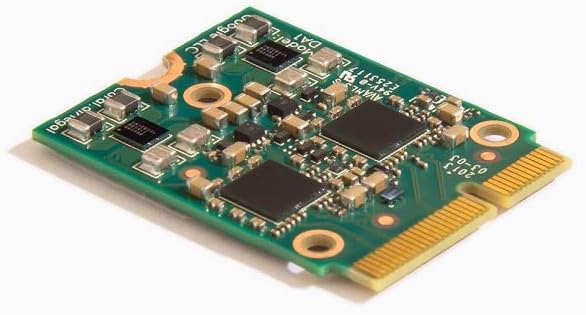
The Coral M.2 Accelerator with B+M Key achieves a perfect 5.0 rating by delivering reliable high-speed machine learning inferencing at an accessible price point. It features an on-board Edge TPU coprocessor capable of 4 trillion operations per second. This efficiency allows it to execute state-of-the-art mobile vision models like MobileNet v2 at impressive frame rates.
We may earn a commission when you buy through this link, at no additional cost to you.
Integration is straightforward for users running Debian-based Linux systems, making it ideal for Raspberry Pi or similar projects. The support for TensorFlow Lite simplifies deployment since models can be compiled directly for the Edge TPU without rebuilding from scratch. Additionally, AutoML Vision Edge support facilitates quick custom image classification model creation.
While the performance is strong, it is primarily optimized for Debian-based environments, which could limit use cases for Windows or other Linux distributions. The B+M key requirement also means it won't fit into slots designed for other key types, necessitating a compatible motherboard or adapter for successful installation and operation.
This accelerator represents an excellent entry point for hobbyists and developers seeking proven ML acceleration without breaking the budget. Its high user satisfaction reflects a consistent and dependable performance profile, making it a recommended choice for educational projects, prototyping, and production deployments where cost is a key factor.
Designed to work with Debian-based Linux systems, ensuring smooth installation and operation for common single-board computers.
TensorFlow Lite support allows pre-trained models to be compiled and run efficiently, reducing development time significantly.
We may earn a commission when you buy through this link, at no additional cost to you.
The QNAP QM2-2P10G1TB is a versatile expansion card that combines storage and networking capabilities into a single PCIe solution. With a 4.4 rating, it serves users looking to enhance system performance via high-speed M.2 SSD caching or direct storage. The inclusion of a 10GbE port offers robust network connectivity for demanding data transfer needs.
We may earn a commission when you buy through this link, at no additional cost to you.
This card utilizes Marvell’s AQtion AQC113C Ethernet Controller to ensure stable and fast network connections. It supports PCIe Gen3 x8, providing sufficient bandwidth for connecting two high-speed NVMe SSDs simultaneously. Compatibility extends across QNAP QTS, QuTS hero, Windows, and Linux operating systems, making it adaptable for various server environments.
While it carries the 'accelerator' concept in terms of performance enhancement, it focuses on storage and I/O acceleration rather than machine learning. Users seeking AI processing units should note this distinction. The physical design includes a low-profile bracket pre-installed, with full-height options available, ensuring fitment in different server chassis sizes.
For IT professionals managing data centers or NAS setups, this card provides an efficient way to upgrade system capabilities without replacing entire hardware stacks. Its ability to handle both high-speed storage and network traffic makes it a strategic addition for workflows requiring rapid data access and reliable network throughput.
Compatible with Windows, Linux, and QNAP operating systems, ensuring flexibility across different server environments and use cases.
The 10GbE port enables high-speed network connections, reducing bottlenecks in data-intensive workflows and storage tasks.
We may earn a commission when you buy through this link, at no additional cost to you.
The Rocket 1604L is a cutting-edge adapter card designed to leverage PCIe Gen5 x16 bandwidth for connecting up to four NVMe M.2 devices. While it lacks established user ratings, its technical specifications suggest it is built for high-performance storage expansion in advanced computing environments. It supports various M.2 form factors including 2242, 2260, and 2280 sizes.
We may earn a commission when you buy through this link, at no additional cost to you.
Its bus interface utilizes the latest PCIe 5.0 standard, offering double the speed of PCIe 4.0 for data transfers. This makes it ideal for workstations or servers needing massive storage throughput for AI datasets or video editing. The card is natively supported by mainstream operating systems on x86 Intel, AMD, and ARM platforms, simplifying driver management.
Despite its advanced features, the lack of user reviews means real-world reliability and thermal performance are yet to be publicly verified. Users must ensure their motherboard supports PCIe 5.0 to fully utilize the card’s potential, which may require newer hardware investments. It serves as a forward-looking solution for those planning future-proof infrastructure.
IT administrators and power users managing large-scale storage arrays will find this card compelling for its raw speed capabilities. It allows centralized management of multiple NVMe drives through a single PCIe slot, streamlining cabling and expanding storage capacity efficiently. This makes it a strategic choice for environments prioritizing raw data bandwidth.
PCIe 5.0 x16 support provides maximum bandwidth for high-demand storage applications, ensuring longevity in system upgrades.
Compatibility with Intel, AMD, and ARM platforms allows deployment across diverse hardware ecosystems without complex custom setups.
We may earn a commission when you buy through this link, at no additional cost to you.
This adapter transforms a single PCIe slot into a dual-TPU workstation, enabling faster object detection and real-time video analytics. Although it has no established ratings yet, it addresses the need for scalable AI inference power without requiring multiple physical slots. The design features a lane splitter to support two Coral M.2 Accelerator Cards simultaneously with integrated cooling.
We may earn a commission when you buy through this link, at no additional cost to you.
The heatsink included with the adapter helps manage thermal output, which is critical when running two ML accelerators at full load. It supports PCIe Gen3 x4 splitting into four Gen2 x1 lanes to ensure each TPU receives adequate bandwidth. This setup is particularly useful for developers building computer vision applications or large-scale edge AI deployments.
Users should note that purchasing this adapter alone does not provide the TPU units; they must be bought separately. This increases the total cost but allows for modular upgrades as projects grow. The lack of reviews means testing for stability under long-term load may be required before full production deployment in mission-critical systems.
For researchers and engineers needing significant inference power in a compact footprint, this adapter offers a practical expansion path. It maximizes existing hardware investments by allowing two accelerators to work together efficiently. This approach balances cost and performance, making it a smart choice for scaling edge AI capabilities effectively.
Supports two TPUs for increased throughput, allowing systems to grow with project demands without replacing the entire workstation.
Integrated heatsink ensures stable operation during sustained workloads, preventing overheating that could slow down AI inference tasks.
We may earn a commission when you buy through this link, at no additional cost to you.
The ASUS Hyper M.2 x16 Gen5 Card adapts server-grade quality to desktop and workstation environments for high-speed data transfers. With a 4.2 rating, it supports up to four PCIe 5.0/4.0 M.2 drives with a massive 512 Gbps bandwidth. This capability ensures smooth data movement critical for video editing, 3D rendering, or large dataset handling.
We may earn a commission when you buy through this link, at no additional cost to you.
It features a two-phase power solution supporting up to 14 watts output to power the latest NVMe drives reliably. Active cooling is provided through a large heatsink with thermal pads and a fan, reducing SSD temperatures for unthrottled transfer speeds. RAID functions are supported across different platforms, allowing creation of bootable arrays with up to four drives.
The need for a 6-pin PCIe power connector adds a slight installation complexity compared to passive cards. Additionally, users may need to configure BIOS settings to ensure proper drive recognition and RAID functionality. These steps are standard for high-performance hardware but require technical familiarity to avoid potential setup issues.
Power users and content creators requiring maximum storage speed and redundancy will appreciate this card's robust design. It eliminates bottlenecks by offering native support for multiple high-speed drives in a single expansion slot. This makes it an essential upgrade for systems where data transfer rates and storage reliability are top priorities for productivity.
Active cooling prevents thermal throttling during sustained transfers, ensuring consistent high-speed performance without overheating.
Supports RAID across platforms, enabling data redundancy or speed enhancement depending on user workflow and requirements.
We may earn a commission when you buy through this link, at no additional cost to you.
The waveshare Hailo-8 M.2 AI Accelerator Module sets a premium standard with a powerful 26 TOPS Hailo-8 AI processor. Achieving a 4.6 rating, it enables real-time, low-latency AI inferencing suitable for professional edge devices. The module is designed to handle multi-stream processing, making it ideal for complex tasks involving multiple camera inputs or models.
We may earn a commission when you buy through this link, at no additional cost to you.
It supports a wide range of frameworks including TensorFlow, ONNX, Keras, and Pytorch, ensuring flexibility in model development and deployment. Compatibility extends to both Linux and Windows systems, broadening its application scope. The power consumption remains low at a typical 2.5W, ensuring efficiency even under heavy processing loads during continuous operation.
The module-only designation means users must provide their own compatible housing or carrier board for specific integration scenarios. While the price reflects its high performance, it may be less accessible for casual hobbyists compared to entry-level options. Rich Wiki resources are provided to assist users in navigating setup and configuration for different projects.
For professional deployments requiring high computational power and versatility, this module offers a robust solution. It balances performance, thermal efficiency, and software support effectively. Developers working on scalable AI projects will find its multi-model capabilities and broad OS support valuable for moving seamlessly from prototyping to production environments.
Enables simultaneous processing of multiple AI streams, significantly improving throughput for surveillance or multi-camera analytics systems.
Compatibility with major frameworks like TensorFlow and Pytorch simplifies migration from cloud models to edge deployment.
We may earn a commission when you buy through this link, at no additional cost to you.
The Coral M.2 Accelerator with A+E Key delivers high-performance machine learning acceleration in a compact 2230 form factor. With a 4.2 rating, it integrates an Edge TPU capable of 4 TOPS peak performance. This design is ideal for systems with limited space that still require efficient ML inference capabilities for embedded applications.
We may earn a commission when you buy through this link, at no additional cost to you.
It supports both Linux and Windows operating systems, offering flexibility for diverse development environments. The low-power design provides 2 TOPS per watt, which is excellent for battery-powered or thermally constrained devices. Industrial-grade reliability ensures operation across a wide temperature range, making it suitable for challenging environmental conditions.
While the 4 TOPS performance is solid for light to moderate tasks, it may not match higher-end dual-TPU solutions for complex models. The A+E key interface limits compatibility to slots supporting this specific layout. Users must verify their motherboard's key configuration to ensure physical fit before purchase.
This accelerator is a strong candidate for IoT devices, smart cameras, or portable AI projects. Its balance of size, power efficiency, and reliability makes it a trusted choice for developers needing consistent edge performance. The broad OS support further simplifies integration into various system architectures without requiring extensive custom drivers.
Operates reliably across a wide temperature range, ensuring consistent performance in varied environmental conditions and locations.
Support for both Linux and Windows allows developers to test and deploy models across different target operating systems easily.
We may earn a commission when you buy through this link, at no additional cost to you.
This adapter is designed exclusively for Coral M.2 Accelerator with Dual Edge TPU modules, maximizing AI inference performance through a specialized interface. It achieves a perfect 5.0 rating by ensuring stable connectivity with bidirectional Gen2 bandwidth. The design supports M.2 2280 B-key or M-key slots, providing a secure fit for standard expansion configurations.
We may earn a commission when you buy through this link, at no additional cost to you.
It includes a stainless steel mounting screw for vibration-resistant PCB fixation, which is crucial for installations in mobile or industrial environments. The upstream bandwidth is a single Gen2 lane, while downstream traffic is split across two Gen2 lanes to optimize data flow to each TPU. Explicit incompatibility with Raspberry Pi CM4 or USB enclosures prevents buyer errors.
The adapter is limited to Coral modules, restricting its use to specific hardware ecosystems. Additionally, using Gen2 lanes may limit throughput compared to Gen3 adapters available in the market. However, for most Edge TPU workloads, these speeds are adequate, and the focus remains on stability and ease of integration for dual-TPU setups.
Users building custom dual-TPU systems will find this adapter a reliable component to ensure consistent performance and physical security. Its focus on hardware integrity and compatibility minimizes potential setup issues. This makes it a recommended accessory for anyone expanding their Coral accelerator setup for more intensive machine learning inference tasks.
Stainless steel mounting screw prevents movement, ensuring reliable electrical connections in environments with vibration or physical movement.
Bidirectional bandwidth ensures efficient data transfer between system memory and the dual TPUs for smooth inference execution.
We may earn a commission when you buy through this link, at no additional cost to you.
Selecting the right M2 Accelerator Card requires evaluating performance metrics, compatibility, and power efficiency to ensure it meets your specific workload needs.
Evaluate the required operations per second (TOPS) for your AI models. Higher TOPS values generally mean faster inference, which is critical for real-time applications like video analytics. Match the card's processing power with the complexity of the machine learning tasks you intend to run to avoid bottlenecks.
Choose a card with sufficient TOPS to handle your specific workload without unnecessary overspending on excess capacity.
Ensure the card's form factor and key type (M-key, E-key, A+E) match your motherboard slot. Incorrect key types will prevent physical installation and proper electrical contact. Check your system specifications to confirm which M.2 slots support PCIe or SATA protocols for your chosen accelerator.
Verify that your motherboard supports the specific interface and key type of the accelerator to guarantee physical and electrical compatibility.
Look for accelerators that offer high performance per watt. Energy efficiency is vital for battery-powered or thermally constrained embedded systems. Cards designed with low power consumption help reduce overall system cooling requirements and extend battery life in portable applications.
Select an accelerator with a high TOPS per watt ratio to maintain system efficiency and reduce thermal loads.
Check the supported operating systems such as Linux, Windows, or Debian. Software drivers and development tools must be available for your chosen OS to ensure smooth deployment. Some accelerators are optimized primarily for specific Linux distributions, so confirm support for your target environment.
Confirm the accelerator supports your target operating system to ensure access to necessary drivers and software development tools.
Consider the availability of a comprehensive software development kit (SDK) and model support. Frameworks like TensorFlow, ONNX, or Pytorch compatibility simplify the integration of pre-trained models. A strong software ecosystem reduces development time and helps optimize models for edge hardware.
Prioritize accelerators with robust SDK support and compatibility with your preferred machine learning frameworks for easier development.
Assess whether the card includes active cooling solutions like fans or passive cooling like heatsinks. Sustained workloads generate heat that can lead to throttling if not properly managed. Proper thermal design ensures the accelerator maintains peak performance during continuous operation without overheating.
Ensure the card has adequate cooling features to prevent thermal throttling during prolonged or intensive inference tasks.
Consider if the system supports adding multiple accelerators for increased throughput. Some adapters allow dual or quad TPU configurations, providing room for project growth. Scalability ensures you can expand capabilities without replacing the entire system as your AI demands increase.
Look for solutions that allow future expansion through multi-card adapters or flexible interface configurations.
Verify the physical dimensions of the card against your system's internal space. Compact 2230 modules are ideal for small form factor devices, while larger 2280 cards need more room. Ensure there is enough clearance for the card and any attached cooling solutions within your chassis.
Match the card's physical dimensions to your available space to ensure successful installation and airflow management.
Begin by physically installing the accelerator card into a compatible M.2 slot on your motherboard, ensuring the key matches and securing it with the provided standoff or screw. Proper alignment is critical to avoid damaging pins and ensure a solid electrical connection.
Install the necessary drivers and SDK provided by the manufacturer to enable the operating system to recognize the card. Follow official documentation to compile your models for the accelerator hardware, ensuring they are optimized for the specific chip architecture.
Monitor system temperatures during initial use to ensure the cooling solution is working effectively. Regularly check for firmware or software updates to maintain performance stability and security. Avoid exposing the hardware to excessive dust or moisture which can impact reliability over time.
An M2 Accelerator Card is primarily used to accelerate machine learning inference tasks at the edge. It helps devices process AI models faster without relying on cloud servers. This enables real-time applications like object detection and image analysis on local hardware.
Yes, your motherboard must have an M.2 slot that matches the card's key type and interface. Some accelerators require PCIe lanes rather than SATA. Always check your motherboard manual to confirm slot specifications before purchasing the card.
Most accelerators support Linux distributions like Debian and Ubuntu, while some offer Windows support. Compatibility varies by vendor and software stack. Always verify the product page for specific operating system requirements before installing.
Lower power consumption helps reduce heat and extends battery life in portable devices. High-performance cards may draw more power, requiring sufficient PSU capacity. Balancing performance with energy efficiency is key for stable operation.
Some M2 Accelerators are designed specifically for Raspberry Pi 5 using HATs. Standard PCIe cards generally do not fit without adapters. Check for specific Pi-compatible models to ensure proper integration and power delivery.
A Dual TPU configuration allows simultaneous processing of multiple models or streams. This increases total inference speed for complex workloads like multi-camera analysis. It is ideal for users needing higher throughput than single-chip solutions provide.
The top picks highlighted in this guide offer a range of solutions from budget-friendly Coral modules to high-performance Hailo-8 accelerators. Selecting the right card depends on your specific processing power needs, interface availability, and operating system environment.
Prioritize performance metrics like TOPS and power efficiency to ensure the hardware meets your project requirements. Compatibility with your existing motherboard and OS is equally crucial to avoid integration hurdles and ensure stable operation.
Prices and availability for these accelerators may change over time due to market demand. Always verify the latest details and specifications on the official product pages before finalizing your purchase decision.